Car batteries come in many sizes and weights, and for a good reason. In the automotive world, the weight of a battery often tells us a silent but vital story about its internal quality and engineering standards. This article explains exactly how heavy car batteries are, provides a comprehensive chart by group size, and explores why the mass of your battery is a direct indicator of its lifespan. You will also learn why weight matters in extreme conditions and how to handle these heavy components safely to prevent injury.
What Does Car Battery Weight Actually Mean?
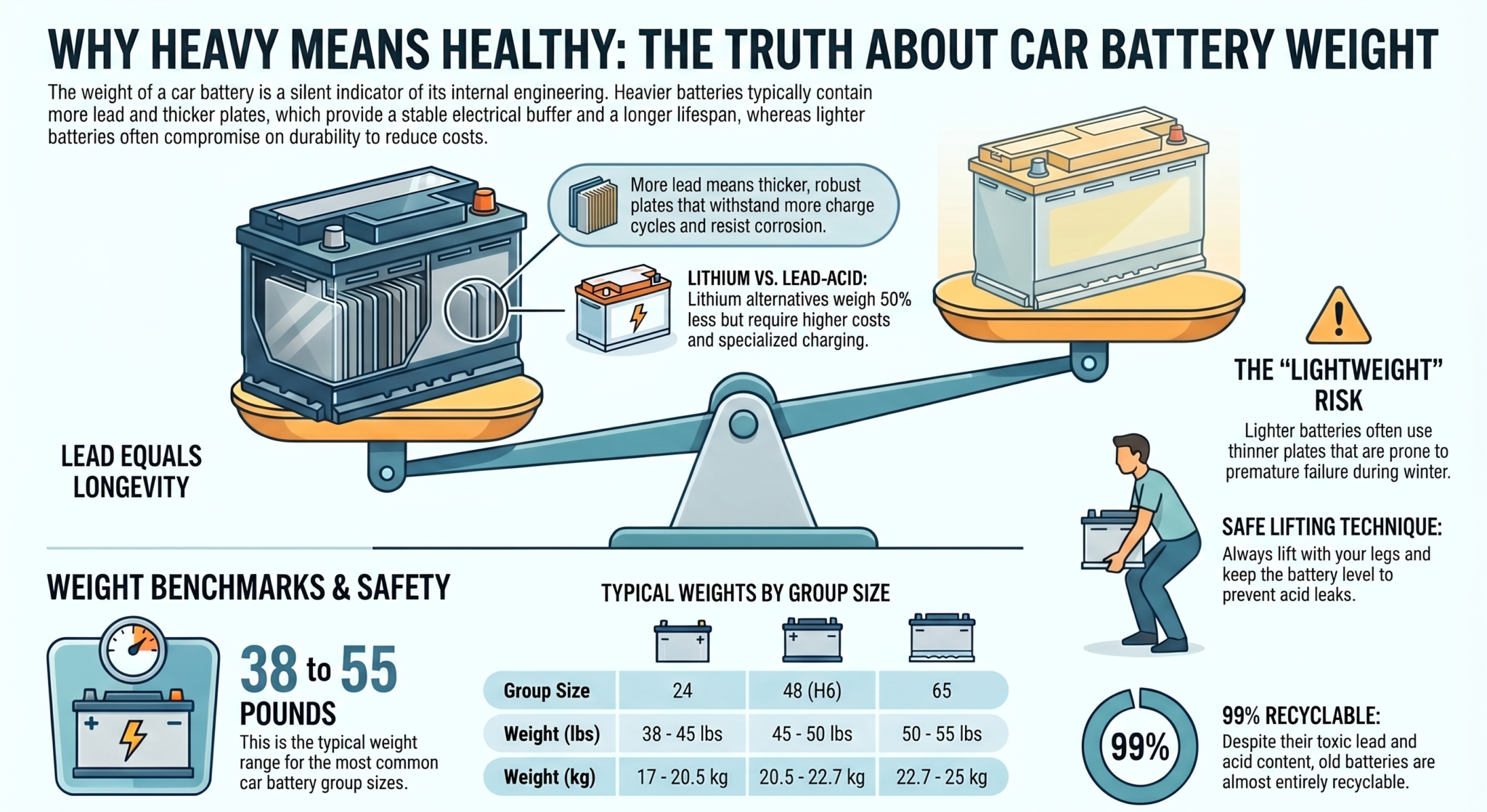
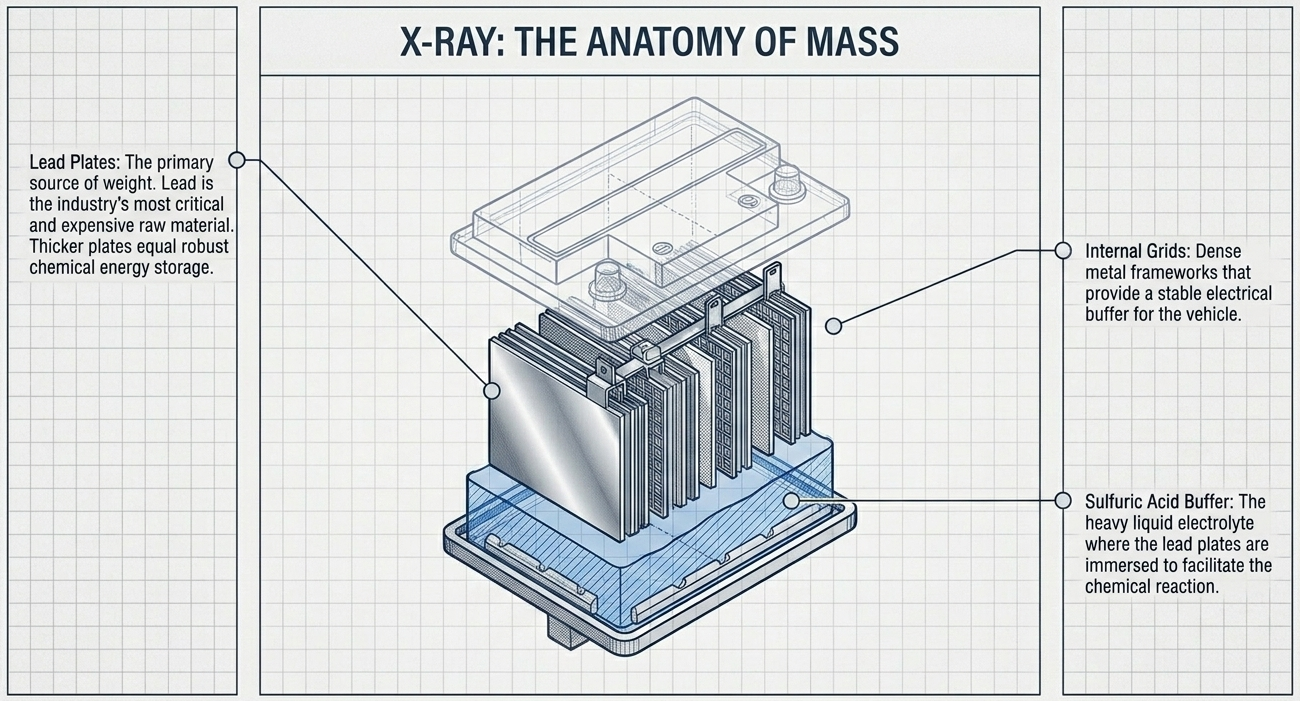
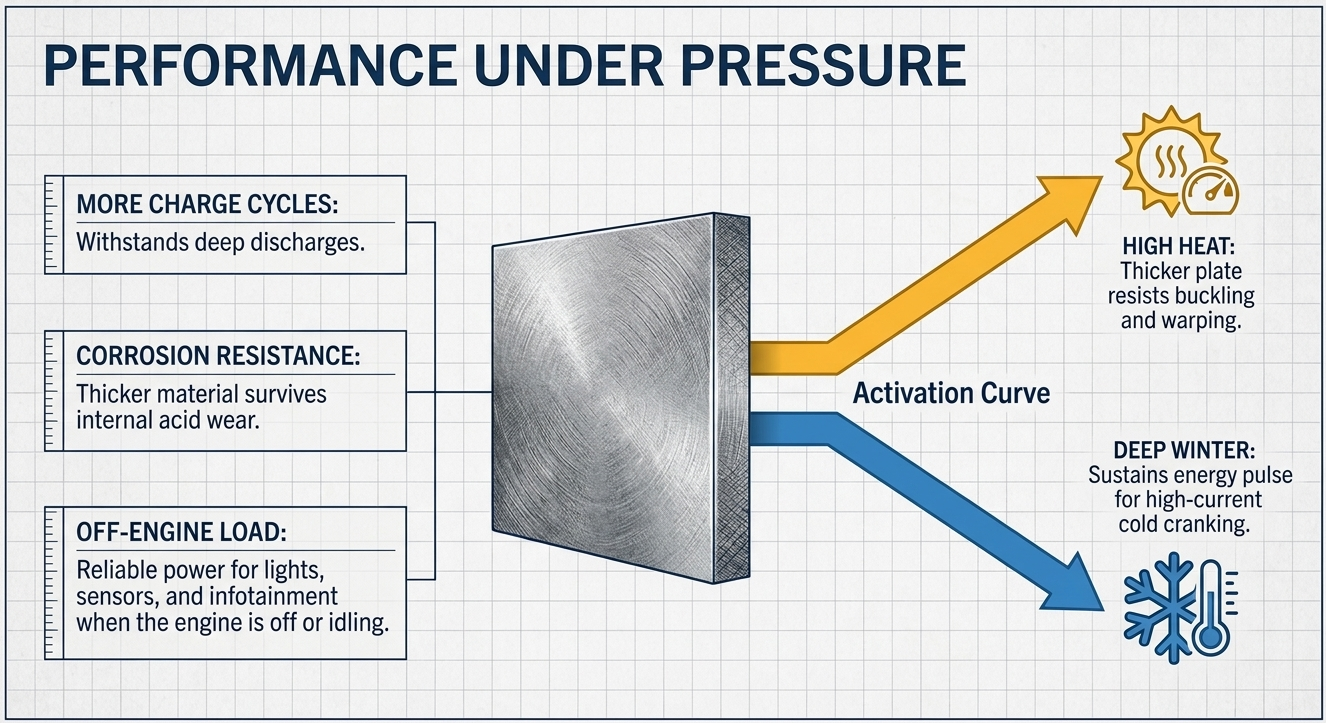
The weight of a car battery mainly comes from lead. Lead is an incredibly dense, heavy metal used to create the internal grids and plates where the chemical energy is stored. In the battery industry, lead is the most expensive and important raw material. Therefore, more lead usually means the battery has thicker, more robust plates. Thicker plates can withstand more charge cycles, resist internal corrosion longer, and perform much better under high-current demands.
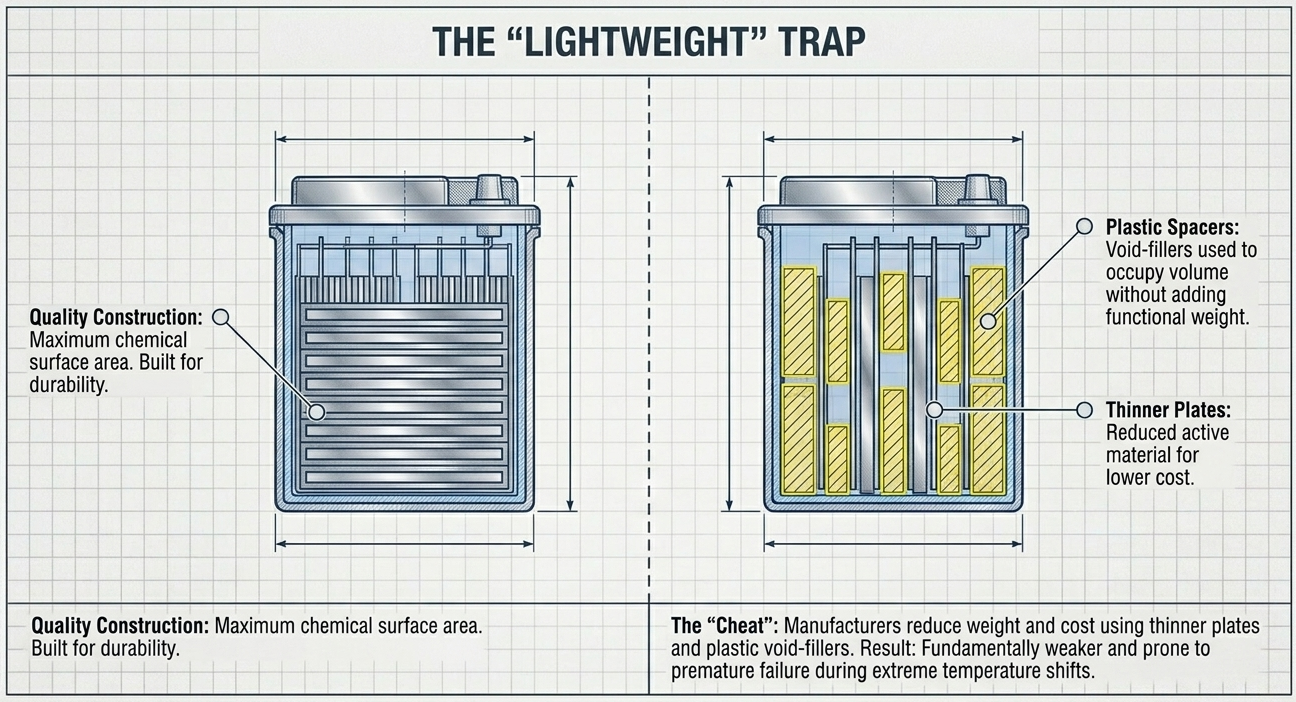
The “Lightweight” Risk: When a battery is unusually light for its size, it may have less lead inside. Some manufacturers use thinner plates or “expanded metal” grids to reduce weight and production costs. While this makes the battery cheaper and easier to ship, it also makes it fundamentally weaker. A lightweight battery may not last as long and often fails prematurely during the first cold snap of winter.
In short, heavier batteries tend to be of much better quality. They have more lead and stronger plates that provide a stable electrical buffer for your vehicle. However, the trade-off is that they are physically harder to carry and install due to their significant mass.
Battery Group Size and Weight
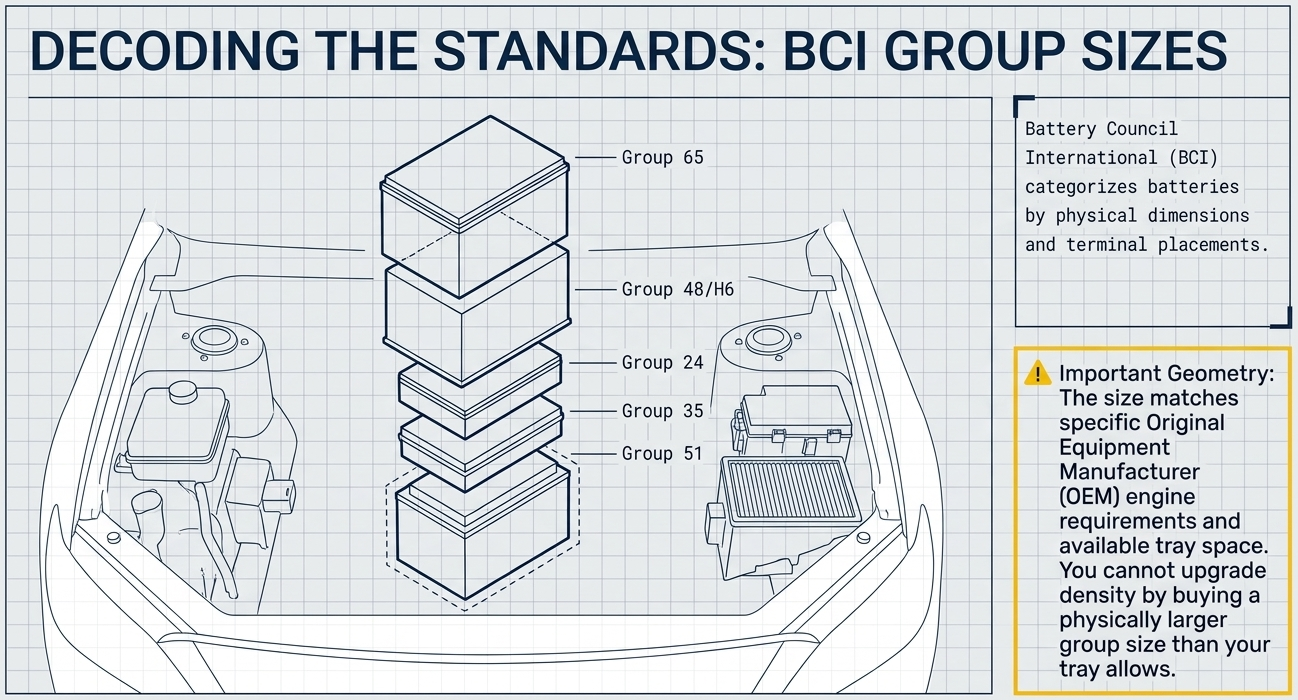
Car batteries are categorized into different sizes, known as **BCI Group Sizes**. The specific size you need depends on your vehicle’s engine requirements and the physical space available in the battery holder (tray). Common group sizes include 24, 35, 48, 51, and 65. Each size has a typical weight range based on the amount of lead required to meet the original equipment manufacturer (OEM) specifications.
Car Battery Weight by Group Size Chart
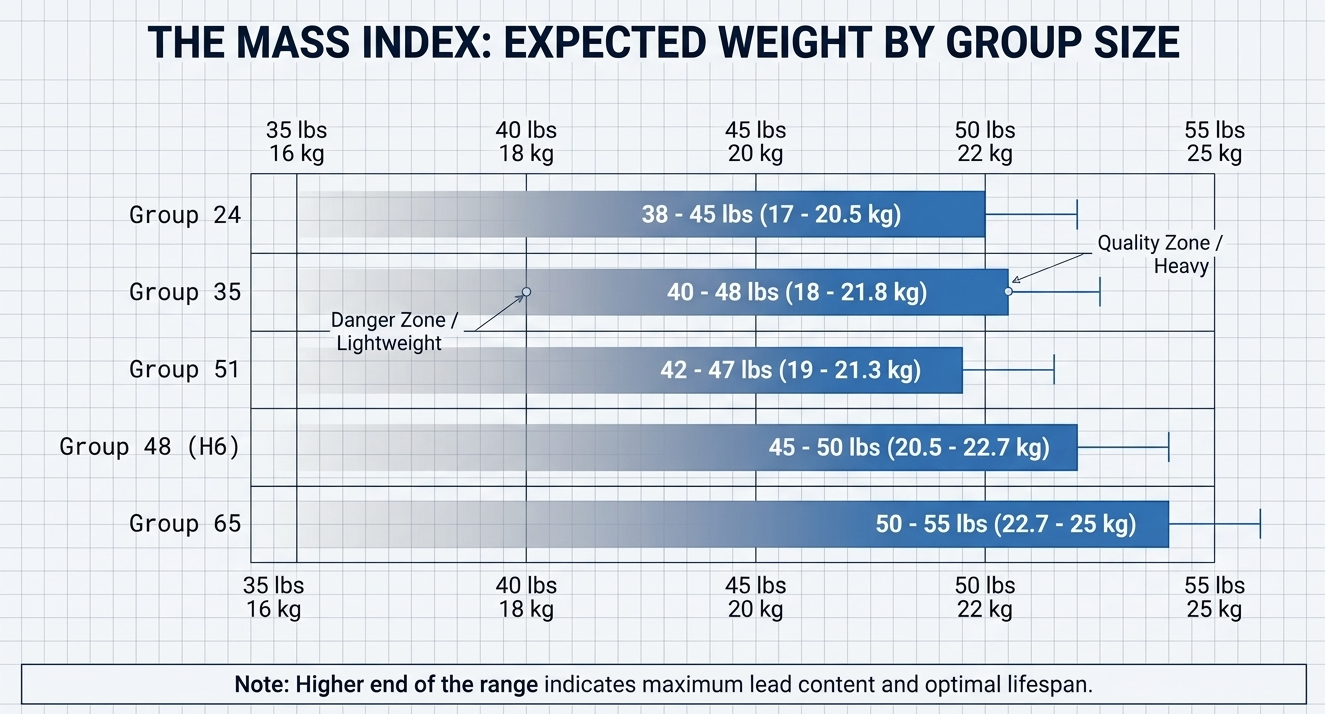
| Group Size | Typical Weight (pounds) | Typical Weight (kilograms) |
|---|---|---|
| 24 | 38 – 45 lbs | 17 – 20.5 kg |
| 35 | 40 – 48 lbs | 18 – 21.8 kg |
| 48 (H6) | 45 – 50 lbs | 20.5 – 22.7 kg |
| 51 | 42 – 47 lbs | 19 – 21.3 kg |
| 65 | 50 – 55 lbs | 22.7 – 25 kg |
Why Do We Care About Battery Weight?
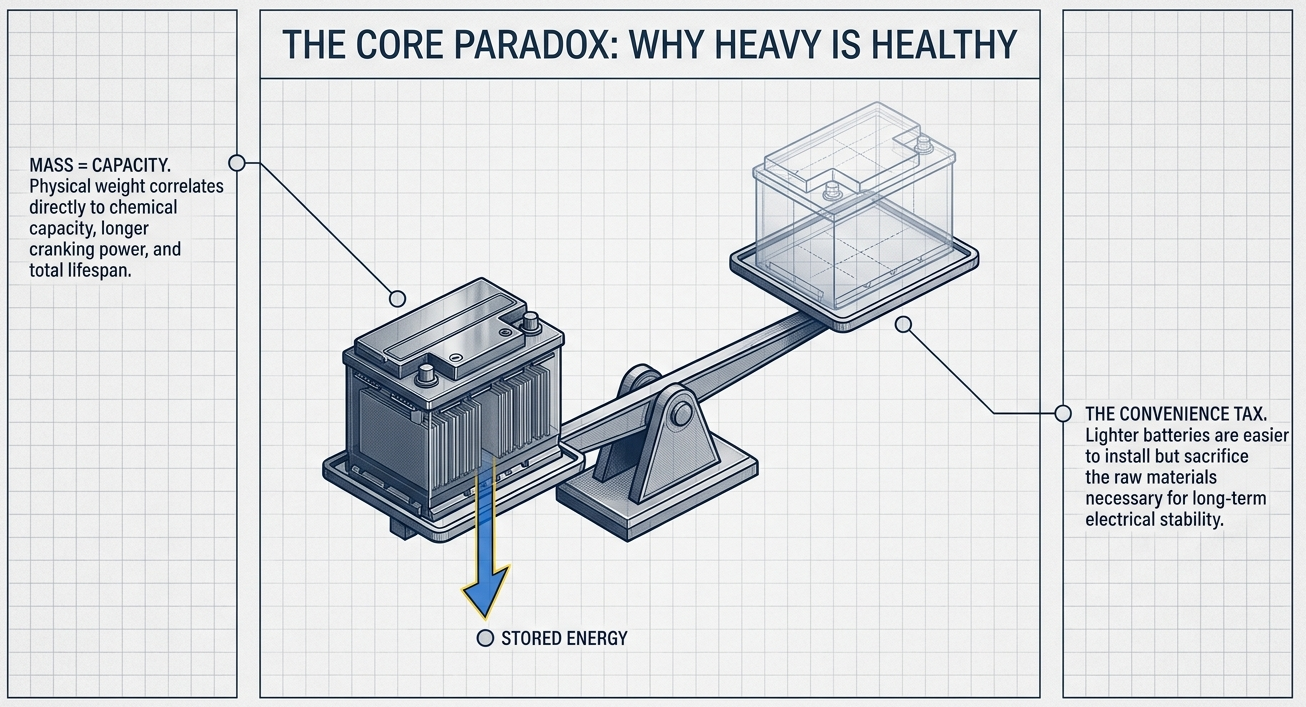
Weight is a physical proxy for performance. In a lead-acid battery, the weight shows how much raw material is available to facilitate the chemical reaction. More lead means longer life and better cranking power. Car batteries don’t just provide a strong start; they also power critical systems like lights, sensors, and infotainment when the engine is off or idling.
Lighter batteries often use thinner lead plates to reduce weight and cost. While these batteries may work perfectly when new, they are much more likely to fail prematurely. Thicker plates in heavier batteries can withstand deep discharges and high-heat environments without buckling or breaking, giving you more long-term value for your money.
How Does Lithium Battery Weight Compare?
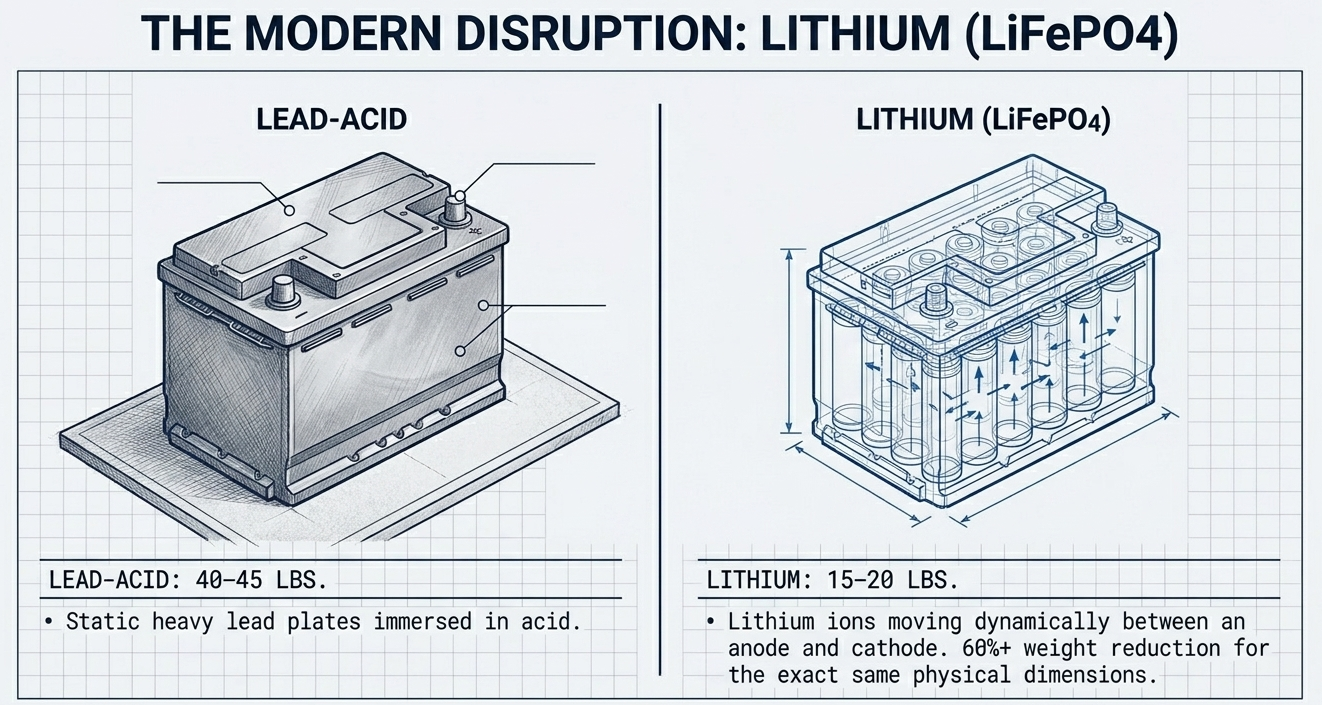
Lithium (LiFePO4) batteries are a modern alternative to traditional lead-acid designs. They utilize lithium ions moving between an anode and a cathode instead of heavy lead plates immersed in acid. This technological shift allows them to be incredibly light. A lithium battery can weigh half—or even less than half—of a lead-acid battery with the same dimensions.
Weight Comparison Example:
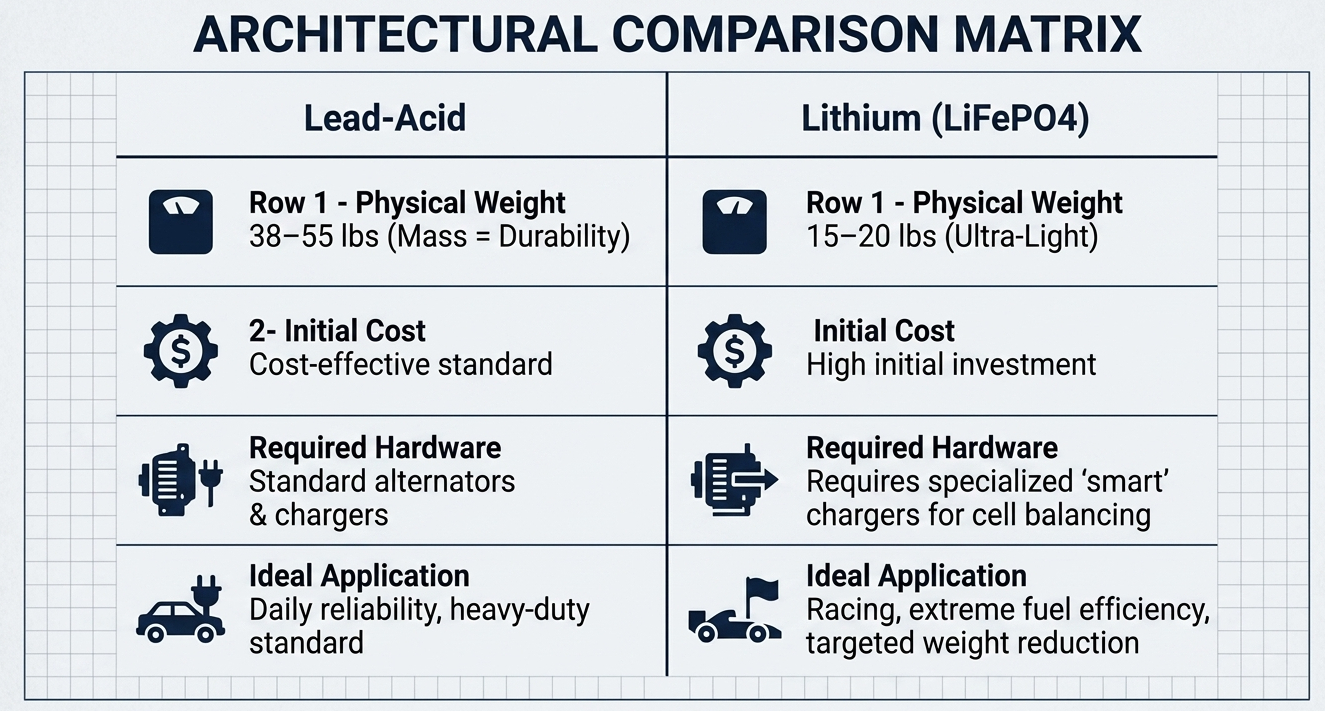
A standard Group 24 lead battery typically weighs 40-45 pounds. A Lithium equivalent might weigh only 15 to 20 pounds. For car owners focused on racing, fuel efficiency, or weight reduction, lithium is a revolutionary choice. However, keep in mind that lithium batteries come with a higher initial cost and may require specialized “smart” chargers to manage their cell balancing.
Handling and Safety Tips for Car Batteries
Because car batteries are heavy and contain concentrated sulfuric acid, they must be handled with extreme care to avoid physical injury or chemical burns.
- Protective Gear: Always wear gloves and eye protection. Battery acid can cause permanent harm to skin and eyes if a leak occurs.
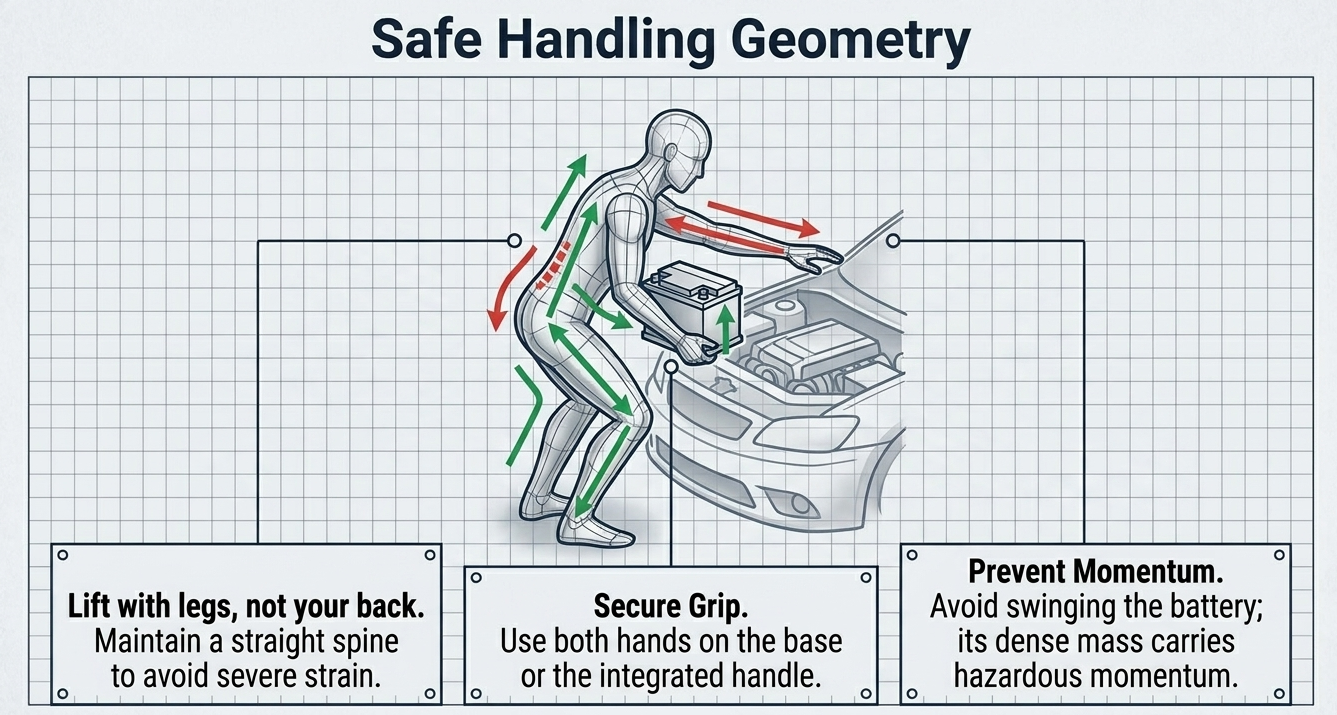
- Proper Lifting: Lift with your legs, not your back. Bend your knees and keep your back straight to avoid strain.
- Secure Grip: Use both hands to hold the battery firmly by the base or the integrated handle. Avoid swinging the battery.
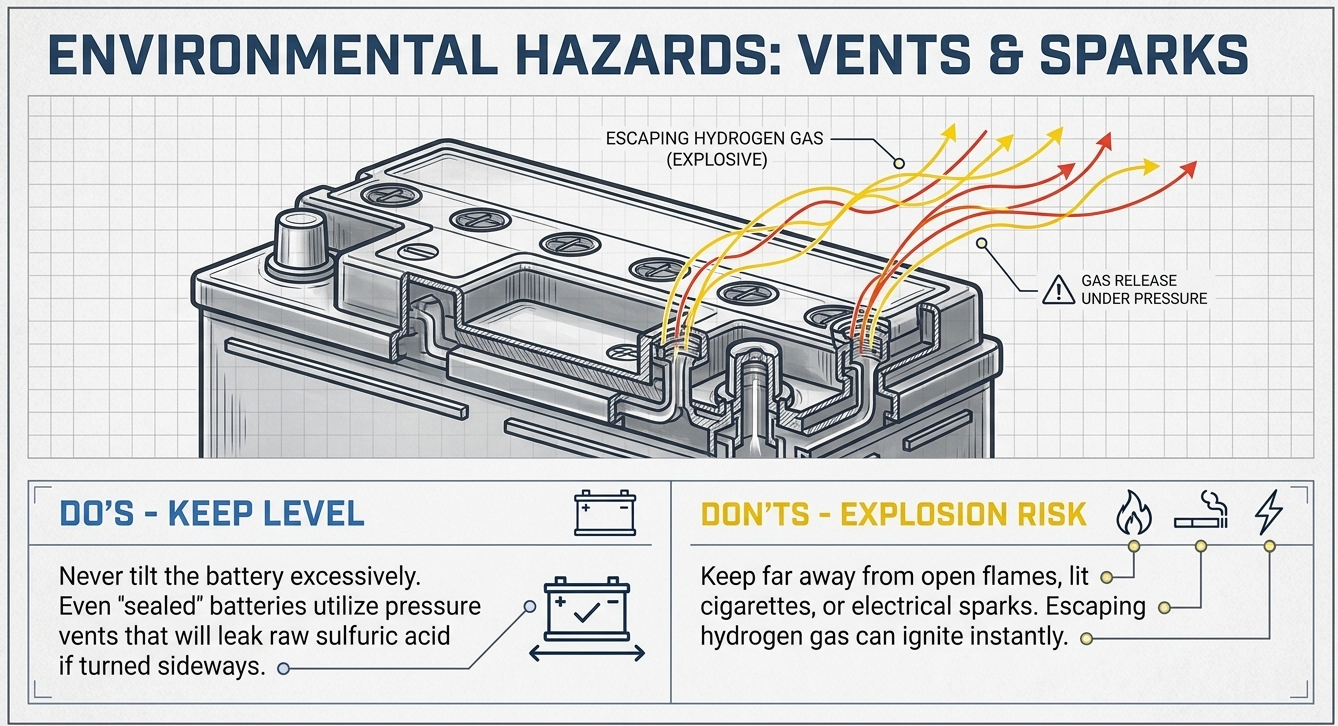
- Keep Level: Do not tilt the battery excessively. Even “sealed” batteries have vents that could leak acid if turned sideways.
- Explosion Risk: Keep batteries away from open flames, cigarettes, or sparks. The charging process can release hydrogen gas, which is highly explosive.
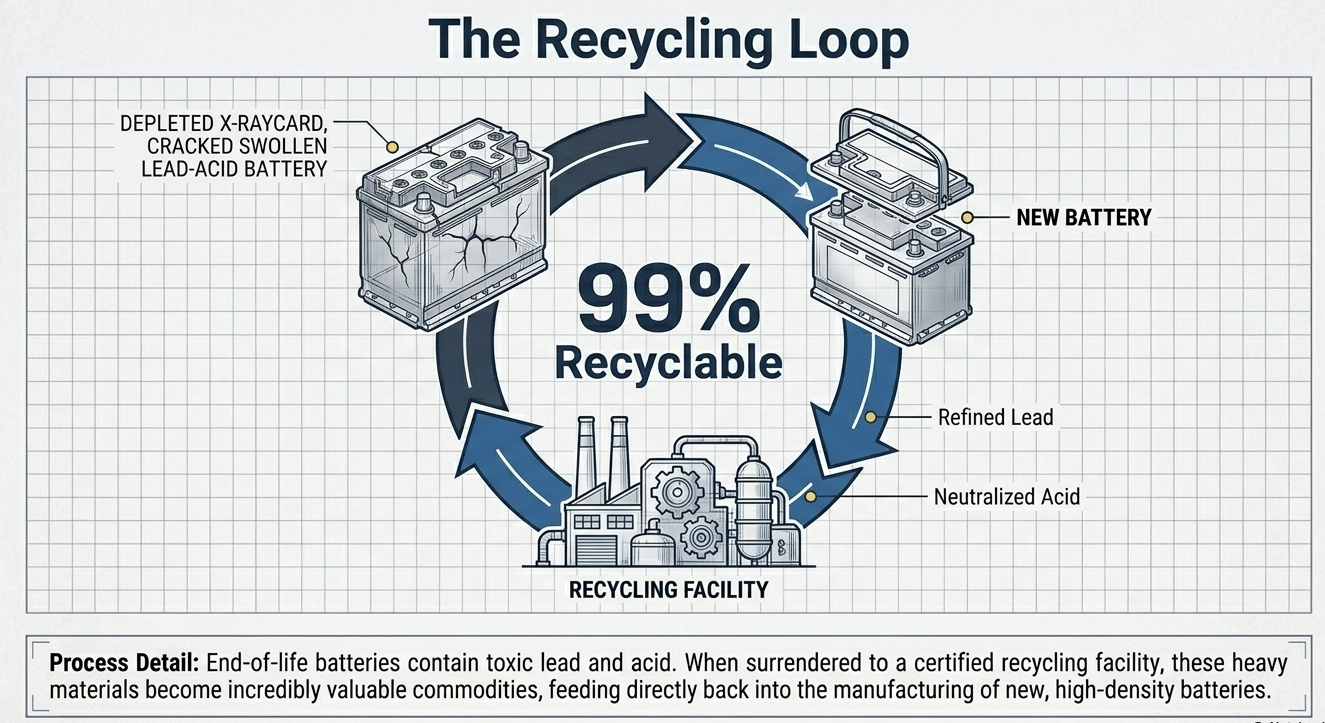
- Recycling: Always recycle old batteries at a certified facility. They contain lead and acid that are toxic to the environment but 99% recyclable.


Summary: Why Heavy is Healthy
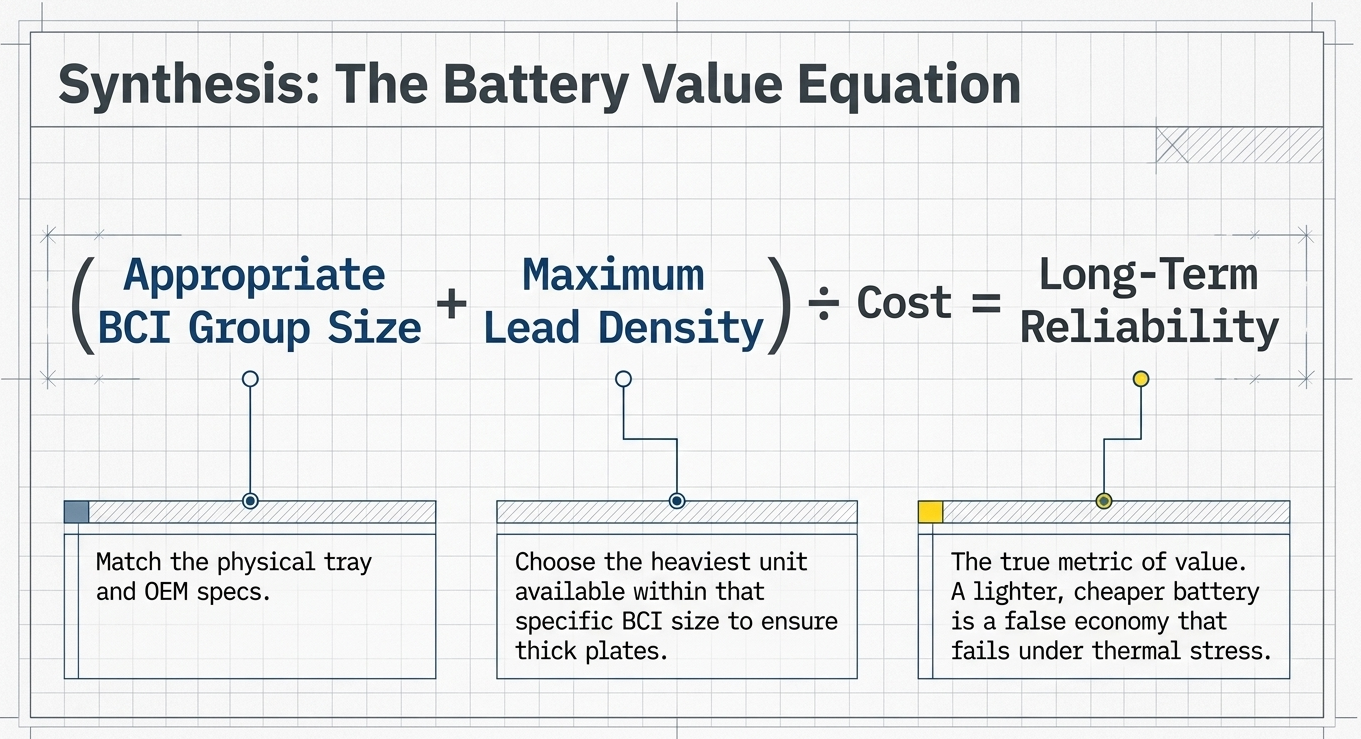
Car battery weight is primarily a result of the lead plates inside. Heavier batteries usually signify better quality, as they contain the thick plates necessary for a long lifespan and stable performance. Lighter batteries may “cheat” by using thinner plates, which are more susceptible to failure under stress.
Understanding battery weight—which typically ranges from 38 to 55 pounds for common group sizes—helps you choose the right product for your vehicle’s needs. While lithium batteries offer a lightweight alternative, the traditional heavy-duty lead battery remains the standard for most drivers who prioritize cost-effective reliability.
Frequently Asked Questions
How Much Does A Group 24 Car Battery Weigh?
A Group 24 car battery typically weighs between 40 to 60 pounds. This substantial weight is due to its high lead content, which is the primary factor affecting the battery’s quality and total lifespan.
Why Do Heavier Car Batteries Mean Better Quality?
Heavy batteries contain more lead plates. More lead provides more chemical surface area, which improves durability, power storage, and the ability to survive extreme temperatures.
How Do Lighter Batteries “Cheat” With Their Weight?
Manufacturers may use thinner lead plates or fill the internal casing with larger plastic spacers to meet the dimensions of the group size while using less lead. This reduces weight but sacrifices the battery’s long-term durability.
What Is The Weight Range For A Group 35 Battery?
Group 35 batteries usually weigh between 35 to 50 pounds. This size is a common balance between high cranking power and a weight that is manageable for DIY installation.

Eric Strong works in the automotive repair industry more than 20 years. His work included repairing electrical systems in various vehicle systems. A hybrid electric car battery replacement experience expanded his understanding of automotive battery technology.
Page Contents