

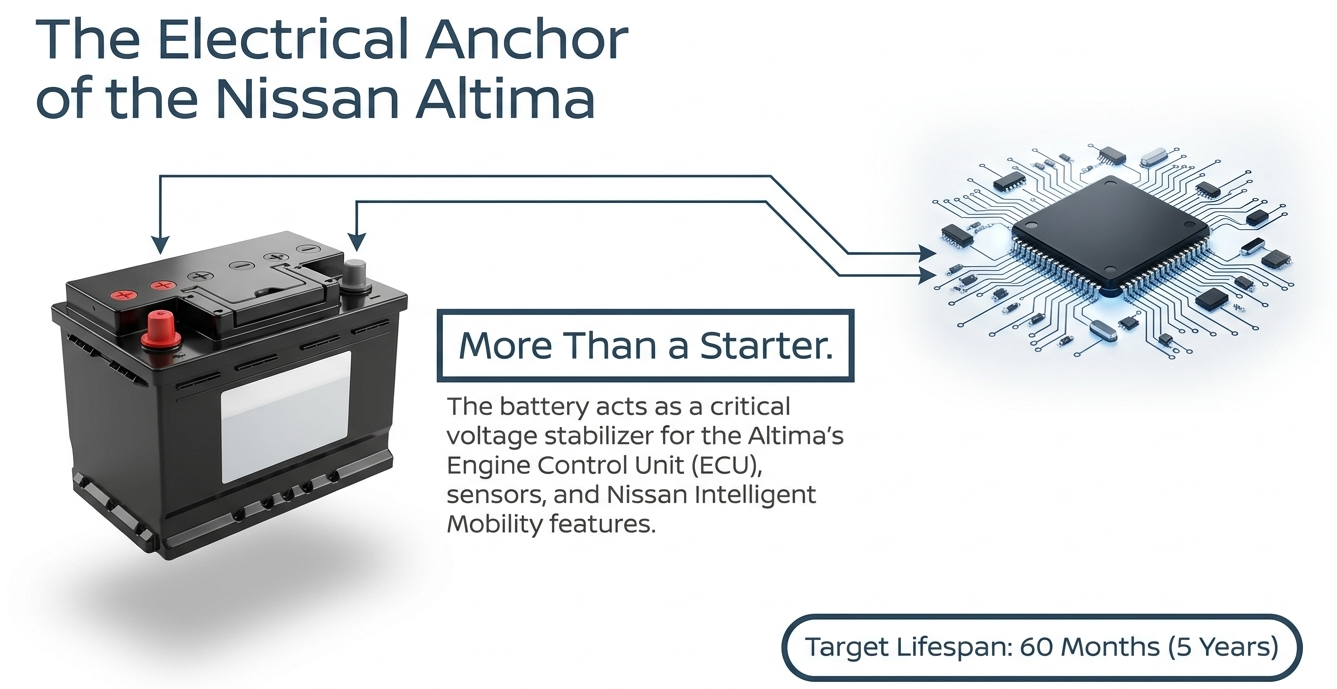
The Nissan Altima has long been a staple of the mid-sized sedan market, prized for its fuel efficiency and smooth CVT-driven ride. However, much of this reliability hinges on a healthy electrical system. The battery in your Altima is more than just a starting device; it acts as a voltage stabilizer for the car’s complex Engine Control Unit (ECU) and sensors. Selecting the correct replacement involves understanding why the Group 35 standard is the preferred choice for this specific chassis.
Choosing a battery for a modern Altima isn’t just about finding something that fits in the tray. You need to account for the charging profile of the alternator and the power demands of the Nissan Intelligent Mobility features. This guide provides the technical depth needed to select, install, and maintain the ideal power source for your vehicle.
Standard Battery Types and Chemistry for the Altima
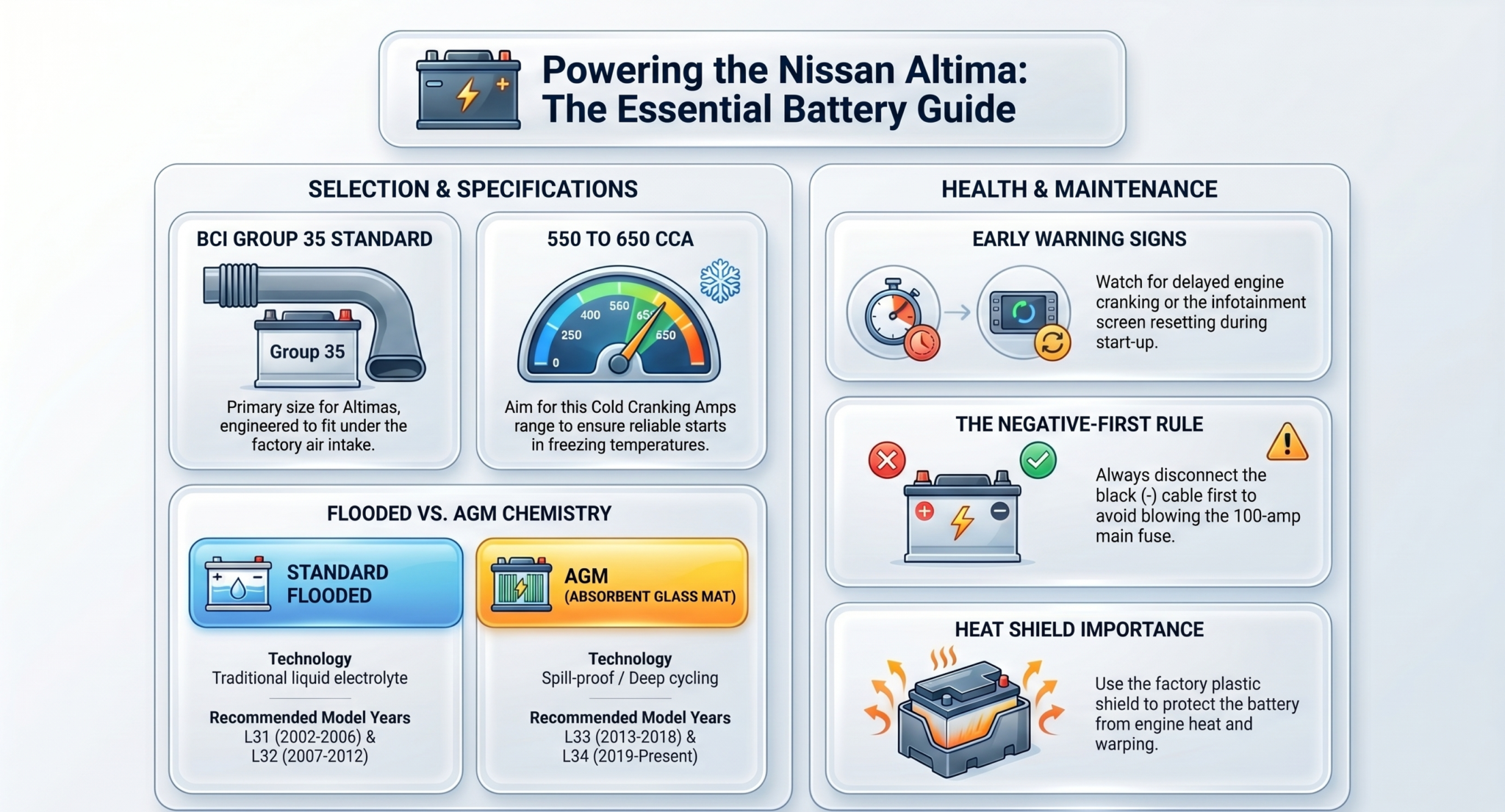
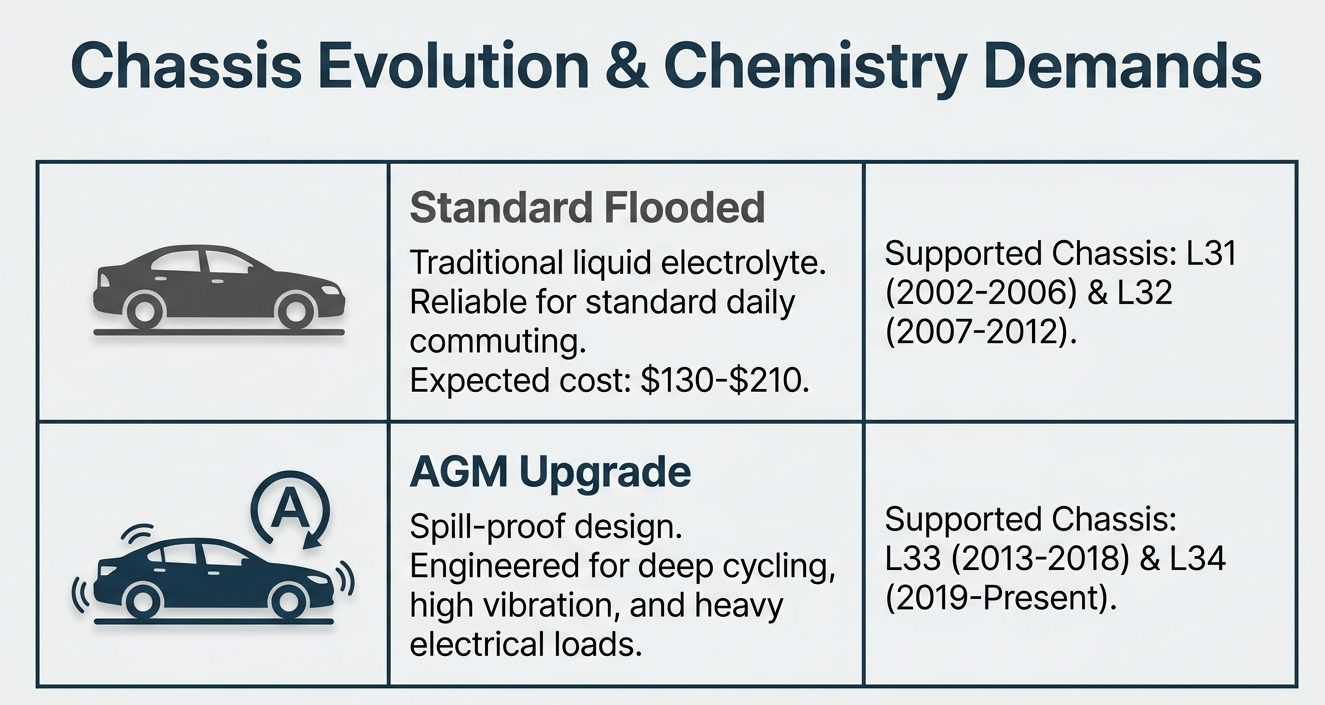
While all Altima models operate on a 12-volt system, the internal chemistry of the battery can vary. Most older generations come factory-equipped with a standard Flooded Lead-Acid (SLI) battery. However, newer trims with high electrical loads or Start-Stop technology benefit significantly from upgraded chemistry. Understanding these differences helps prevent premature battery failure in extreme climates.
| Battery Type | Technical Characteristics | Recommended Altima Model Years |
|---|---|---|
| Standard Flooded | Traditional liquid electrolyte; reliable for daily commuting. | Altima L31 (2002-2006) and L32 (2007-2012). |
| AGM (Absorbent Glass Mat) | Spill-proof, handles deep cycling and high vibration better. | Altima L33 (2013-2018) and L34 (2019-Present). |
Decoding Group 35 and 24F Specifications
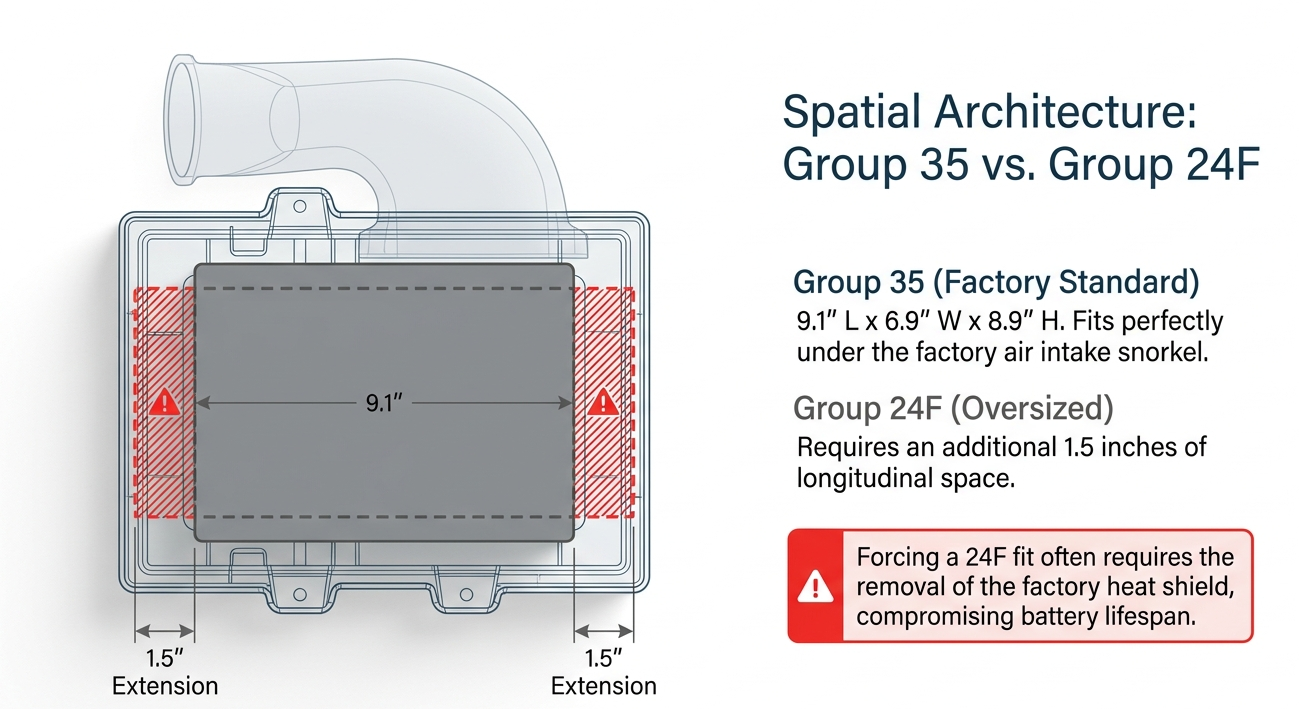
Most Nissan Altima models are designed to use a BCI Group 35 battery. This size is specifically engineered to balance weight and cranking power. In some rare V6 configurations or cold-weather packages, you might encounter a Group 24F, which offers a larger footprint and more reserve capacity. It is vital to measure your existing battery tray before attempting to “upgrade” to the larger 24F size, as it requires more longitudinal space.
- Physical Dimensions (Group 35): Approximately 9.1″ L x 6.9″ W x 8.9″ H. This compact size ensures the battery fits under the factory air intake duct found in many Altima engine bays.
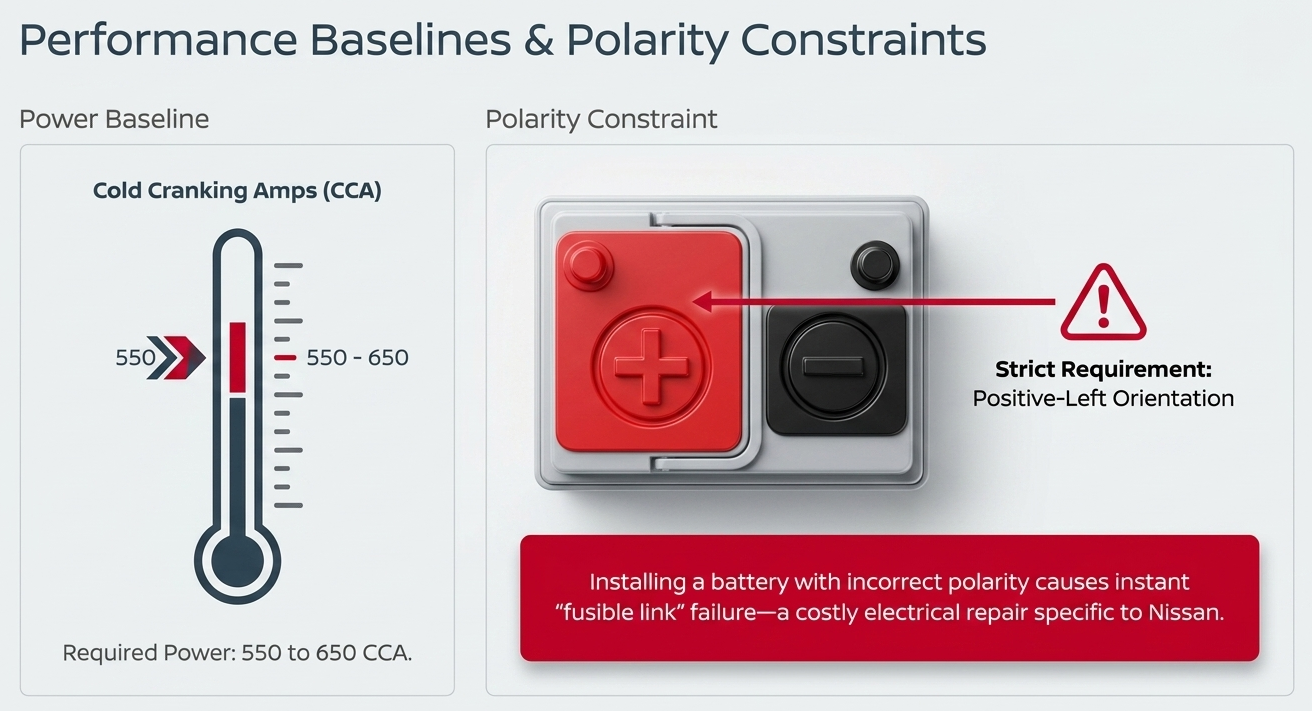
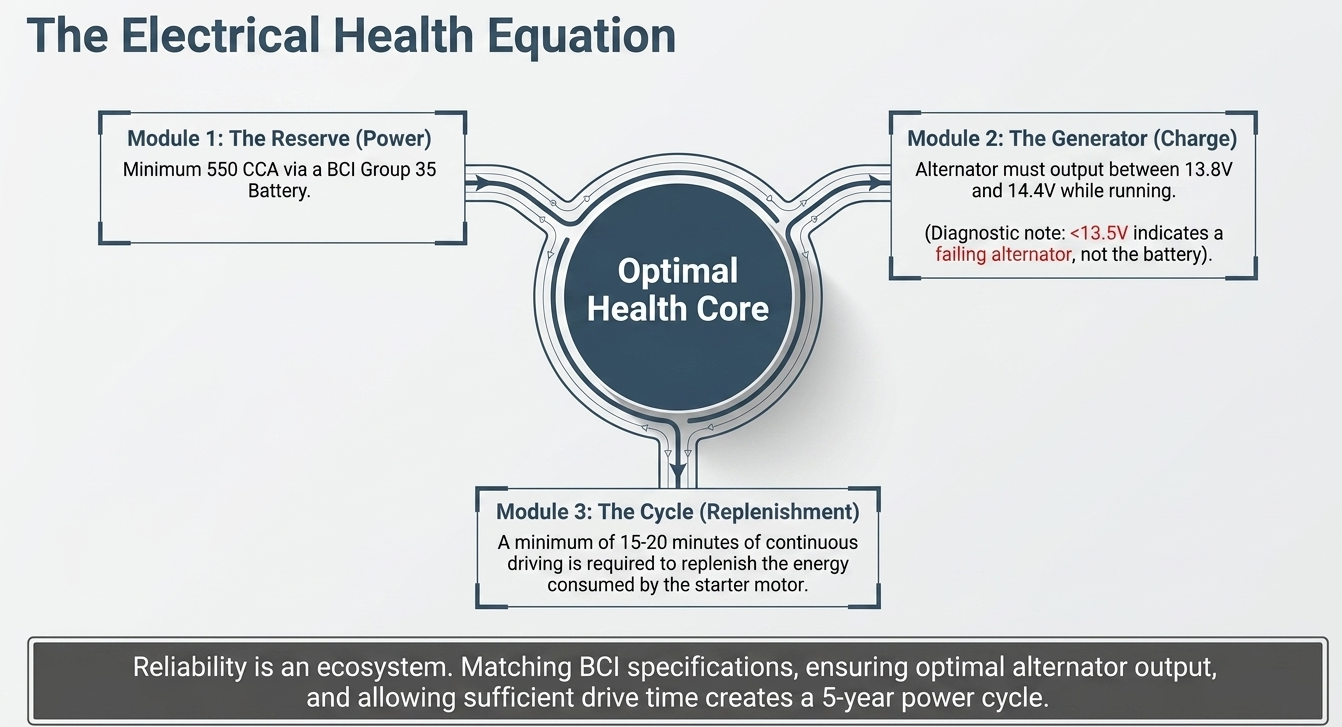
- Cold Cranking Amps (CCA): For an Altima, you should aim for 550 to 650 CCA. A higher CCA rating is essential if you live in regions where temperatures frequently drop below freezing, as it provides the necessary amperage to turn over the engine with thickened oil.
- Terminal Polarity: Group 35 features a “Positive Left” orientation. Installing a battery with the wrong polarity can lead to an instant “fusible link” failure, which is a costly repair in Nissan vehicles.
Identifying Early Signs of Battery Degradation
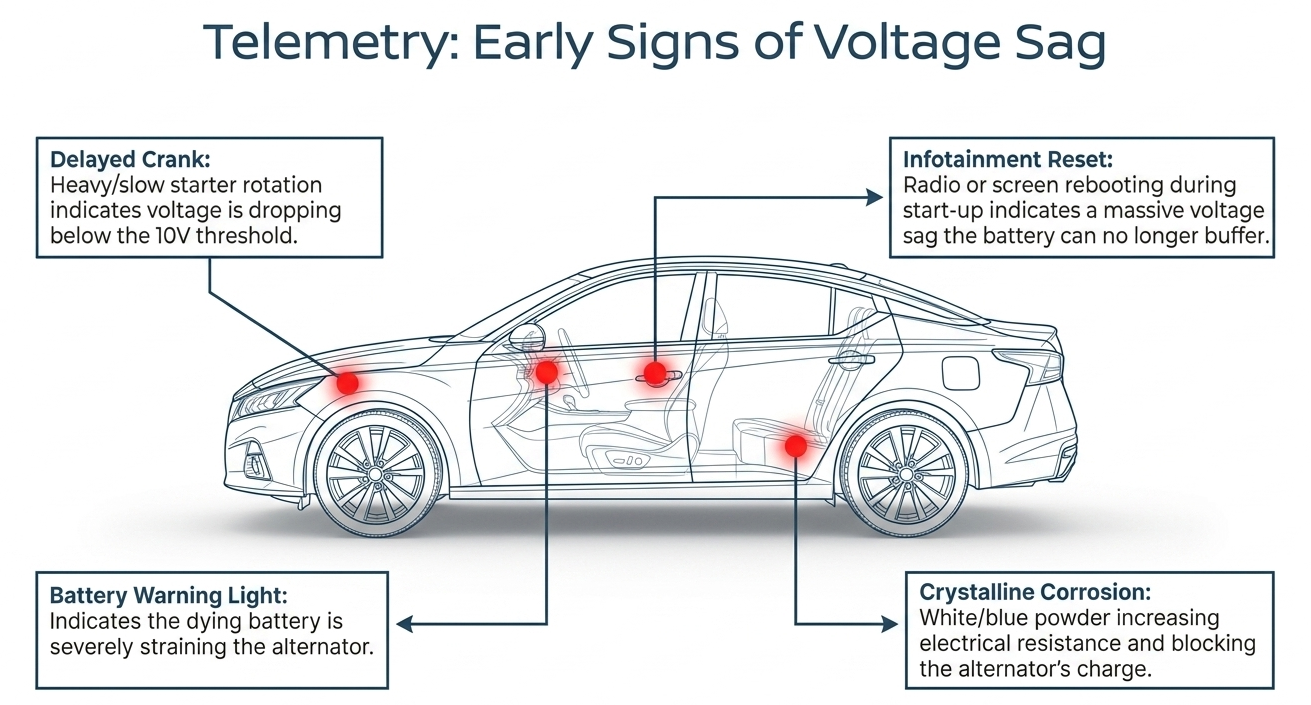
Nissan’s electrical systems are quite communicative, but you have to know what to look for. Modern Altimas utilize sensitive electronics that will often malfunction before the battery completely dies. Being proactive about these symptoms can save you from a “no-start” situation at the most inconvenient time:
- Delayed Engine Crank: If the starter motor sounds like it’s struggling (a “heavy” or slow rotation), the battery’s voltage is likely dropping below the 10V threshold during cranking.
- Infotainment Resetting: If your radio or center screen reboots specifically during the engine start process, it indicates a significant voltage sag that the battery can no longer buffer.
- Corrosion at the Positive Post: Nissan terminals are prone to buildup. White or blue crystalline powder on the posts increases resistance, preventing the alternator from fully charging the battery.
- The Battery Warning Light: If this stays illuminated on your dash, it usually indicates an alternator issue, but it often happens because a dying battery has put too much strain on the charging system.
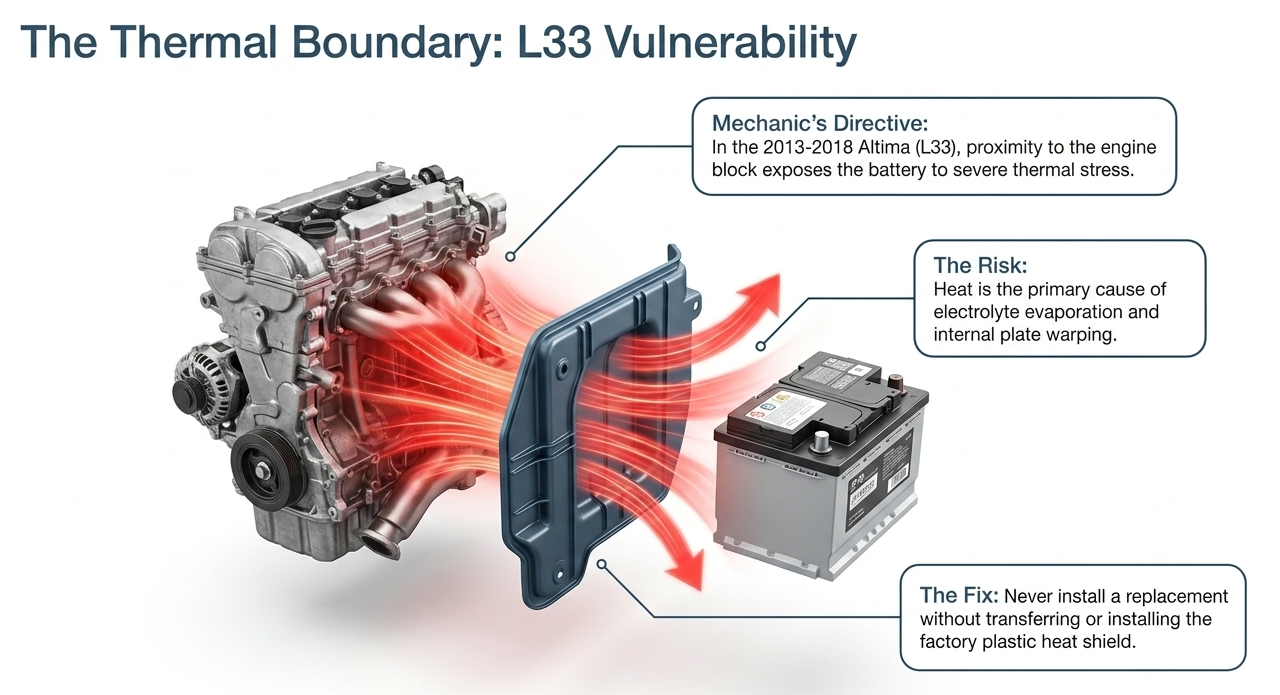
Mechanic’s Note: In the 2013-2018 Altima (L33), the battery is positioned in a way that it can be affected by engine heat. If your battery doesn’t have its factory plastic heat shield, it is highly recommended to install one, as heat is the primary cause of electrolyte evaporation and internal plate warping.
Essential Maintenance for Nissan Battery Longevity
To get the full five-year lifespan out of your Altima’s battery, regular maintenance is required. This is especially true for Nissan owners who drive short distances, as the alternator needs at least 15-20 minutes of continuous driving to replenish the energy used during the initial start-up:
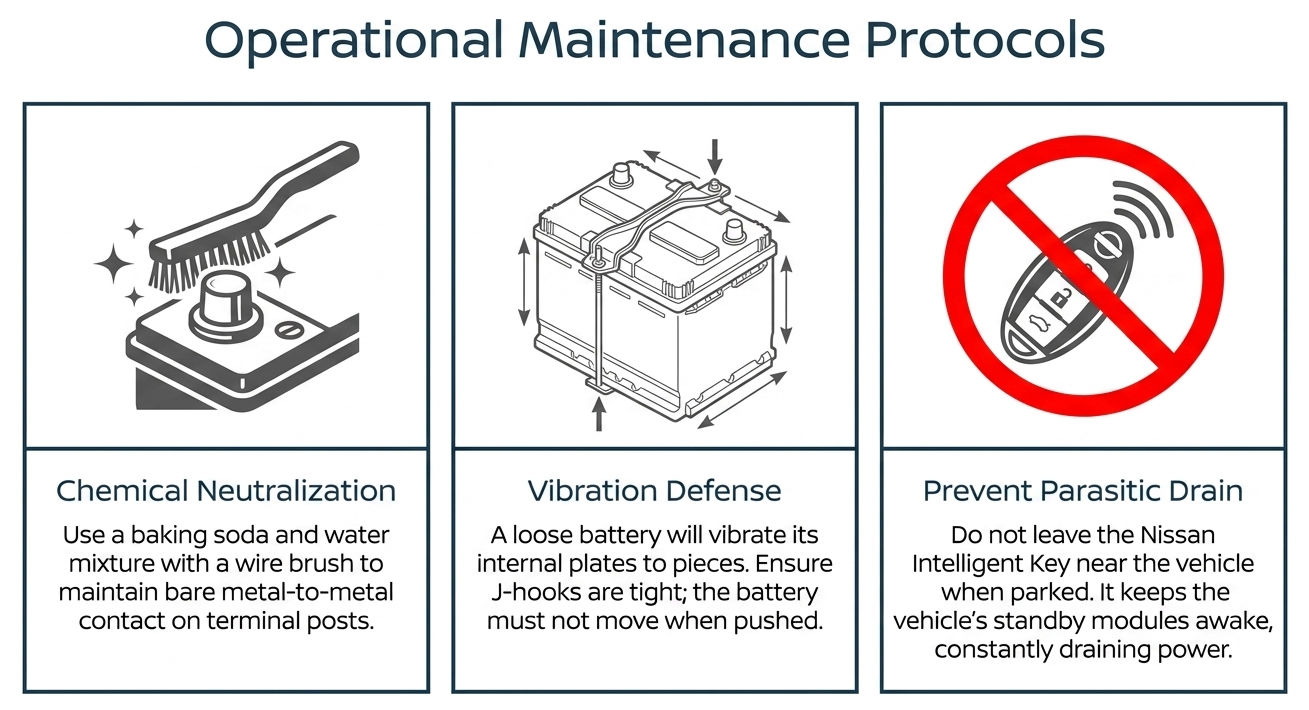
- Clean Terminal Posts: Use a wire brush and a mixture of baking soda and water to neutralize acid. This ensures a clean metal-to-metal connection for maximum current flow.
- Check the Tie-Down Bracket: The Altima’s engine bay can be subject to significant vibration. A loose battery will literally vibrate its internal plates to pieces. Ensure the J-hooks are tight and the battery doesn’t move when pushed.
- Avoid Parasitic Drain: Modern Altimas with keyless entry (Nissan Intelligent Key) stay in a “standby” mode. Avoid leaving the key fob near the car when parked in a garage, as this can keep the car’s modules awake and drain the battery.
Professional Steps for Altima Battery Replacement
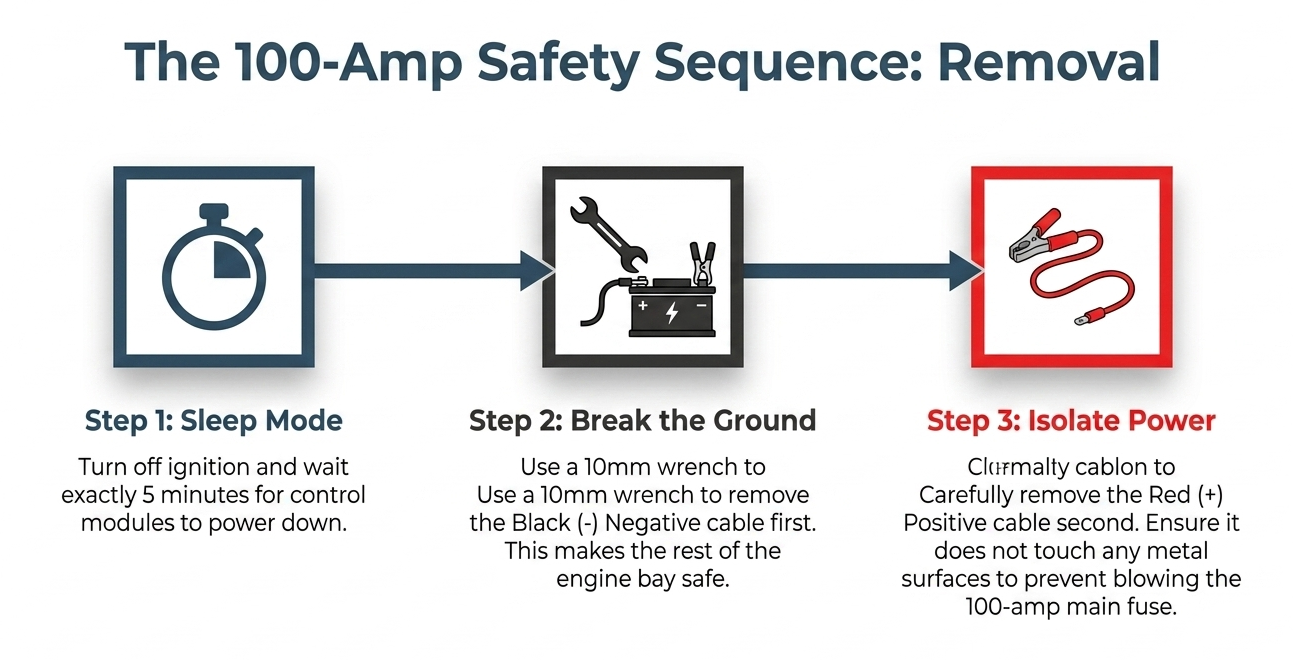
Replacing the battery on an Altima is a straightforward task, but there is a specific sequence required to prevent blowing the 100-amp main fuse or losing your radio presets and throttle body calibration:
- The Safety Rule: Turn off the ignition and let the car sit for 5 minutes. This allows the various control modules to enter “sleep” mode.
- Negative Cable First: Use a 10mm wrench to remove the **Black (-)** cable. This breaks the ground and makes the rest of the job safe.
- Positive Cable Second: Carefully remove the **Red (+)** cable and move it aside so it doesn’t touch any metal surfaces.
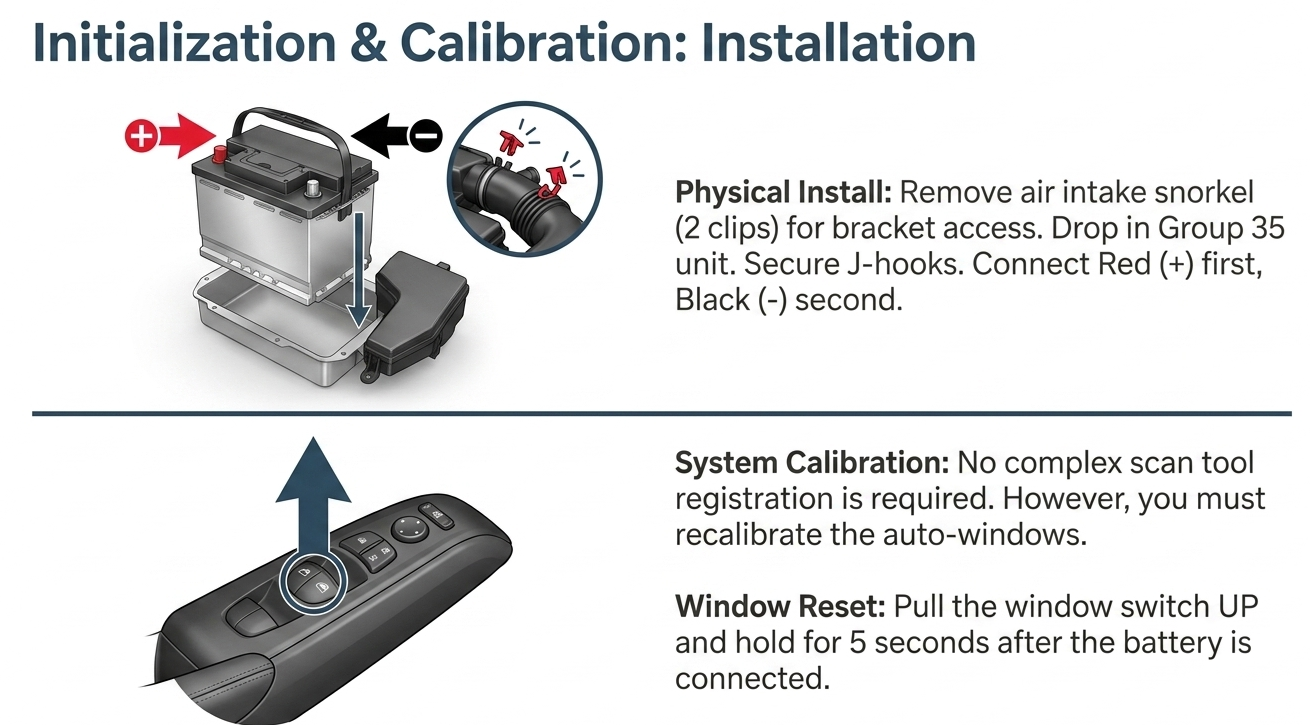
- Clear the Path: Many Altimas have a plastic air intake snorkel over the battery. You may need to remove two plastic clips to pop this off and gain access to the hold-down bracket.
- Installation: Drop in the new Group 35 unit, secure the bracket, and reconnect in reverse order: Positive first, then Negative.
Frequently Asked Questions Regarding Nissan Altima Power Units
What is the typical cost for an Altima battery replacement?
Expect to pay between $130 and $210 for a high-quality AGM or premium flooded battery. While big-box stores may offer cheaper options, a battery with a 36-month free replacement warranty is the standard for professional-grade setups.
Can I use a Group 24F instead of a Group 35?
Only if your battery tray has the extra 1.5 inches of space. While the 24F offers more power, it is physically longer. Most 4-cylinder Altimas have a tray sized specifically for the Group 35, making the 24F a very tight fit that often requires removing the factory heat shield.
Why does my battery keep dying in my Nissan?
If the battery is new, you likely have a parasitic draw or a failing alternator. Nissan Altima alternators should output between 13.8V and 14.4V while the engine is running. If you see less than 13.5V, the alternator is likely the culprit.
Do I need to “register” the new battery in my Altima?
Unlike some European brands, the Nissan Altima does not require a complex battery registration through a scan tool. However, you may need to reset your “Auto” window function by holding the window switch up for 5 seconds after the battery is connected.
Final Recommendations for a Reliable Start
The Nissan Altima depends on the BCI Group 35 battery to maintain its reliable reputation. By choosing a unit with at least 550 CCA and ensuring the terminals remain clean and the tie-down bracket is secure, you can avoid the common electrical pitfalls associated with this model. Whether you opt for a standard flooded battery or an upgraded AGM, matching the BCI group size and maintaining proper cable tension are the keys to a professional-grade installation that will last for years.

Eric Strong works in the automotive repair industry more than 20 years. His work included repairing electrical systems in various vehicle systems. A hybrid electric car battery replacement experience expanded his understanding of automotive battery technology.
Page Contents


