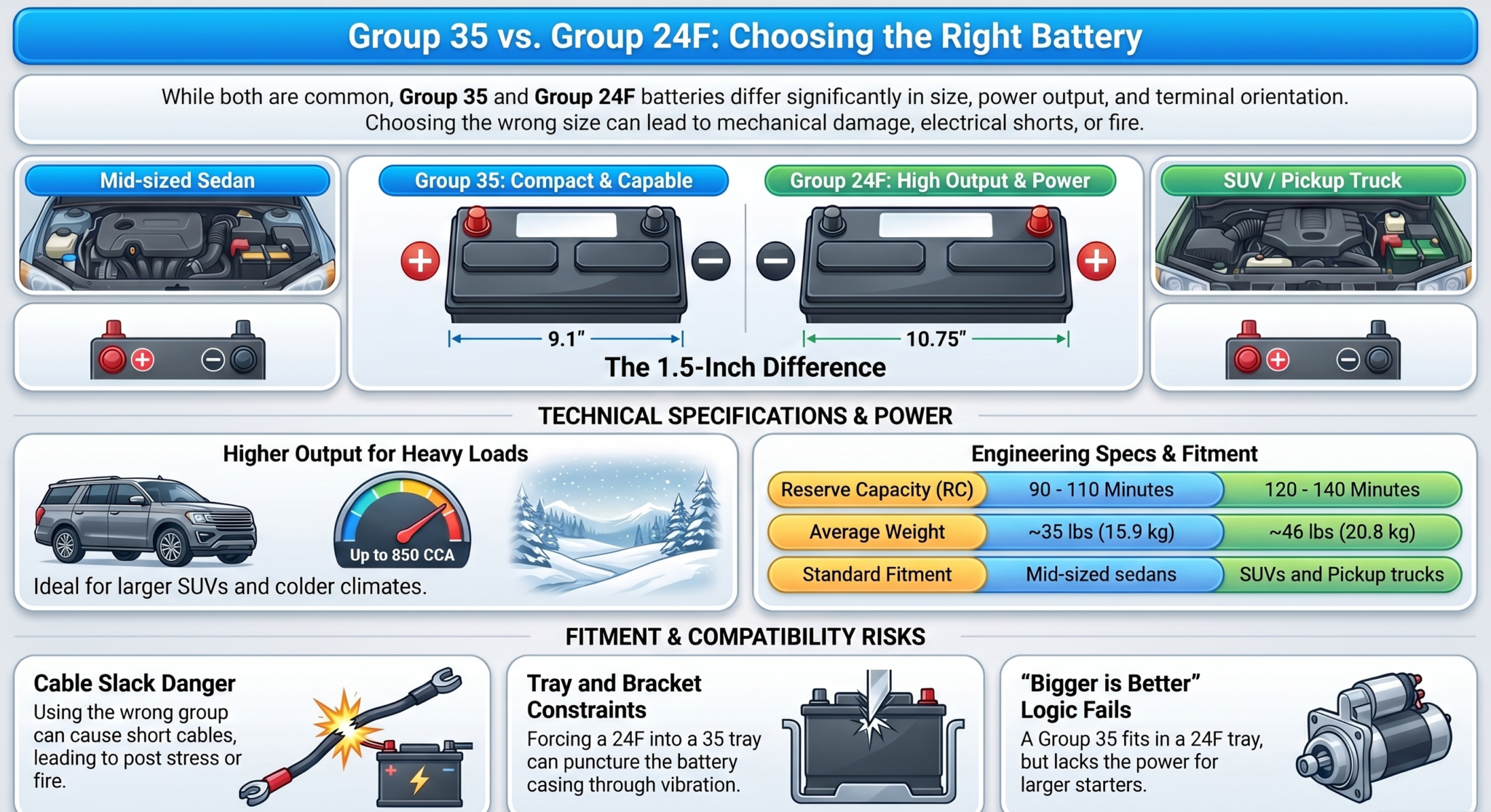
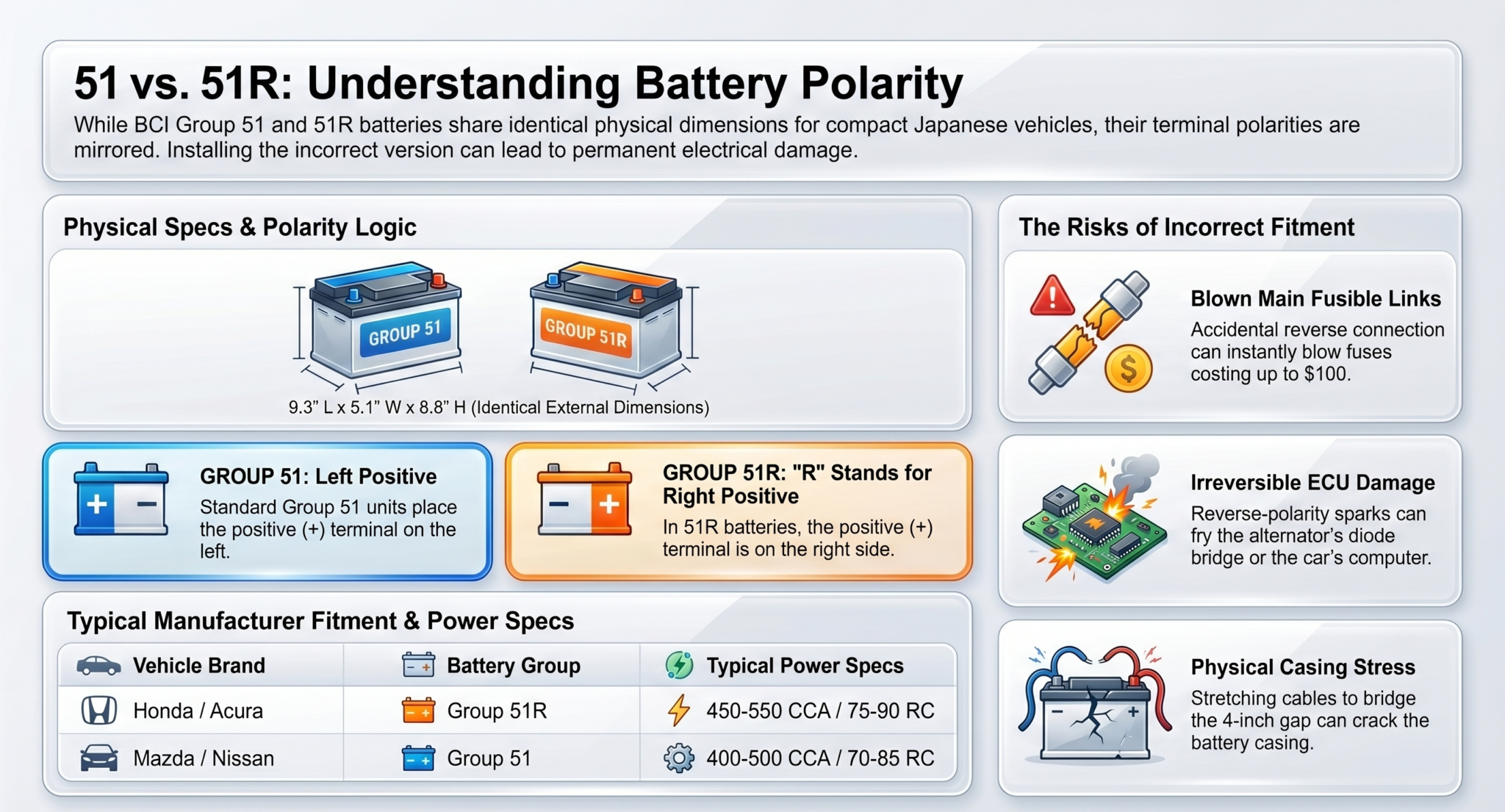
When you need a new battery for your vehicle, the choices can be confusing—especially when the model numbers are so similar. For owners of Japanese brands like Toyota, Lexus, Honda, and Nissan, the Group 24 vs 24F battery debate is more than just a matter of size; it is a matter of electrical safety. While these units share nearly identical dimensions, the terminal layout is mirrored, and in a modern engine bay with zero cable slack, choosing the wrong one can lead to expensive repairs and blown fuses.
I’ve spent over 20 years as a battery technician, and I’ve seen many drivers make costly mistakes just because they didn’t notice the “F” suffix. If you want your car to start every time and keep your sensitive Engine Control Unit (ECU) safe, it pays to understand these technical nuances before you head to the parts store.
What Are Group 24 and Group 24F Batteries?
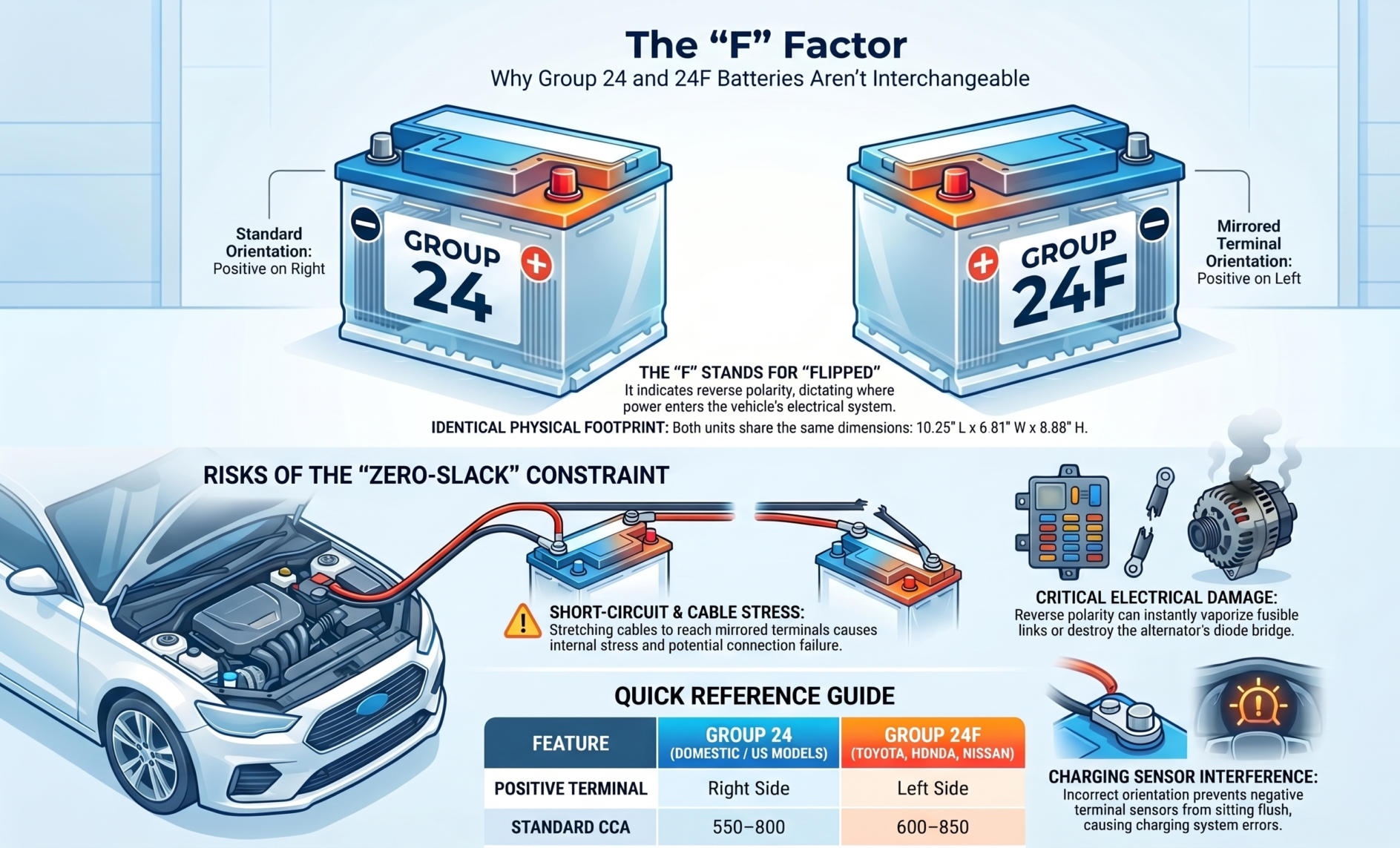
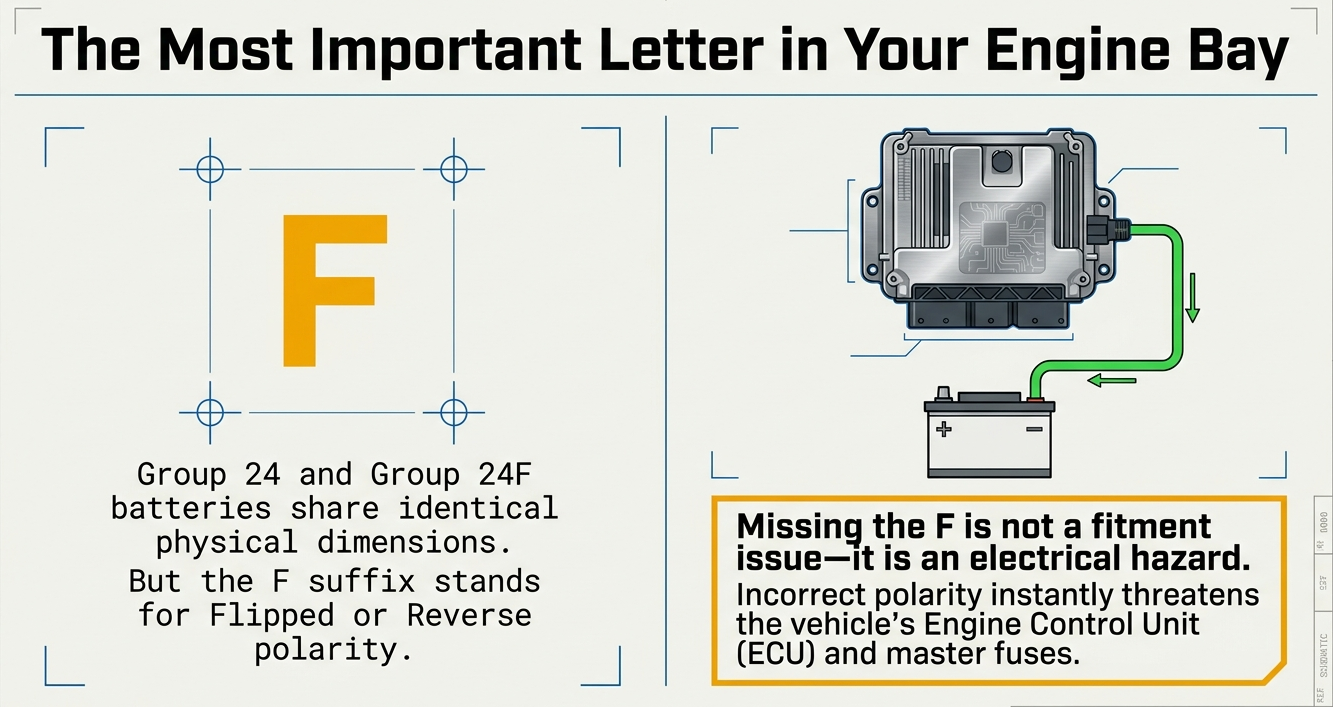
Both Group 24 and Group 24F fall under the Battery Council International (BCI) classification, meaning they are designed to fit mid-size to large sedans and SUVs. However, the “F” in 24F is the most important character on the label. It stands for “Flipped” or “Reverse” polarity, which dictates where the power enters your vehicle’s electrical system.
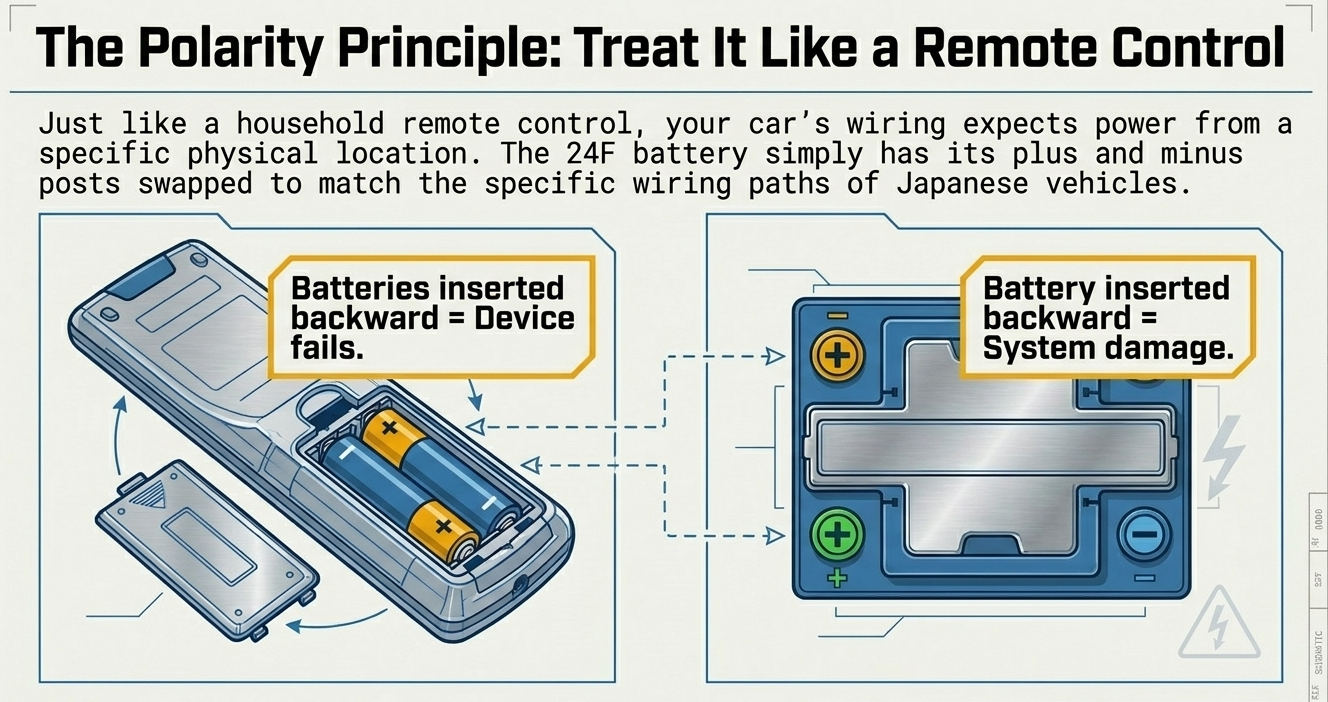
Explaining the “F” Factor to a Child:
Imagine your battery is like a remote control. If you put the batteries in the wrong way, the remote won’t work and might even break. The 24F battery has its “plus” and “minus” buttons swapped compared to a regular 24, so it only fits cars where the wires are reached from a specific side.
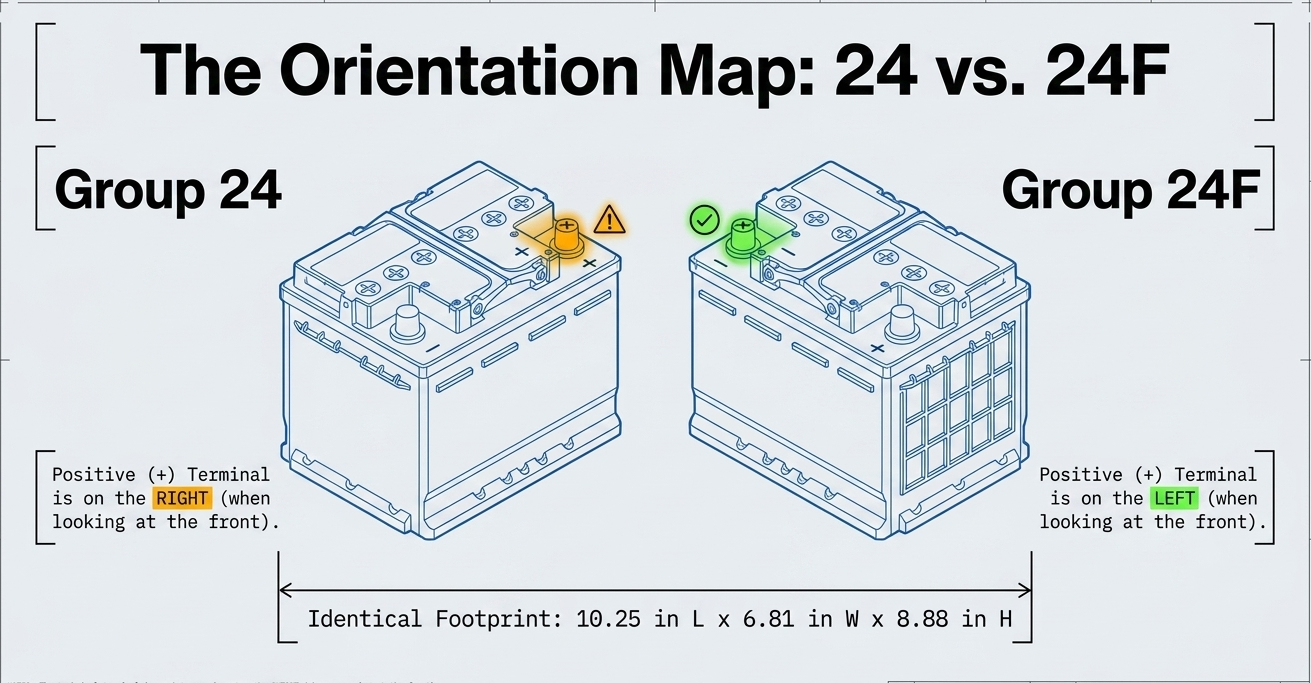
- Dimensions: Both are approximately 10.25″ L x 6.81″ W x 8.88″ H.
- Group 24 Orientation: Positive (+) terminal is on the right (when looking at the front).
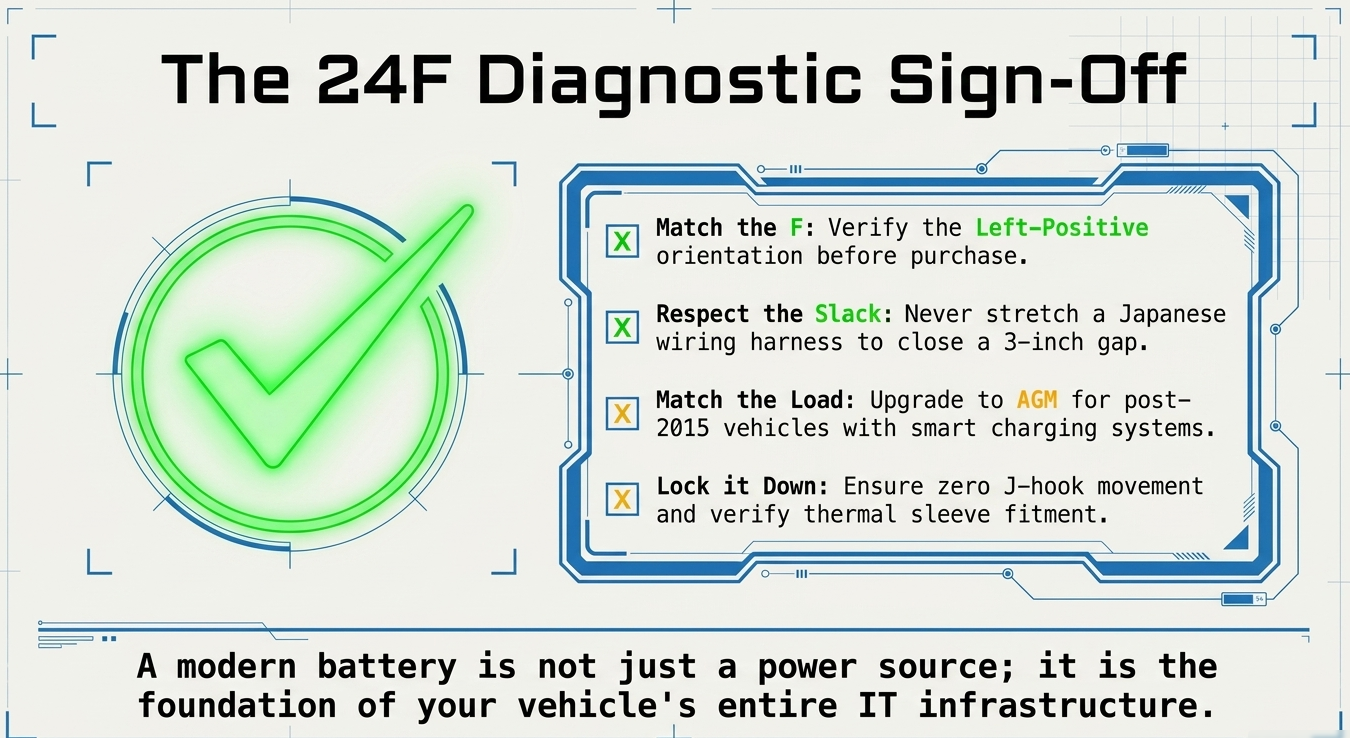
- Group 24F Orientation: Positive (+) terminal is on the left (when looking at the front).
The “Zero-Slack” Constraint in Japanese Engineering
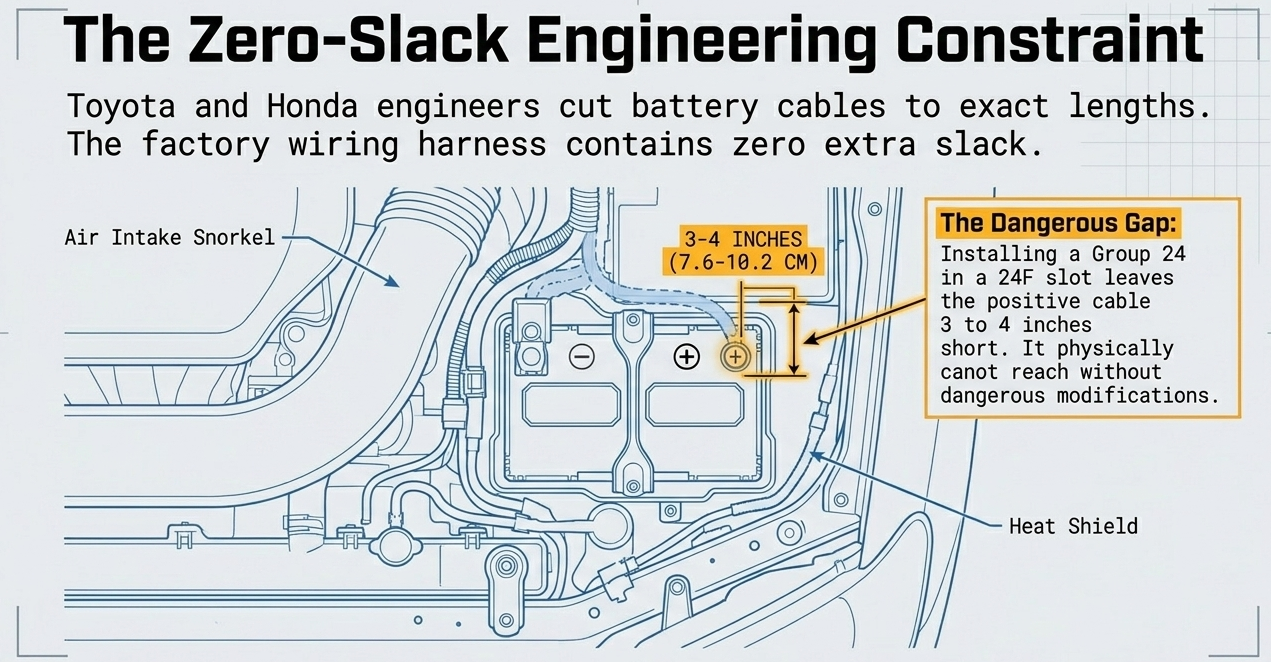
The biggest mistake I see is drivers swapping these groups without checking the cable reach. Modern Toyota and Honda engine bays are packed with air intake snorkels and heat shields, leaving literally zero extra length in the factory wiring harness. This creates a set of technical risks that most beginners miss:
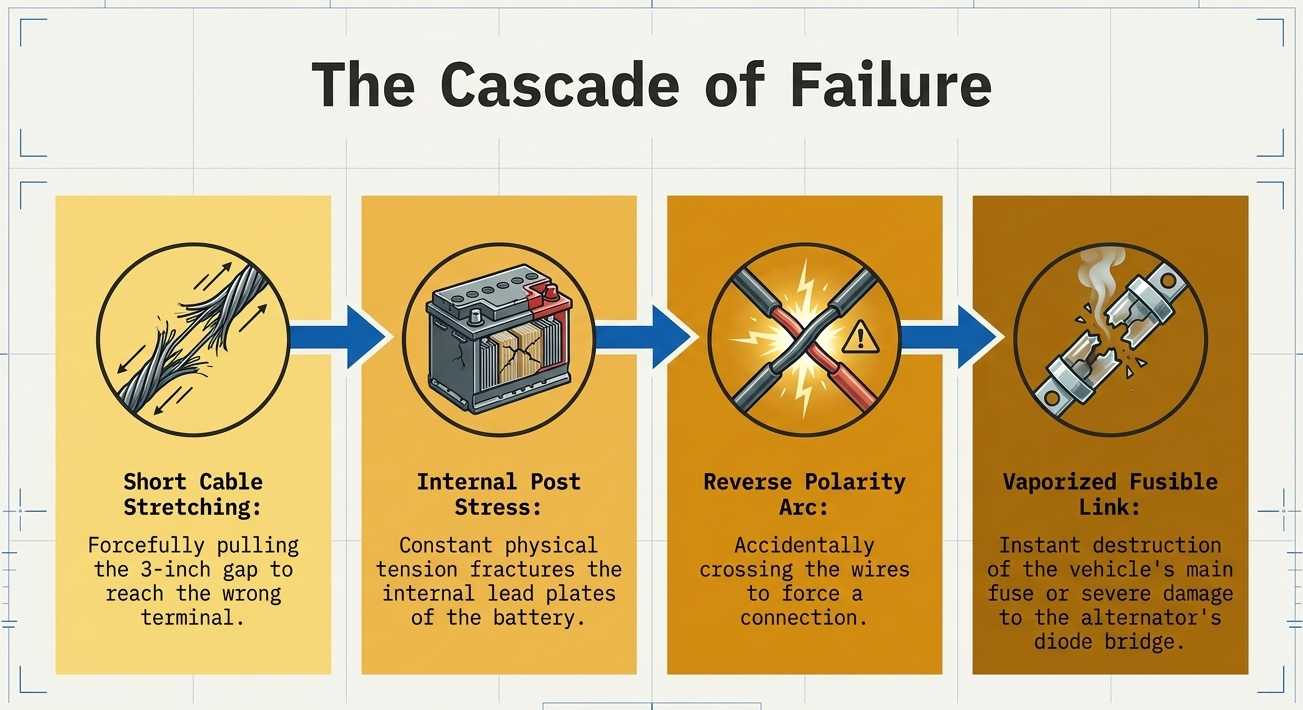
- The Dangerous Gap: If you install a Group 24 where a 24F should be, the positive cable will be 3-4 inches short. Stretching it causes internal stress on the lead posts.
- Reverse Polarity: Connecting cables to the wrong posts can instantly vaporize the “fusible link” or damage the alternator’s diode bridge.
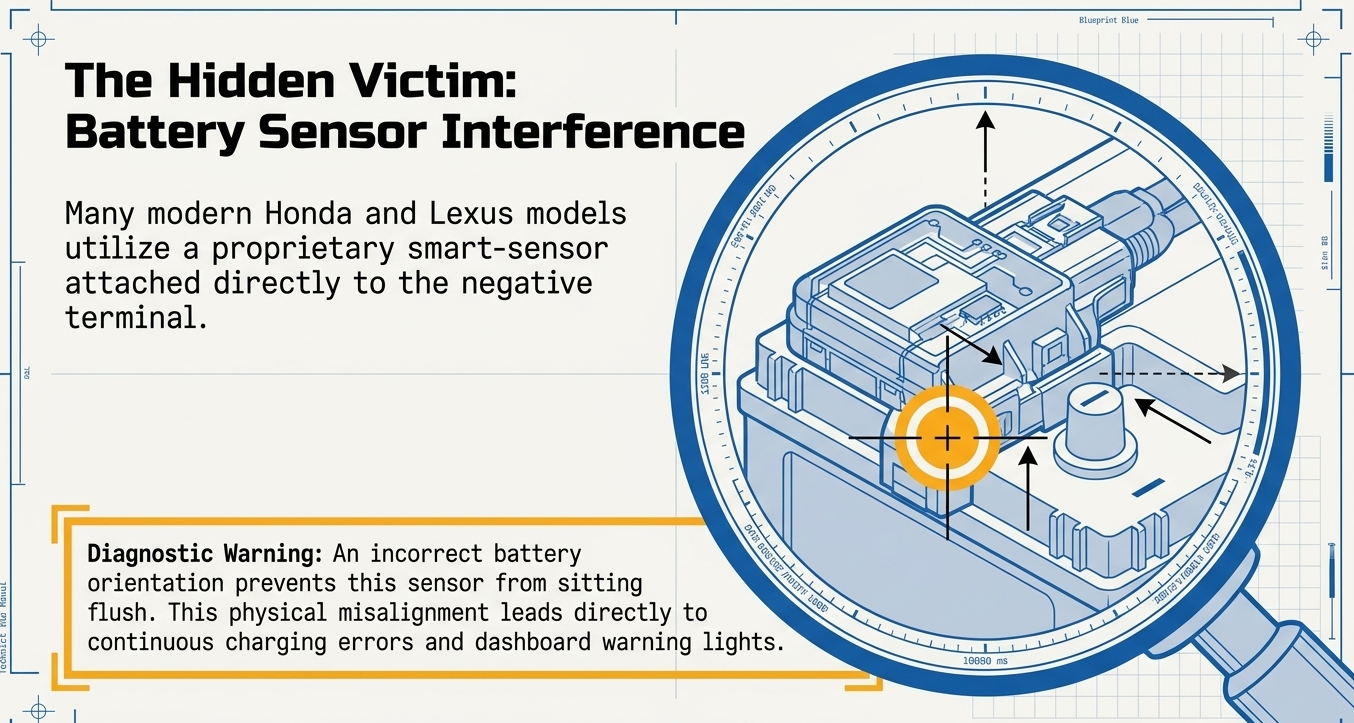
- Battery Sensor Interference: Many Lexus and Honda models have a sensor on the negative terminal. A wrong battery orientation prevents this sensor from sitting flush, leading to charging errors.
24 Essential Technical Points for Replacement
As a senior technician, I use a specific rubric when performing a swap. These points ensure that the new unit survives the high-heat and high-vibration environment of a modern engine bay.
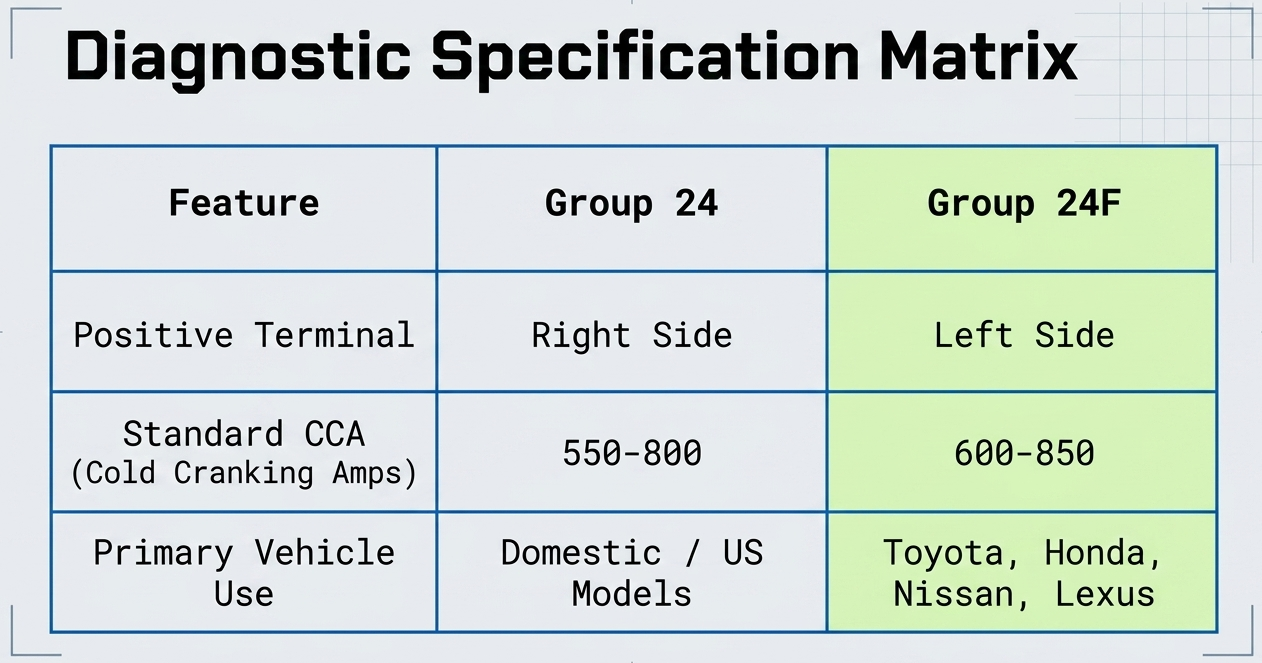
| Feature | Group 24 | Group 24F |
|---|---|---|
| Positive Terminal | Right Side | Left Side |
| Standard CCA | 550–800 | 600–850 |
| Primary Use | Domestic/US Models | Toyota, Honda, Nissan |
Beyond the table, always verify these three “hidden” factors:
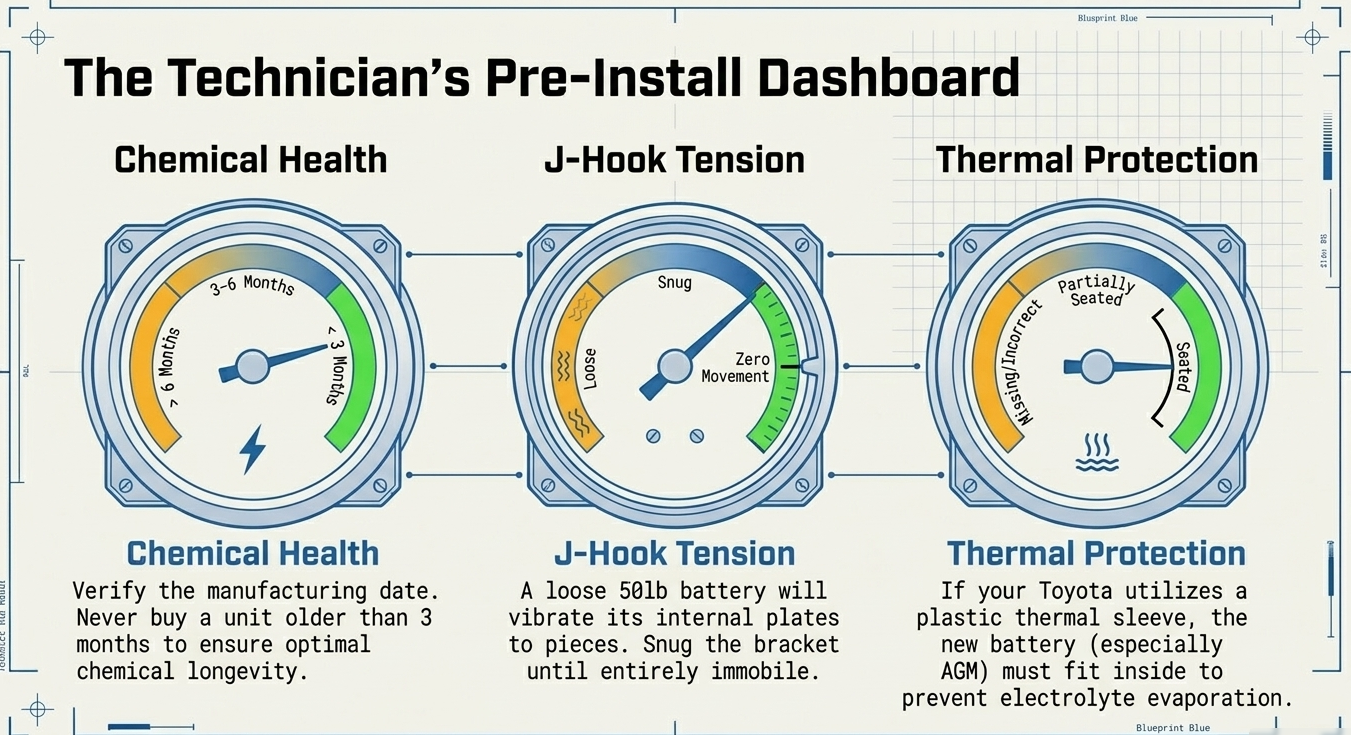
- Manufacturing Date: Never buy a unit older than 3 months for optimal chemical health.
- J-Hook Tension: A loose 50lb battery will vibrate its internal plates to pieces. Snug the bracket until there is zero movement.
- Heat Shield Compatibility: If your Toyota has a plastic thermal sleeve, ensure the new battery (especially AGM) fits inside it to prevent electrolyte evaporation.
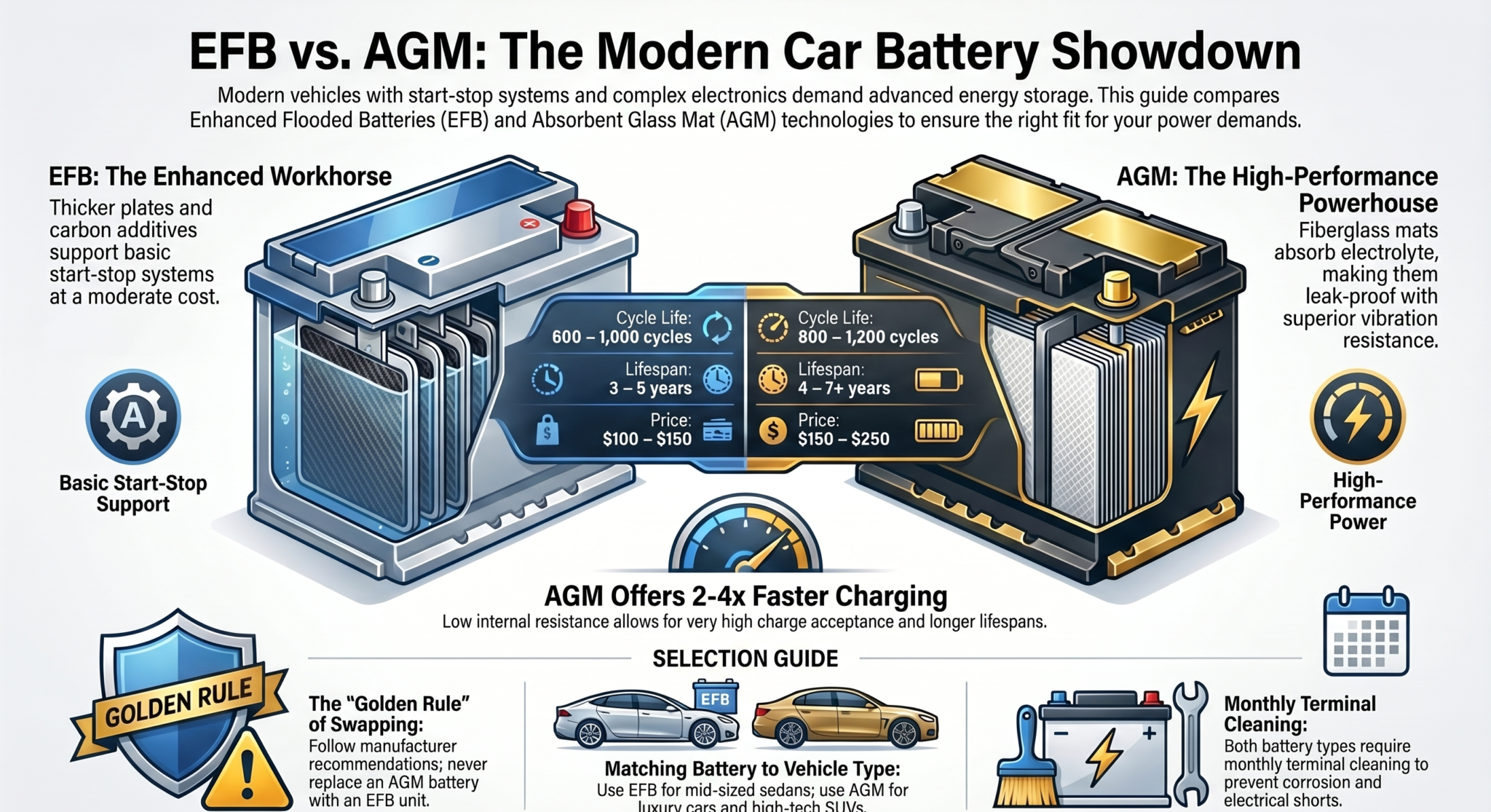
AGM vs. Flooded: Which Architecture for 2026?
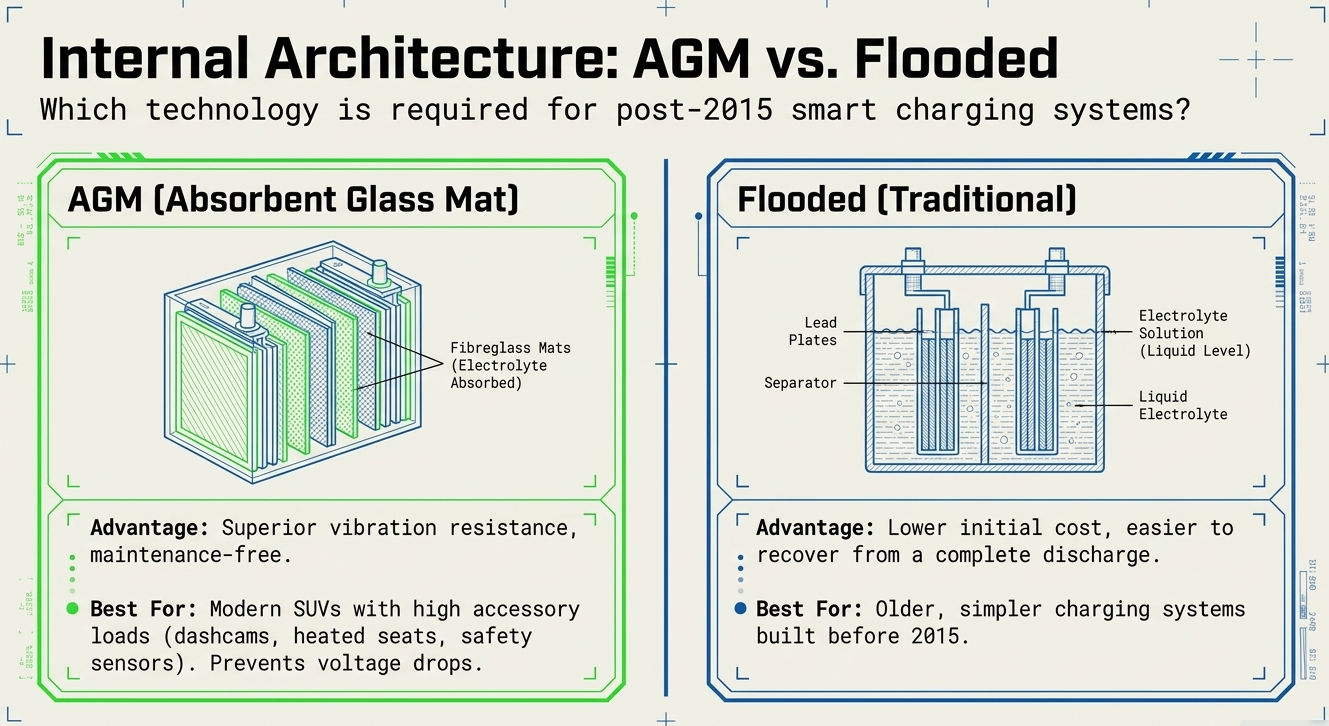
Choosing between an Absorbent Glass Mat (AGM) and a traditional flooded battery depends on your vehicle’s electronic load. If your car was built after 2015, it likely features “smart charging” that works more efficiently with AGM technology.
- AGM Advantages: Maintenance-free, superior vibration resistance, and handles high accessory loads (dashcams, GPS, heated seats) without dropping voltage.
- Flooded Advantages: Lower initial cost and easier to recover from a complete discharge if you have an older, simpler charging system.
Frequently Asked Questions
Why does the “F” matter so much for my Toyota?
Toyota cuts battery cables to exact lengths. Without the “F” (flipped) orientation, the positive cable simply won’t reach the post, requiring dangerous modifications to the wiring.
Can I use a Group 24 if my cables are long enough?
Technically yes, but it’s rare in Japanese cars. If you have enough slack, you must be extremely careful to mark your cables, as the reversed layout makes it easy to accidentally cross the wires.
Is an AGM battery worth the extra cost?
Yes, especially for modern SUVs. AGM batteries last longer in extreme heat and provide the consistent voltage required for today’s sensitive vehicle computers and safety sensors.

Eric Strong works in the automotive repair industry more than 20 years. His work included repairing electrical systems in various vehicle systems. A hybrid electric car battery replacement experience expanded his understanding of automotive battery technology.
Page Contents