Every off-road adventure starts before you even turn the key. Selecting the right power source can be the difference between a trouble-free overland trip and getting stranded miles from help in a remote canyon. For many Jeep and Toyota owners, the decision often comes down to the Group 34 vs. Group 35 battery debate. While these two groups may look similar in a catalog, their physical dimensions, power density, and terminal orientation have a massive impact on fitment—especially for rigs equipped with winches, refrigerators, and auxiliary lighting.
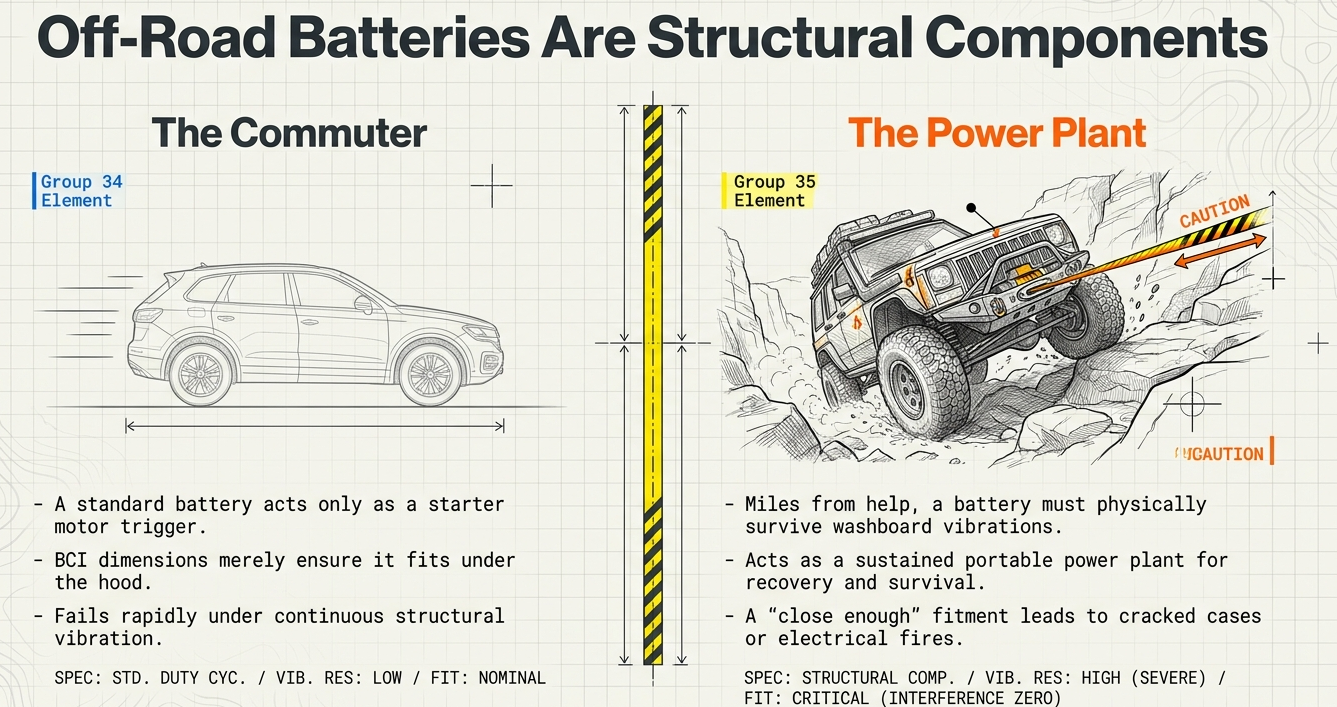
 As a professional automotive engineer and off-road battery specialist with over 20 years of shop experience, I’ve seen how a “close enough” fit can lead to cracked cases or electrical fires on washboard roads. If you want your rig to survive harsh environments, it pays to understand the engineering deltas before you upgrade your tray or cables.
Why Battery Group Size Matters for 4×4 Enthusiasts
In the off-road world, a battery is more than just a starting device; it’s a structural component and a portable power plant. A BCI group size is a set of precise physical standards. When you leave the pavement, these standards determine if your battery will stay secure in its tray or bounce loose, potentially shorting against the hood.
Explaining Battery Groups to a Child:
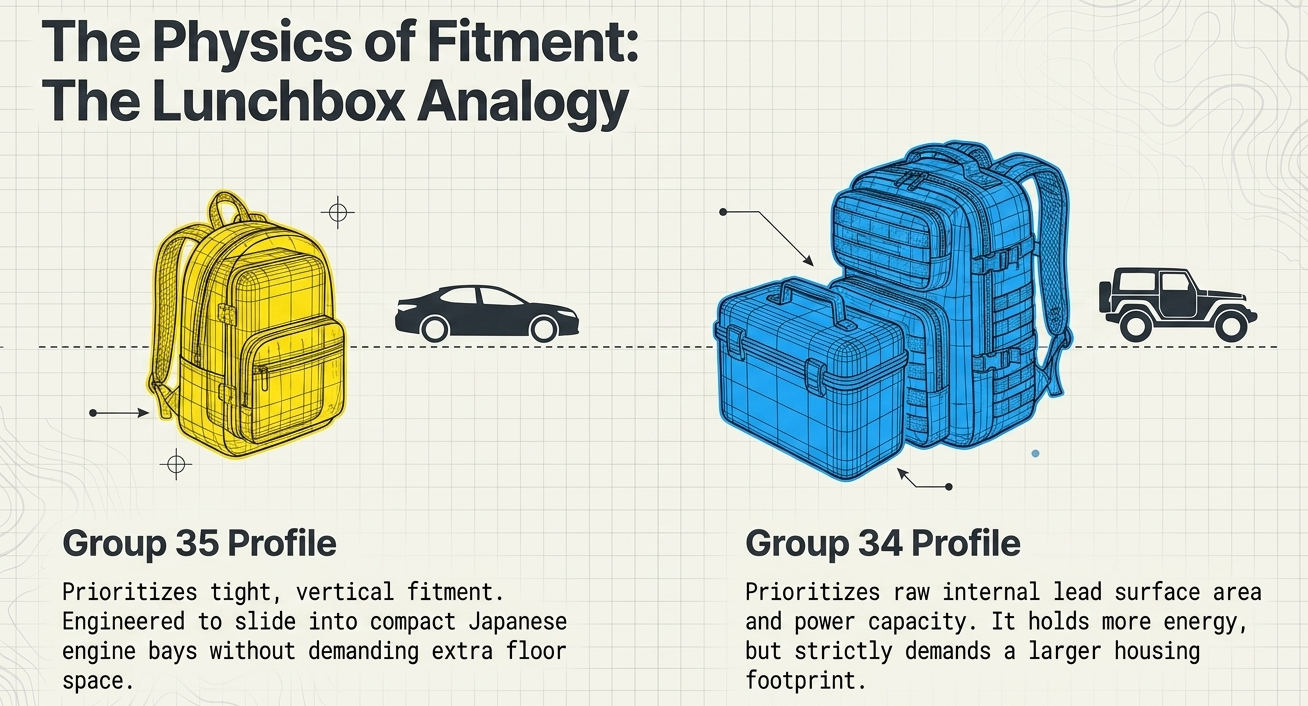
Think of a battery like a lunchbox. A Group 35 is a tall, thin lunchbox that fits perfectly in a small backpack (like a Toyota Camry). A Group 34 is a longer, wider lunchbox that holds more food (power) but needs a bigger backpack (like a Jeep Wrangler). If you try to force the big one into the small bag, it might rip or won’t close.
Dimensional Deltas: The 1.2-Inch Rule
The most obvious difference between these two groups is their external footprint. Understanding these measurements is crucial, especially in modern engine bays where space is at a premium and cables have “zero-slack.”
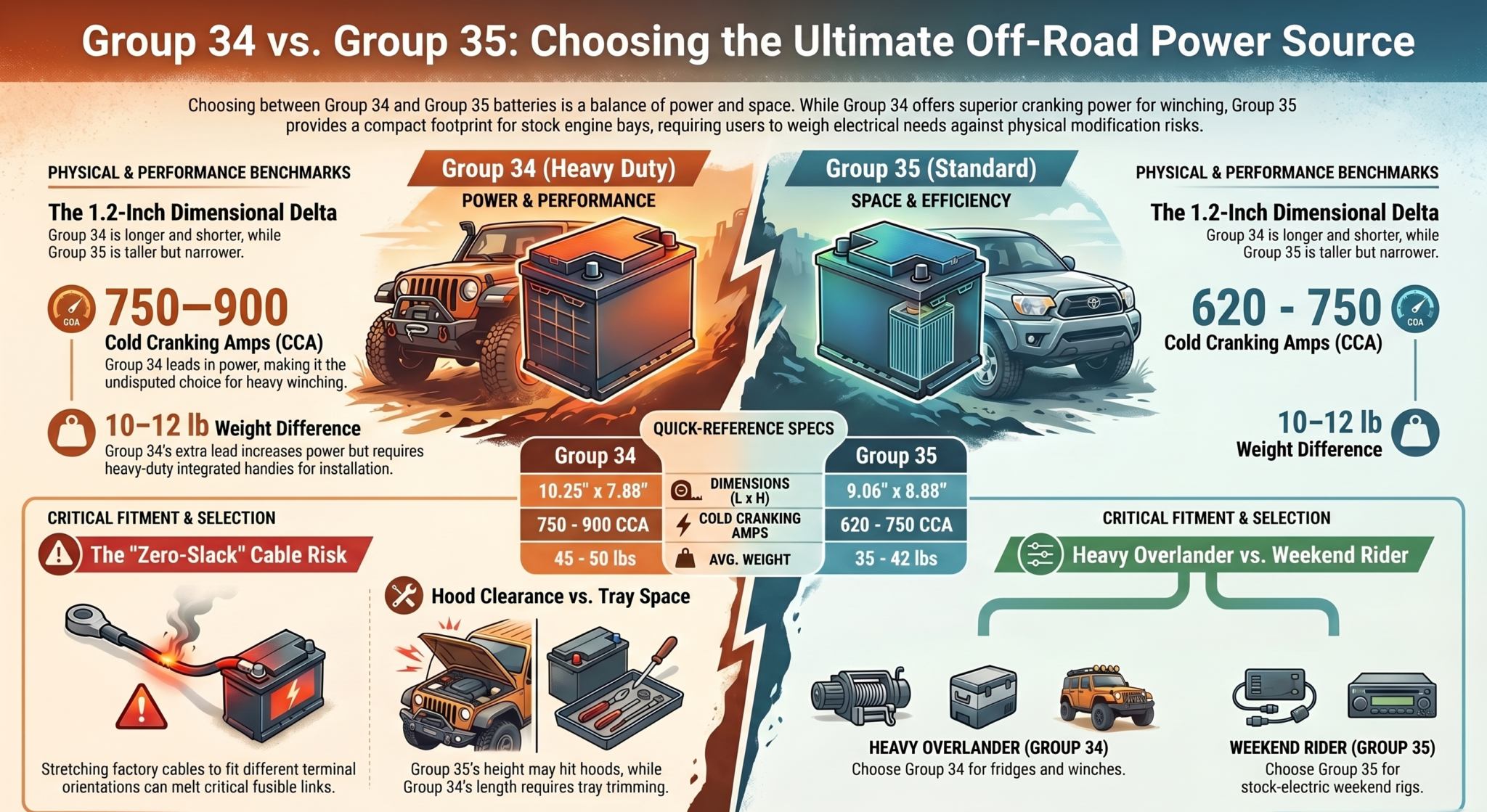
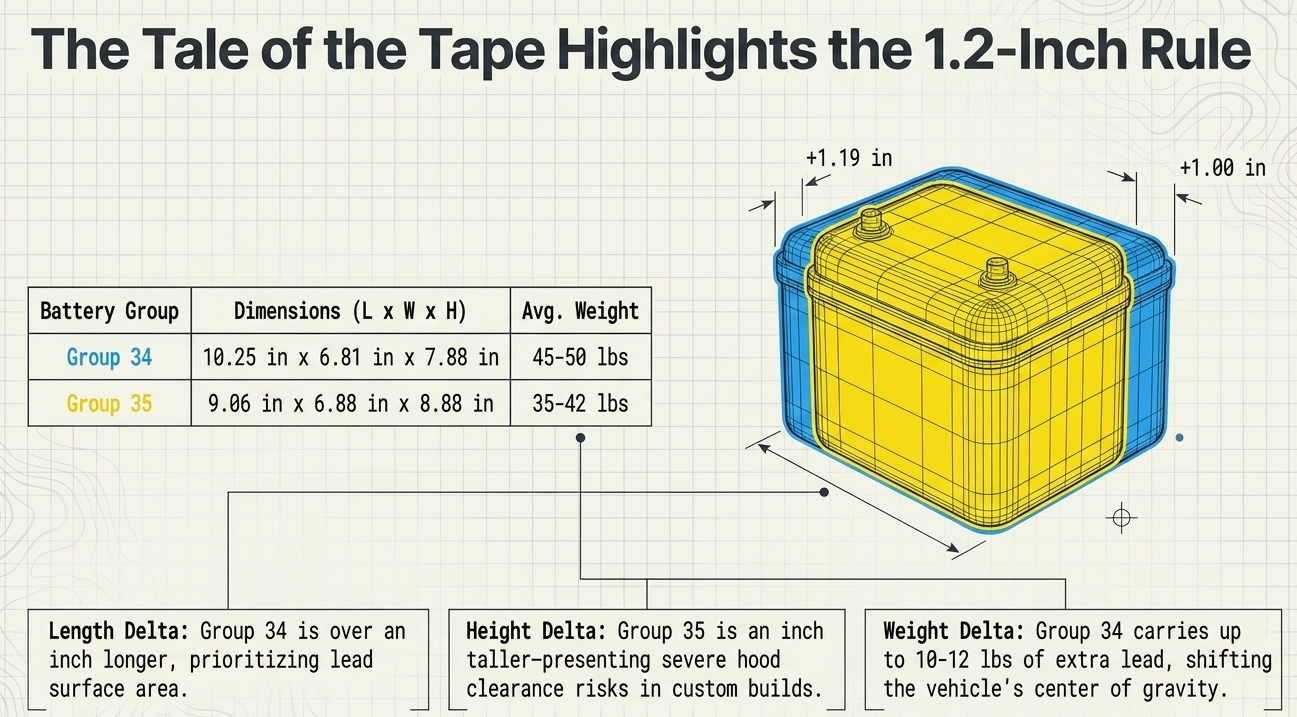
- Group 34: Measuring 10.25″ L x 6.81″ W x 7.88″ H. Its longer chassis allows for more internal lead surface area, translating to higher Cold Cranking Amps (CCA).
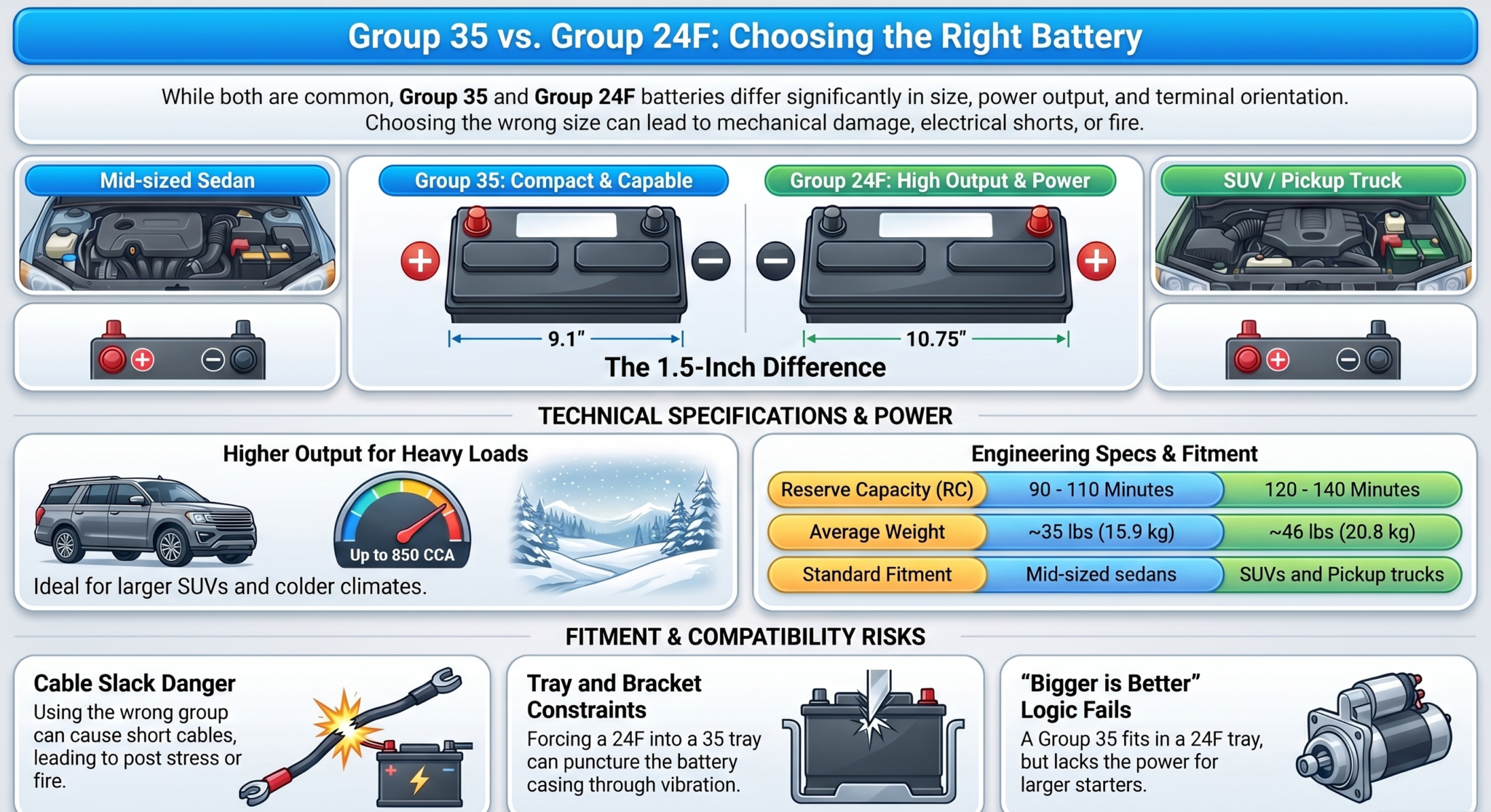
- Group 35: Measuring 9.06″ L x 6.88″ W x 8.88″ H. It is shorter in length but significantly taller, which can cause hood clearance issues in some custom Toyota builds.
| Battery Group | Length | Height | Avg. Weight |
|---|---|---|---|
| Group 34 | 10.25 in | 7.88 in | 45-50 lbs |
| Group 35 | 9.06 in | 8.88 in | 35-42 lbs |
34 Critical Technical Factors for Off-Roaders
When comparing these two for a 4×4 application, I always look at the structural and electrical stamina. Here are the first 10 foundational points we verify in the lab:
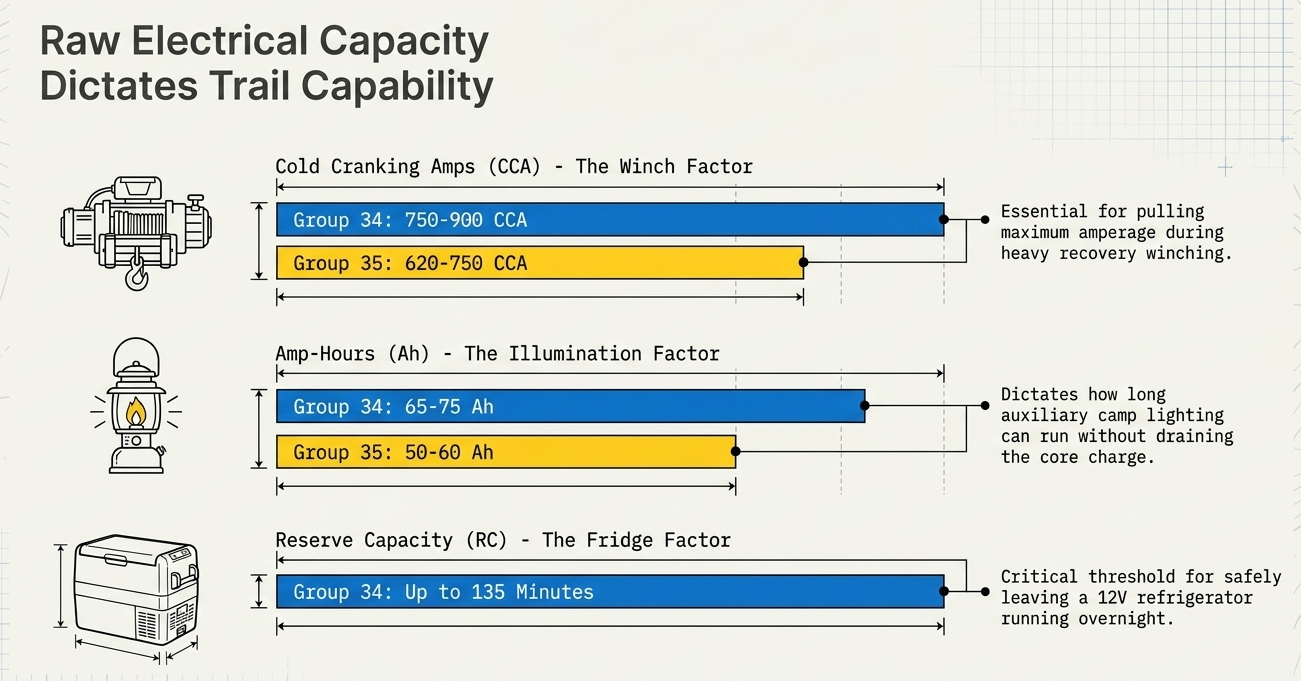
- Cold Cranking Amps (CCA): Group 34 is the undisputed leader (750-900 CCA), which is essential for heavy winching. Group 35 (620-750 CCA) is suitable for moderate loads.
- Reserve Capacity (RC): Group 34 offers up to 135 minutes of reserve—critical if you leave a 12V fridge running overnight.
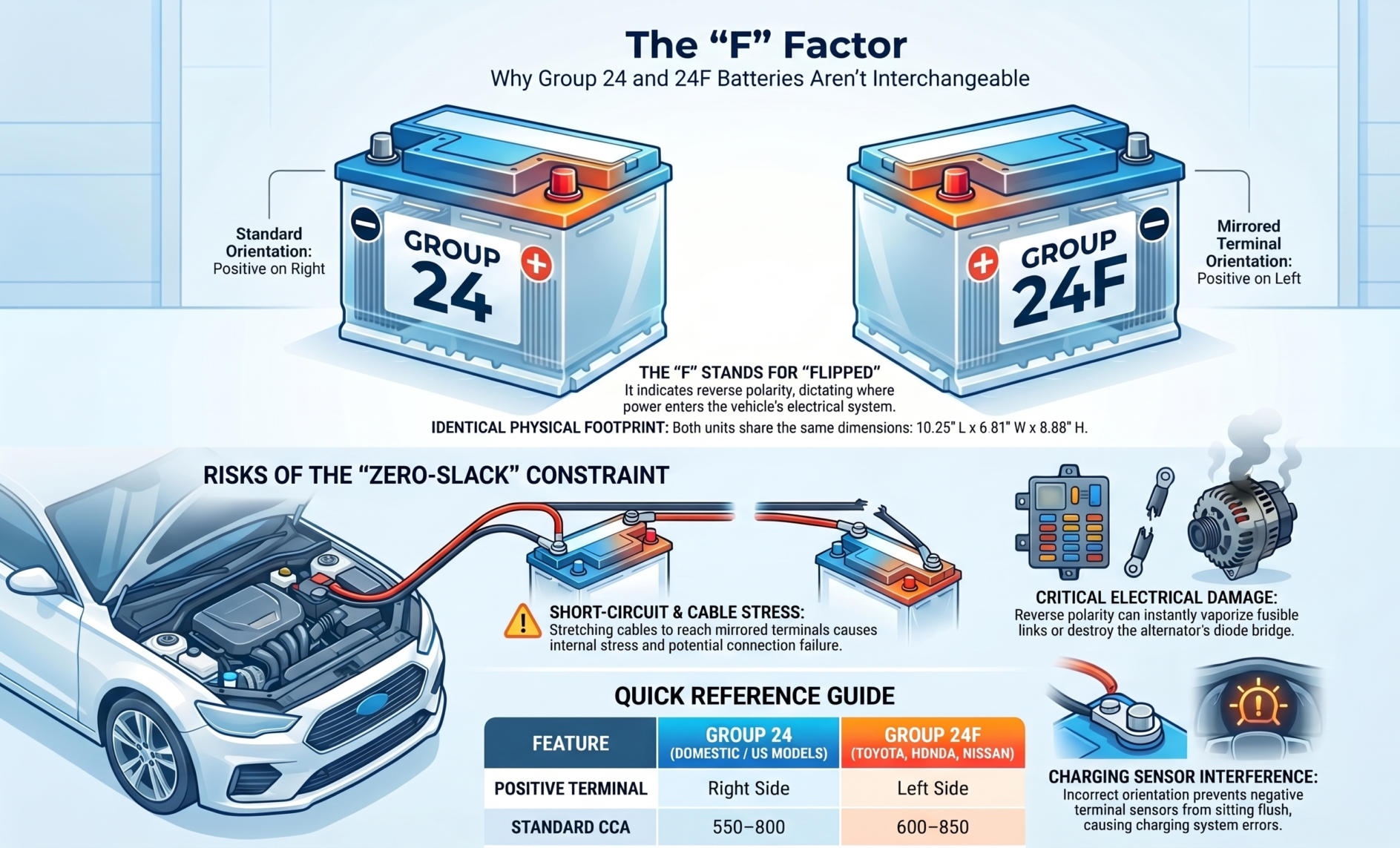
- Terminal Orientation: Always verify post placement. Reversed polarity can instantly fry your Engine Control Unit (ECU).
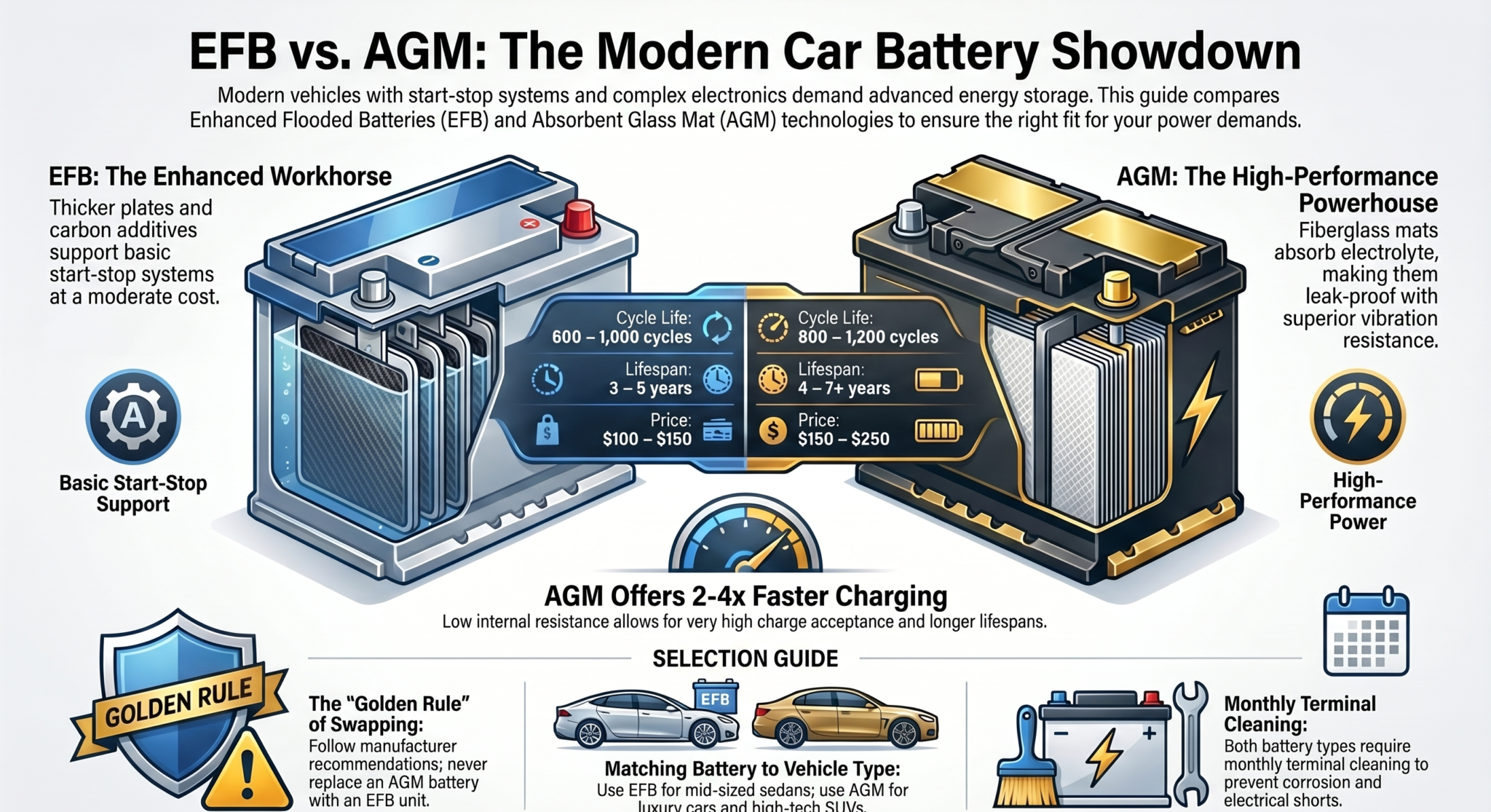
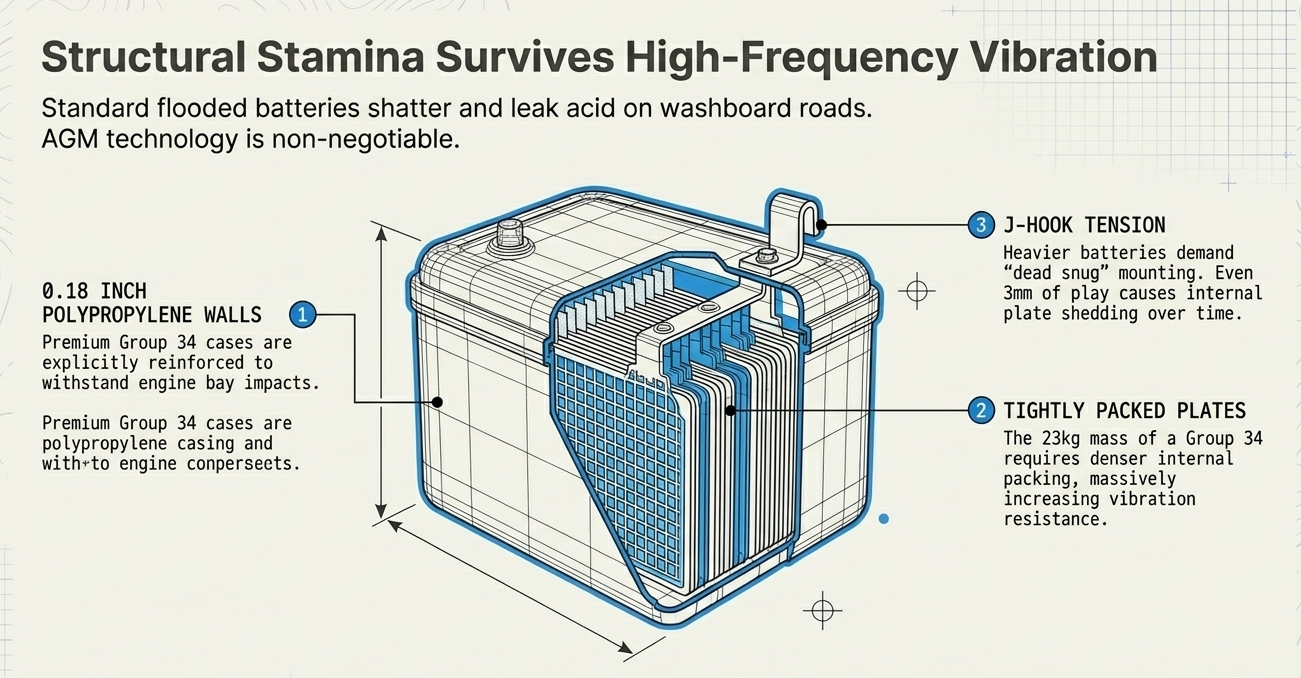
- Vibration Resistance: For washboard roads, AGM technology is mandatory. Group 34 AGM plates are typically packed tighter due to the larger assembly weight.
- Case Wall Thickness: Premium Group 34 batteries often use reinforced polypropylene (0.18″) to withstand impacts in the engine bay.
- J-Hook Tension: Since Group 34 is heavier, the mounting must be “dead snug.” Even 3mm of play will lead to internal plate shedding over time.
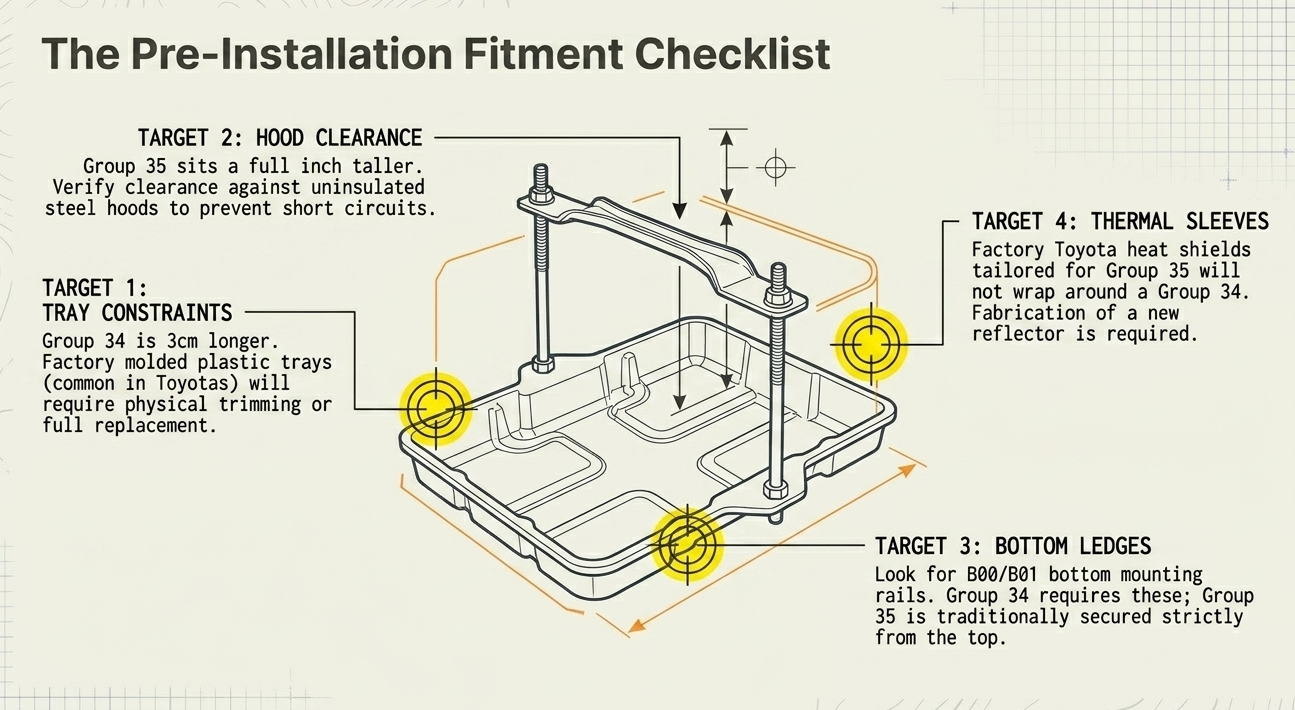
- Hood Clearance: Group 35 is 1 inch taller. Always check if it will contact the hood or custom aftermarket air intakes.
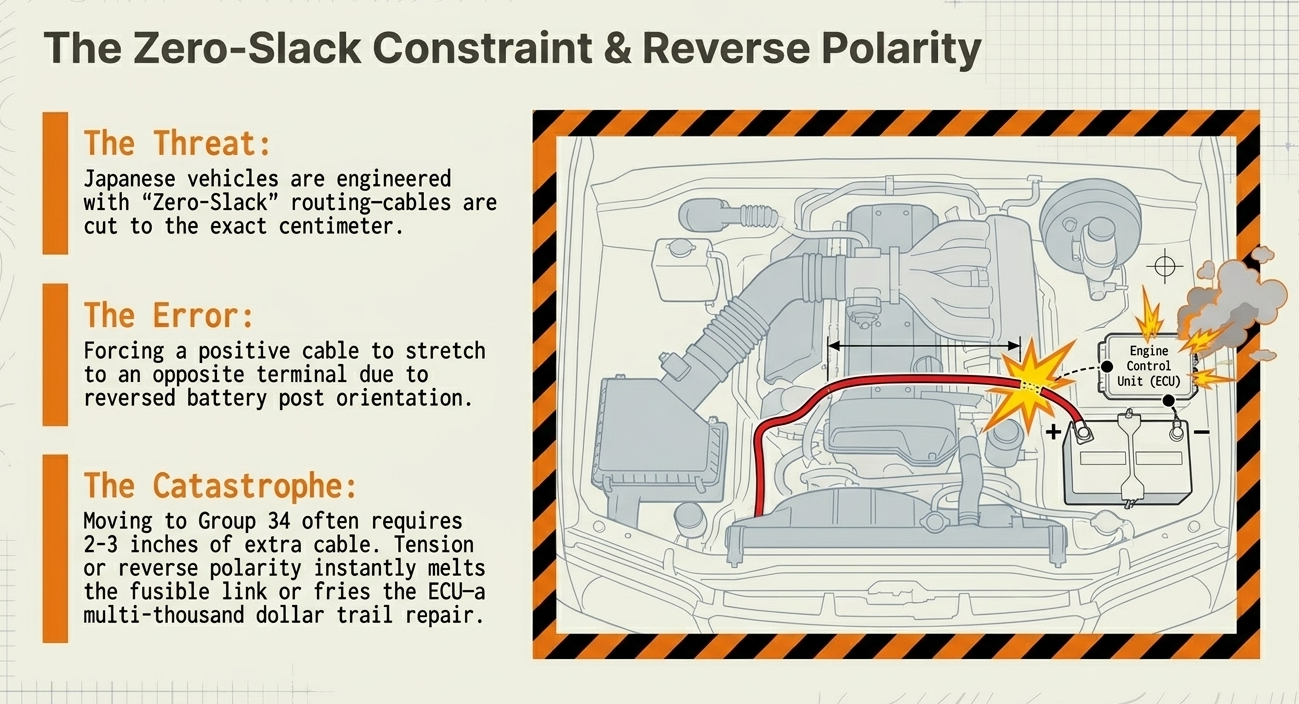
- Cable Reach: Moving to Group 34 often requires 2-3 inches of extra cable length. Do not allow tension (the Zero-Slack constraint).
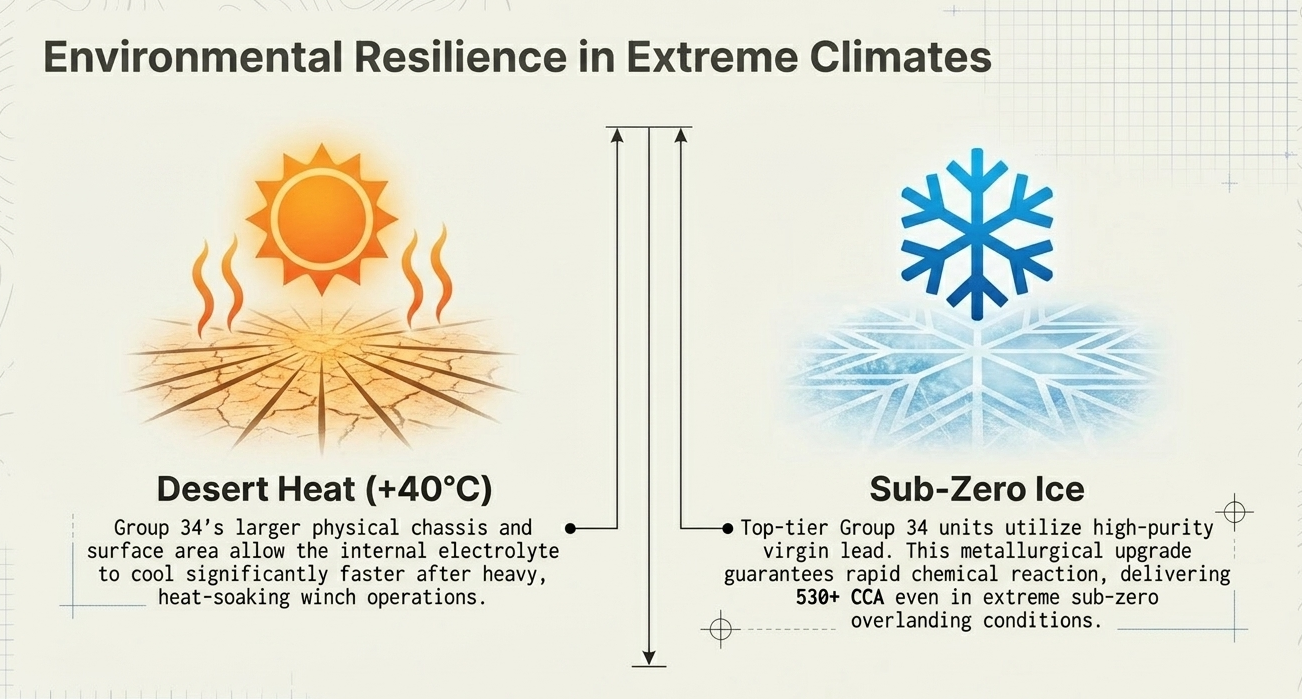
- Heat Dissipation: The larger surface area of Group 34 allows the electrolyte to cool faster after heavy winch use in desert heat.
- Weight Balance: The extra 10-12 lbs of a Group 34 shifts the center of gravity; consider this if mounting in high-clearance battery racks.
Read all 34 technical points…
- Amp-Hours (Ah): Group 34 delivers 65-75 Ah vs. 50-60 Ah for Group 35. This means more stored energy for camp lighting.
- Terminal Type: While most use SAE cones, Group 34 models more frequently feature additional threaded studs for accessories.
- Tray Compatibility: Group 34 is 3cm longer. If the tray is molded plastic (common in Toyotas), it may need trimming or replacement.
- Depth of Discharge: Group 34 plates are thicker, allowing them to handle deep discharge cycles from fridges or inverters more effectively.
- Hot Cranking Performance: In desert environments (+40°C), Group 34 remains more stable when starting a heat-soaked engine.
- Handle Design: Due to the 23kg weight, Group 34 handles must be integrated and heavy-duty for safe installation in tight spots.
- Spill Protection: Both AGM groups are leak-proof, but Group 34 is more frequently certified for mounting at angles up to 45 degrees.
- Overcharge Protection: The higher lead volume in Group 34 makes it less sensitive to brief voltage spikes from high-output alternators.
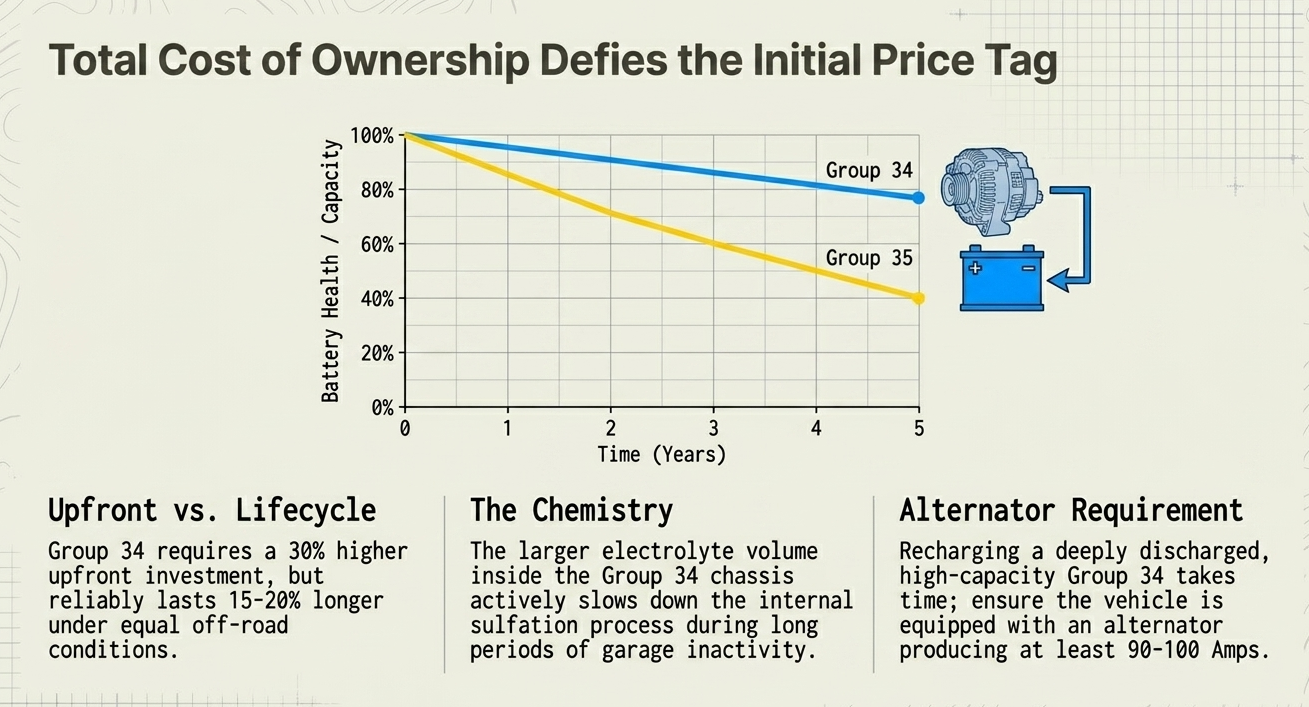
- Service Life: Under equal conditions, Group 34 typically lasts 15-20% longer due to lower chemical stress per square inch of plate area.
- Bottom Ledge (B00/B01): Check for the bottom mounting rail. Group 35 units rarely feature this as they are usually secured from the top.
- Thermal Sleeve Fit: Factory Toyota heat shields for Group 35 will not fit a Group 34. You will need to fabricate a new reflector.
- Market Availability: Group 35 is a shop standard, but Group 34 is the off-road industry standard. Keep this in mind for remote repairs.
- Recharge Rate: AGM Group 34 units accept current from the alternator faster after a deep winch-induced discharge.
- Lead Purity: Top-tier Group 34 units (like Odyssey) use virgin lead, providing 530+ CCA even in extreme sub-zero temperatures.
- Current Sensor Placement: On Honda/Lexus models, the sensor is on the negative terminal. Ensure it doesn’t contact the body when changing groups.
- Short Circuit Risk: Group 35 terminals are higher. If the hood is steel and uninsulated, the risk of terminal contact is higher with Group 35.
- Low-Draw Efficiency: For maintaining ECU memory and alarms during a month of storage, Group 34 is preferred.
- Sulfation Resistance: The larger electrolyte volume in Group 34 slows down the degradation process during long periods of inactivity.
- State of Charge Indication: Many Group 35s have a hydrometer “eye”; Group 34 AGMs do not—rely on a voltmeter instead.
- Total Cost of Ownership: Although Group 34 is 30% more expensive, the cost-per-year is usually lower due to its longevity.
- Alternator Impact: Charging a “flat” Group 34 takes more time; ensure your alternator produces at least 90-100A.
- Jump-Starting Ease: Due to the longer chassis, Group 34 often provides better clearance for jumper cable clamps.
- Warranty Terms: Off-road specific Group 34 batteries often come with extended 4-year warranties for extreme use.
- ECU Safety: The primary risk is swapping polarity when “forcing” an incorrect group. Always verify (+) and (-) markings.
The Hidden Danger: Reverse Polarity and ECU Failure
One of the most expensive mistakes you can make during a battery swap is ignoring the terminal orientation. Many Jeep and Toyota owners assume that if the battery fits the tray, it’s correct. However, if the positive and negative terminals are reversed compared to your factory cables, you risk a catastrophic short circuit.
Professional Insight: Japanese vehicles are engineered with “Zero-Slack” routing. This means the cables are cut to the exact centimeter. If you try to stretch a positive cable to reach a terminal on the opposite side, you will likely melt the fusible link—a specialized safety fuse that can be very difficult to replace on the trail.
Which Battery Should You Choose for Your Rig?
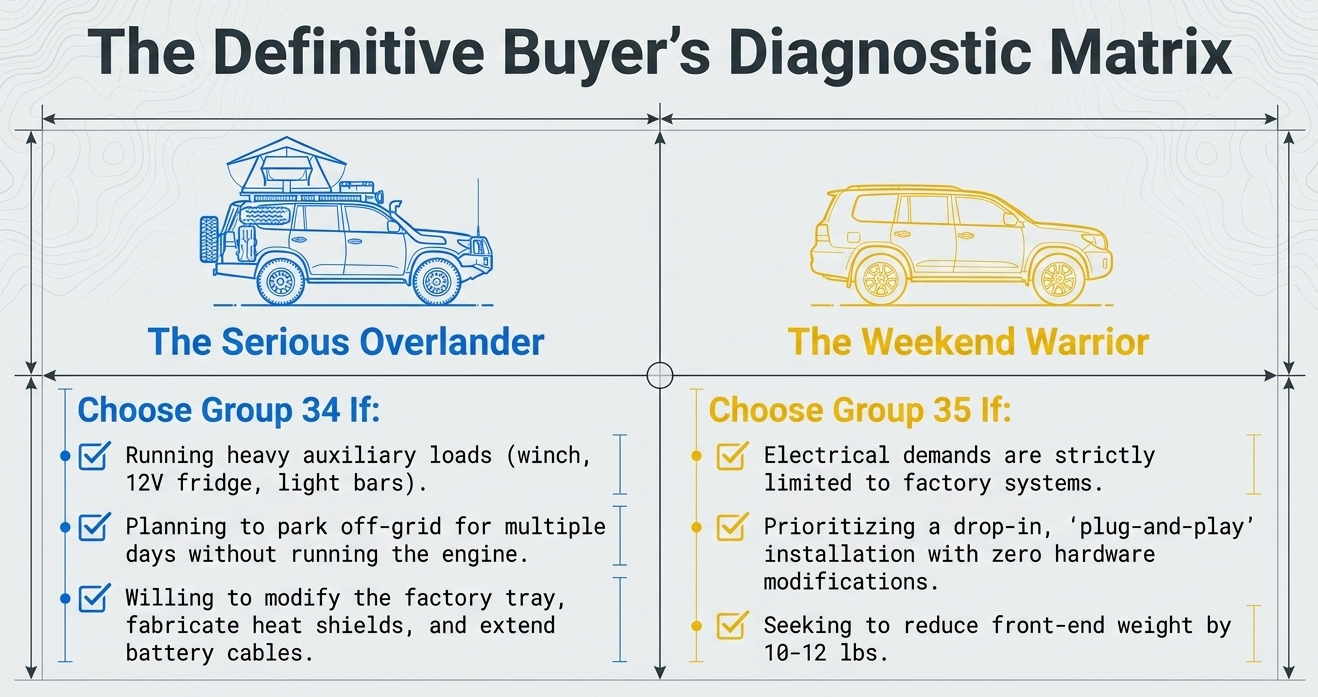
The decision ultimately depends on your electrical load and your willingness to modify your hardware.
- Choose Group 34 if: You are a serious overlander with a winch, fridge, and lights. You must be prepared to install an aftermarket tray and verify cable slack.
- Choose Group 35 if: You want a “Plug-and-Play” replacement with lower weight. This is the best choice for weekend trail riders who keep their electrical system mostly stock.
Frequently Asked Questions
Can I swap a Group 35 for a Group 34 in a Tacoma?
Yes, but it is not a direct drop-in. You will need a larger battery tray and likely have to modify the hold-down bracket. The electrical gain is about 20-30% more reserve power.
Is an AGM battery really necessary for off-roading?
Absolutely. Standard flooded batteries can leak acid when tilted on steep inclines and their internal plates can shatter from the high-frequency vibration of dirt roads. AGM batteries are spill-proof and structurally reinforced.
What happens if I install the terminals backward?
In the best-case scenario, you blow a main fuse. In the worst case, you destroy the vehicle’s alternator and ECU, resulting in a multi-thousand dollar repair bill.

Eric Strong works in the automotive repair industry more than 20 years. His work included repairing electrical systems in various vehicle systems. A hybrid electric car battery replacement experience expanded his understanding of automotive battery technology.
Page Contents