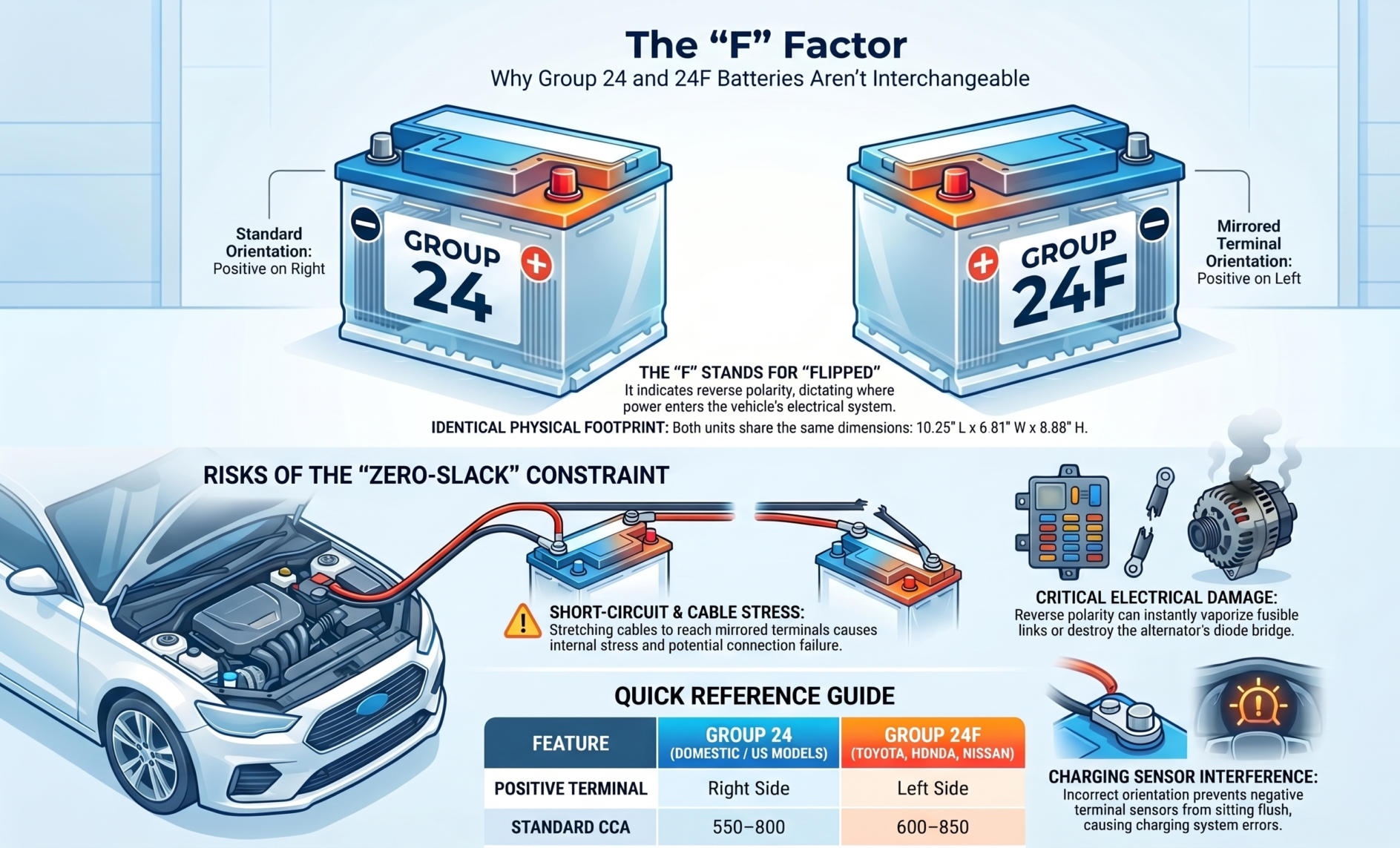
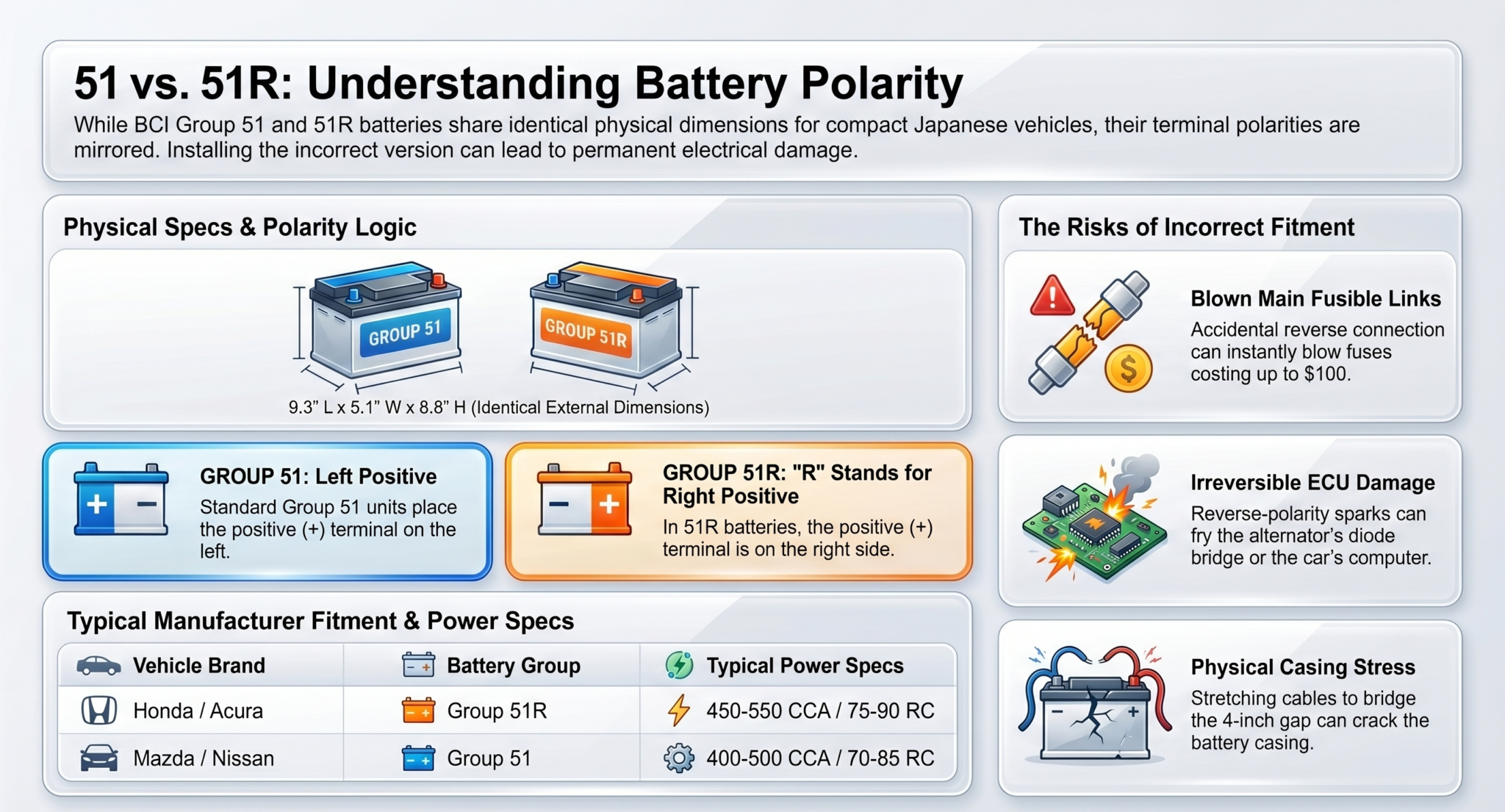
At first glance, the BCI Group 51 and Group 51R batteries appear identical. They share the same narrow, tall casing that has become a hallmark of Japanese automotive engineering, specifically in compact models from Honda, Nissan, and Mazda. However, beneath this shared exterior lies a fundamental difference in terminal orientation that makes them non-interchangeable. In the automotive world, the “R” suffix stands for Reverse Polarity, a designation that dictates exactly where your positive and negative cables must land.
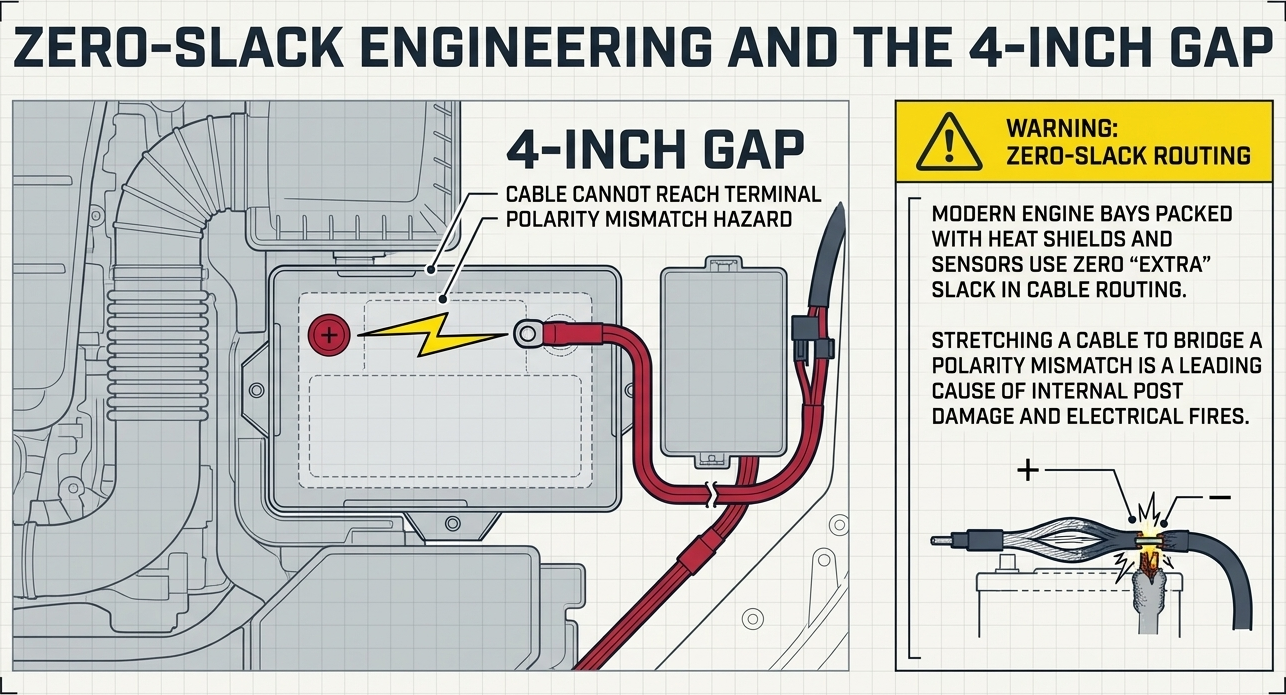
For a mechanic, installing a 51 in place of a 51R is more than a minor inconvenience; it is a high-risk error. Because modern engine bays are packed with heat shields, air intake snorkels, and delicate sensors, battery cables are engineered with zero “extra” slack. This guide explains the technical nuances of these two groups and why respecting the polarity of your specific chassis is vital for your car’s electrical integrity.
| Image | Product | |
|---|---|---|
Best Choice  | Optima Batteries 8073-167 D51R YellowTop Dual Purpose Battery
| Check Price |
Best Value 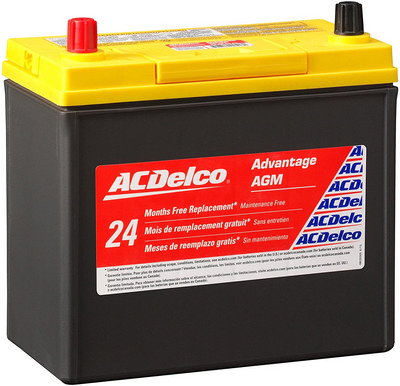 | ACDelco ACDB24R Advantage AGM Automotive Battery
| Check Price |
Also Great 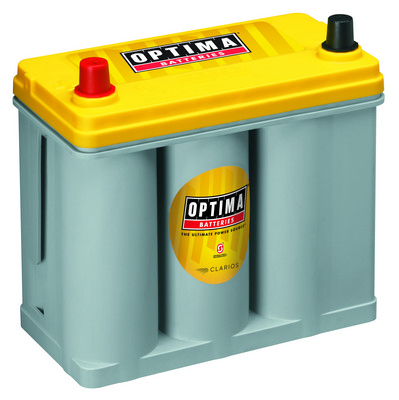 | Optima Batteries 8071-167 D51 YellowTop Dual Purpose Battery
| Check Price |
Good Choice 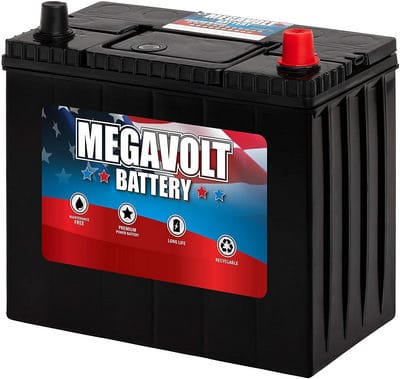 | Megavolt Lead Acid Flooded Car Battery BCI 51R, 12V 55AH CCA500 CA525 (51R-60-500)
| Check Price |
Good Choice 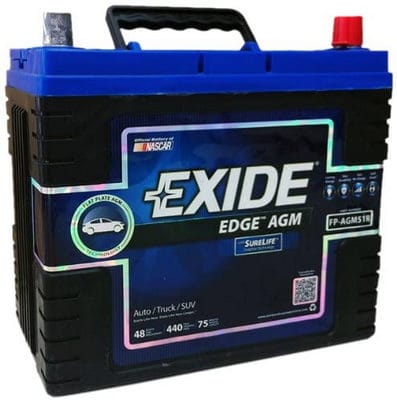 | Exide Edge FP-AGM51R Flat Plate AGM Sealed Automotive Battery
| Check Price |
Good Choice  | SLI51R Duracell Ultra BCI Group 51R Car and Truck Battery
| Check Price |
Good Choice 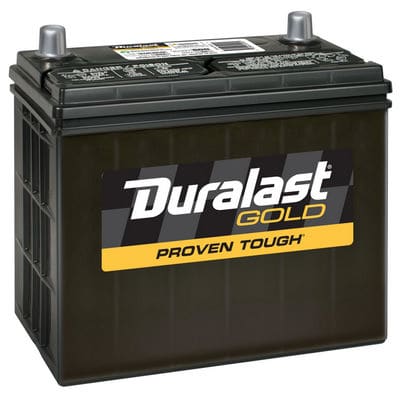 | Duralast Gold Battery 51R-DLG Group Size 51R 500 CCA
| Check Price |
Shared Physical Dimensions: The Group 51 Footprint
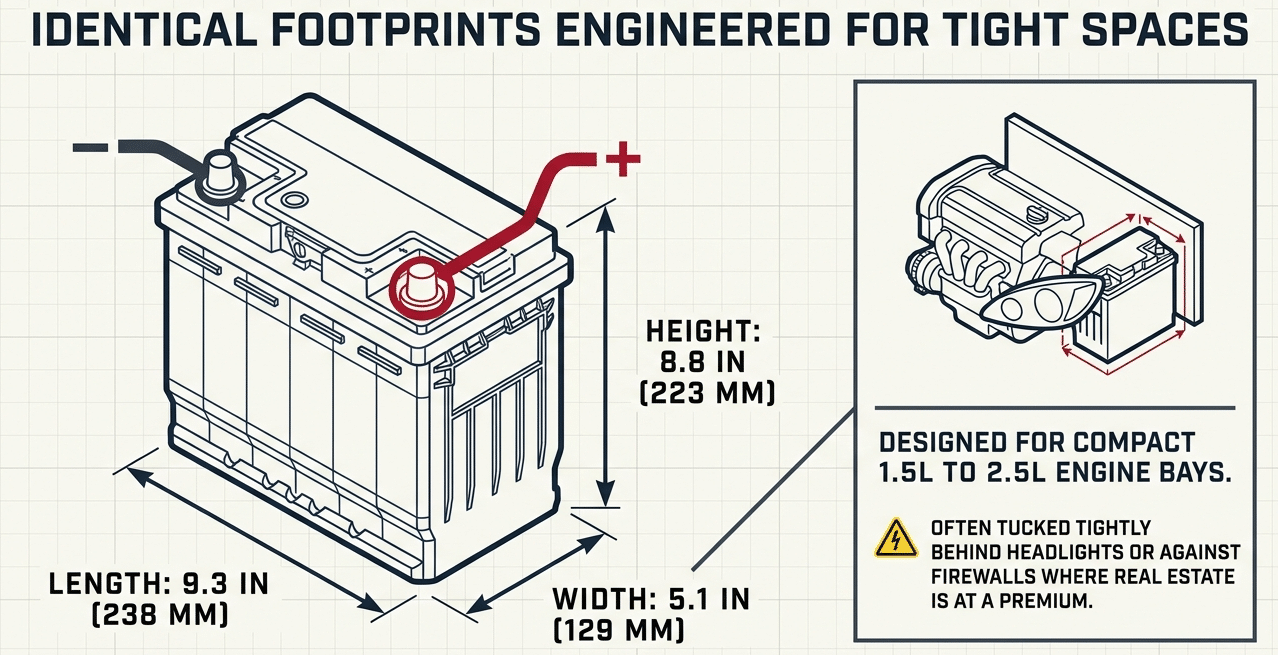
Both Group 51 and 51R belong to the same BCI size family. They are designed for small to mid-sized vehicles where engine bay real estate is at a premium. Their narrow width (only 5.1 inches) allows them to sit deep in the engine compartment, often tucked behind a headlight or near the firewall.
| Dimension | Measurement (Inches) | Measurement (Metric) |
|---|---|---|
| Length | 9.3 in | 238 mm |
| Width | 5.1 in | 129 mm |
| Height | 8.8 in | 223 mm |
The Critical Distinction: Terminal Polarity
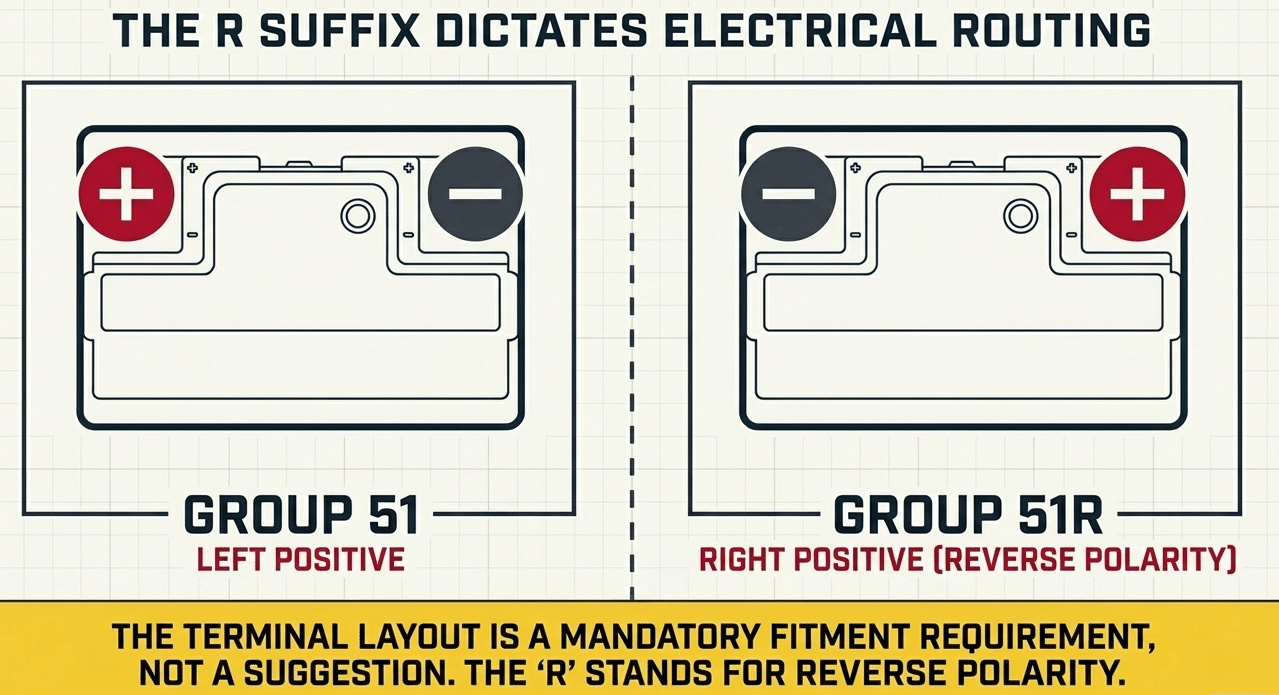
The only difference between a 51 and a 51R is the placement of the battery posts. When you are looking at the battery from the front (the side where the labels are usually upright), the terminal locations are mirrored:
- Group 51R (Right Positive): The positive (+) terminal is located on the right side. This is the standard for the vast majority of Honda Civic and Acura models.
- Group 51 (Left Positive): The positive (+) terminal is located on the left side. This configuration is frequently seen in Mazda and Nissan sedans.
This layout isn’t just a suggestion—it is a mandatory fitment requirement. If you attempt to install a Group 51 where a 51R belongs, the positive cable will be roughly 4 inches away from where it needs to be. Stretching a battery cable to bridge this gap is a leading cause of internal post damage and electrical fires.
Why Swapping 51 and 51R is Dangerous
In the shop, I often see “DIY” attempts to use a standard 51 battery in a Honda designed for a 51R because it was the only one in stock. This leads to several immediate technical failures:
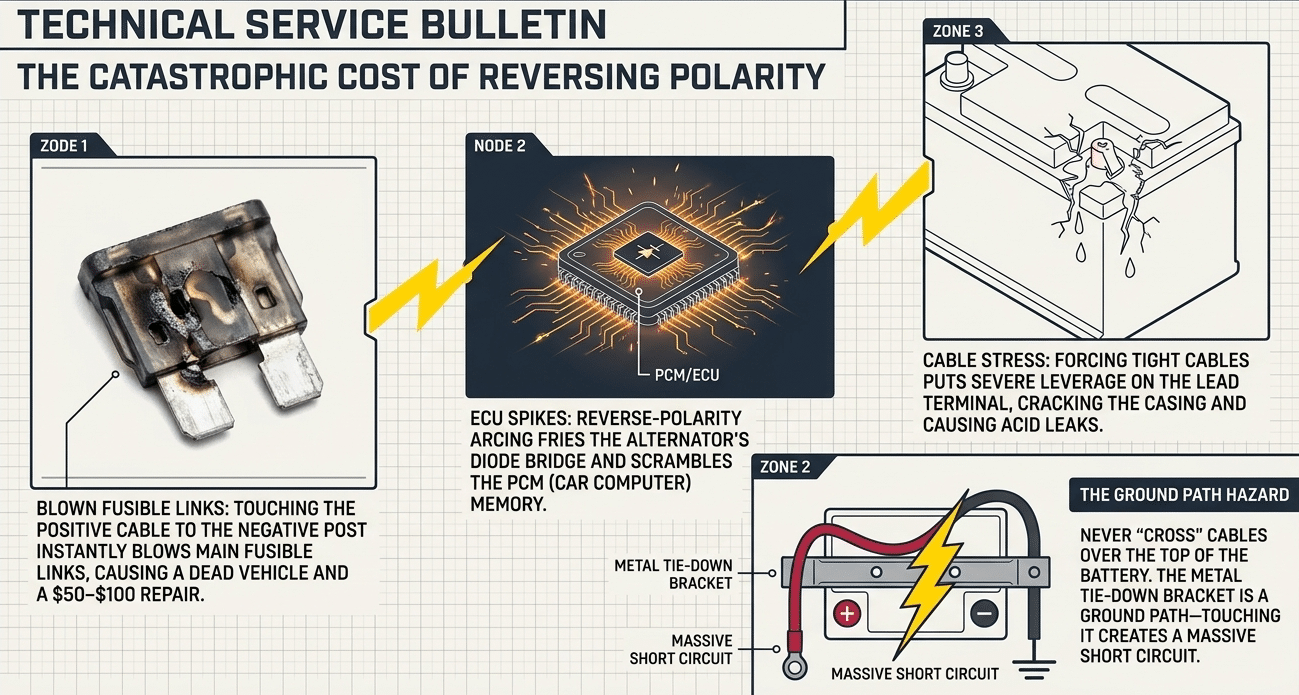
- Blown Fusible Links: If you accidentally touch the positive cable to the negative post (even for a split second), you will likely blow the main fusible link—a large, multi-circuit fuse that can cost $50 to $100 and leave the car completely dead.
- Cable Stress: Battery cables are made of heavy-gauge copper. Forcing them to reach across the battery body puts leverage on the lead terminal post, which can crack the battery casing and cause acid leaks.
- ECU Spikes: Modern cars are extremely sensitive to the “arcing” that happens when cables are connected incorrectly. A reverse-polarity spark can fry the diode bridge in your alternator or scramble the memory of your car’s computer (PCM).
Expert Note: If you find yourself in an emergency where you have the wrong battery, do not “cross” the cables over the top of the battery. The metal tie-down bracket that holds the battery in place is a ground path. If the positive cable rubs against this bracket, it will create a massive short circuit.
Typical Vehicle Applications and Power Requirements
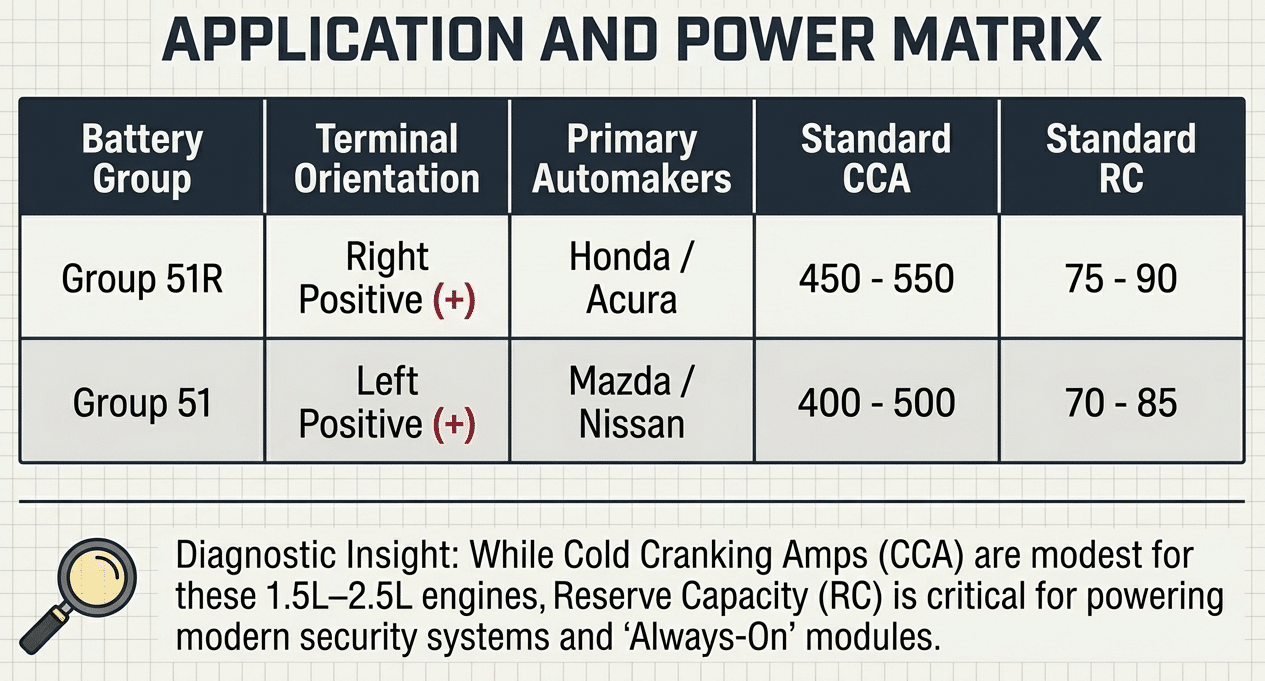
The Group 51 family is generally used in engines ranging from 1.5L to 2.5L. Because these engines are relatively small, the Cold Cranking Amps (CCA) requirements are modest compared to large V8 trucks, but the Reserve Capacity (RC) is crucial for the car’s security systems and “Always-On” modules.
| Vehicle Brand | Required Group | Typical Specs |
|---|---|---|
| Honda / Acura | Group 51R | 450 – 550 CCA / 75 – 90 RC |
| Mazda / Nissan | Group 51 | 400 – 500 CCA / 70 – 85 RC |
Maintenance and Inspection Protocols
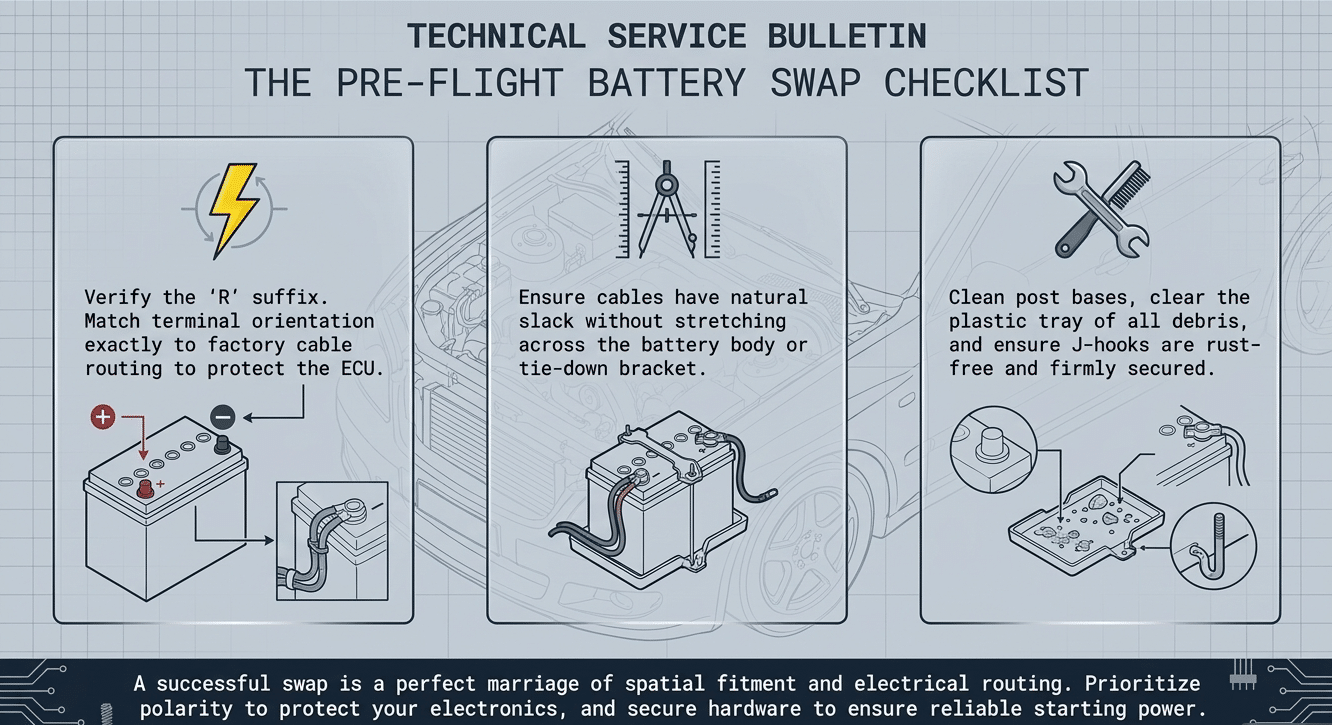
Because Group 51 batteries are narrow and tall, they are more prone to “tipping” or vibrating if the hold-down bracket isn’t perfectly snug. During your annual inspection, follow these mechanic-verified steps:
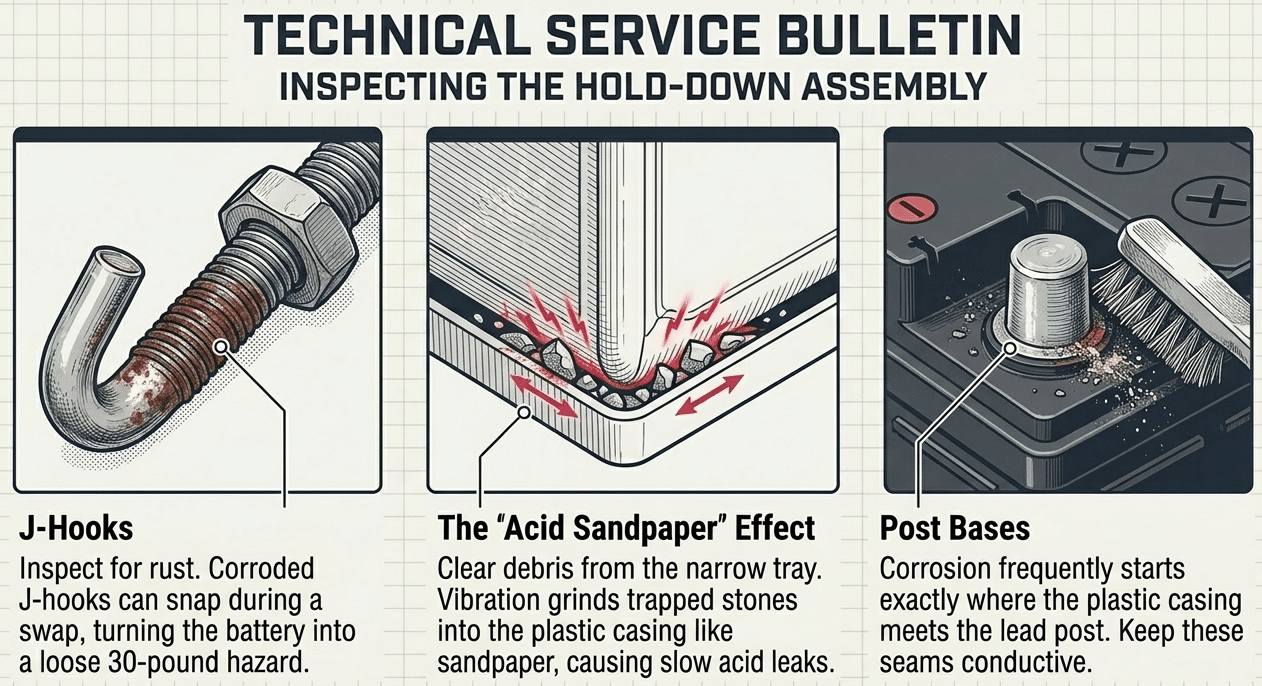
- Check the J-Hooks: Ensure the long threaded bolts (J-hooks) are not rusted. If they are, they can snap during a battery swap, leaving you with a loose 30-pound weight in your engine bay.
- Inspect the Plastic Tray: Debris often gets trapped in the narrow 51R tray. Small stones can act like sandpaper against the plastic battery casing, leading to a slow acid leak over time.
- Clean the Post Bases: Corrosion on Group 51 batteries often starts at the base of the post where the plastic meets the lead. Use a dedicated terminal brush to keep these areas conductive.
Frequently Asked Questions: Group 51 vs. 51R Nuances
When it comes to the small but mighty Group 51 family, there are several common points of confusion regarding fitment and performance. Below are the expert answers to the most frequent inquiries from Nissan and Honda owners.
Can I use a Group 51 battery instead of a 51R?
Technically, no. While the physical box dimensions are the same, the reversed terminal positions are a deal-breaker. In almost every vehicle designed for a 51R (like the Honda Civic), the cables are too short to reach the posts of a standard Group 51. Attempting to force them can damage the battery posts or lead to dangerous electrical arcing.
Which specific car brands use the Group 51R?
The Group 51R (Right Positive) is the go-to standard for the vast majority of Honda and Acura vehicles, including the Civic, Fit, and older CR-V models. It is also found in some smaller Toyota and Ford compact cars. Always look for the “R” on the label if you are shopping for a Honda.
What vehicles require a standard Group 51 battery?
Standard Group 51 batteries (Left Positive) are most commonly used by Mazda, Nissan, and some Subaru models. These manufacturers route their positive cables to the driver’s side of the battery tray, necessitating the left-hand post configuration.
How can I tell if my Nissan Altima battery is dying?
The first signs are usually a sluggish engine crank in the morning or the flickering of your dashboard lights during startup. Because the Altima’s Group 51 is relatively small, it doesn’t have much “reserve” once it begins to degrade. If the voltage drops below 12.2V while the car is off, it’s time for a replacement.
Is it possible to replace my own 51R battery at home?
Yes, replacing a Group 51R is one of the easiest DIY maintenance tasks. You only need a 10mm wrench. Just remember the mechanic’s golden rule: disconnect the Negative (Black) terminal first to prevent shorts, and connect it last when you are finished.
Professional Selection Criteria for 51 and 51R Replacements
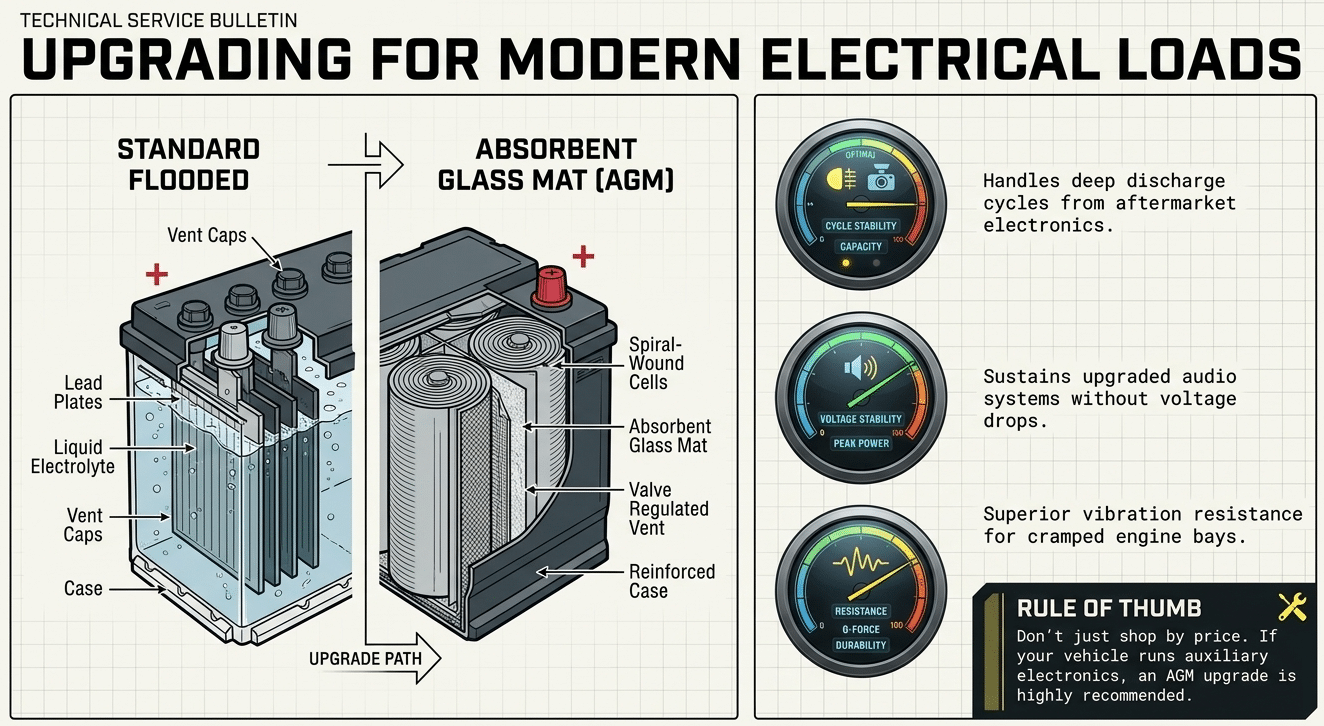
When shopping for a replacement, don’t just look for the lowest price. The Group 51 family varies significantly in quality between standard flooded and AGM (Absorbent Glass Mat) versions. If your vehicle has aftermarket lights, a dashcam, or an upgraded sound system, an AGM upgrade (like the Optima YellowTop D51R) is highly recommended. AGM batteries handle the deep discharge cycles of modern electronics far better than standard lead-acid cells and offer superior vibration resistance in the cramped engine bays of compact cars.
Final Checklist for a Secure Installation
Ensuring your vehicle gets the correct battery starts with verifying the “R” suffix on the label. A Group 51R is not a substitute for a 51, and vice-versa. By matching the terminal orientation exactly to your car’s factory cable routing, you avoid the risk of blown fuses, melted wiring, and expensive ECU damage. Always prioritize a secure tie-down bracket and clean terminals to ensure your Honda, Mazda, or Nissan has the reliable starting power it needs, regardless of the temperature outside.

Eric Strong works in the automotive repair industry more than 20 years. His work included repairing electrical systems in various vehicle systems. A hybrid electric car battery replacement experience expanded his understanding of automotive battery technology.
Page Contents