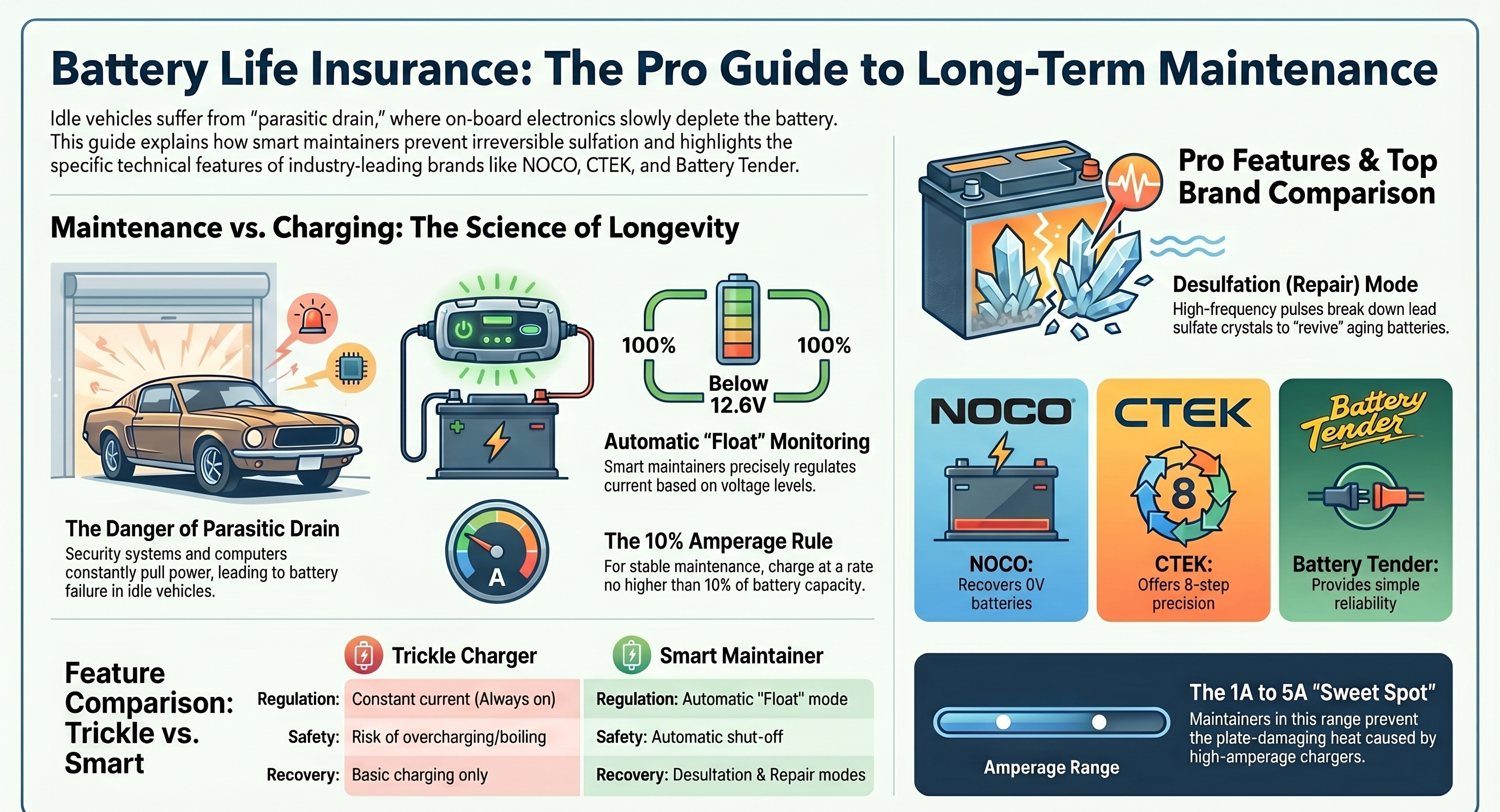
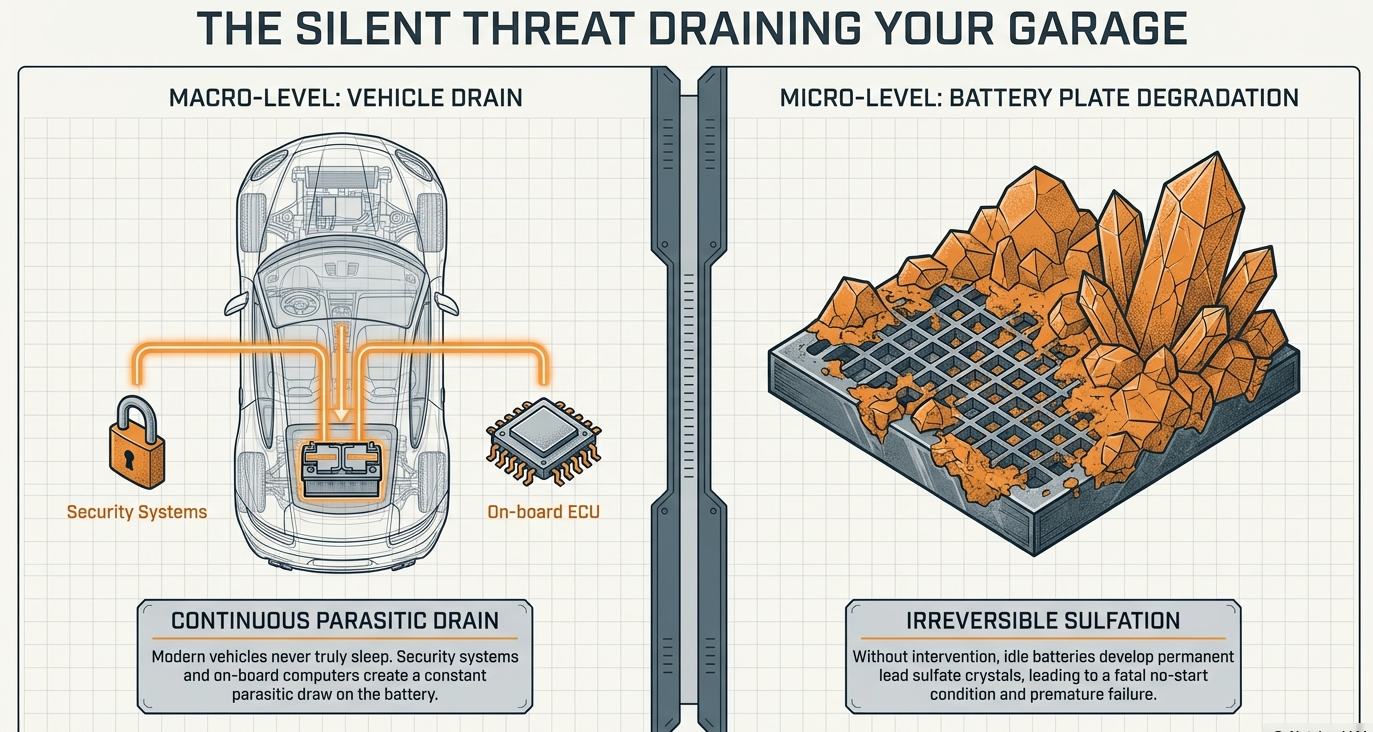
For vehicles that sit idle—whether it’s a seasonal classic, a weekend track car, or an RV in winter storage—the battery is under constant parasitic drain from security systems and on-board computers. Without a dedicated maintenance strategy, a lead-acid or AGM battery will eventually undergo irreversible sulfation, leading to a “no-start” condition and premature failure. Modern trickle chargers and “smart” maintainers have evolved to do more than just add current; they now act as diagnostic tools that can revive dead cells and optimize battery health for long-term reliability.
Choosing the right charger requires understanding the technical difference between a simple, unregulated power supply and a multi-stage smart maintainer. In this guide, we analyze the top performers from industry leaders like NOCO, CTEK, and Battery Tender. We focus on critical professional features such as thermal compensation, desulfation pulses, and the safety protocols required to leave a charger connected for months at a time without risk of fire or electrolyte evaporation. When you invest in a quality maintainer, you are essentially buying insurance for your battery’s lifespan.
Charging vs. Maintaining: Know the Difference
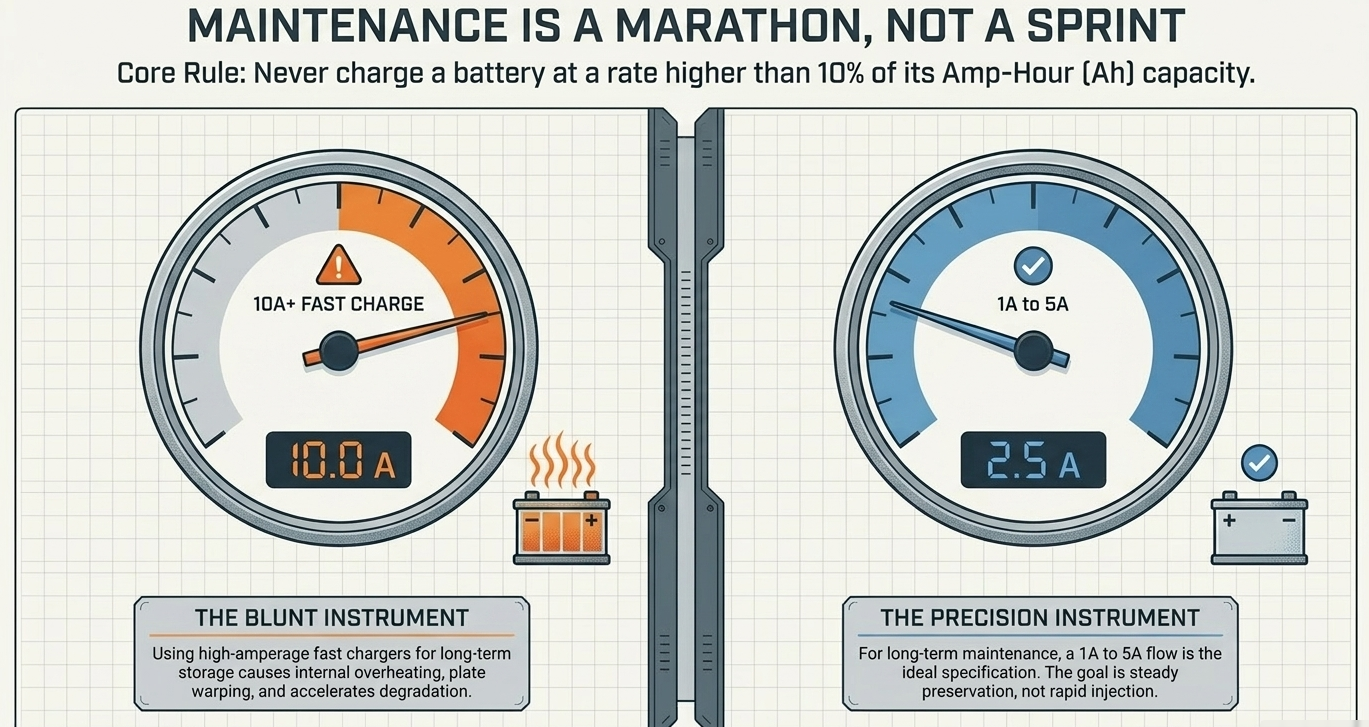
One of the most common mistakes in battery care is using a high-amperage “fast charger” for long-term storage. A standard car battery should generally be charged at a rate no higher than 10% of its Amp-Hour (Ah) capacity. For maintenance, the goal is not speed, but precision and stability. A maintainer must be delicate enough to counter parasitic draw without inducing heat that could damage the internal lead plates.
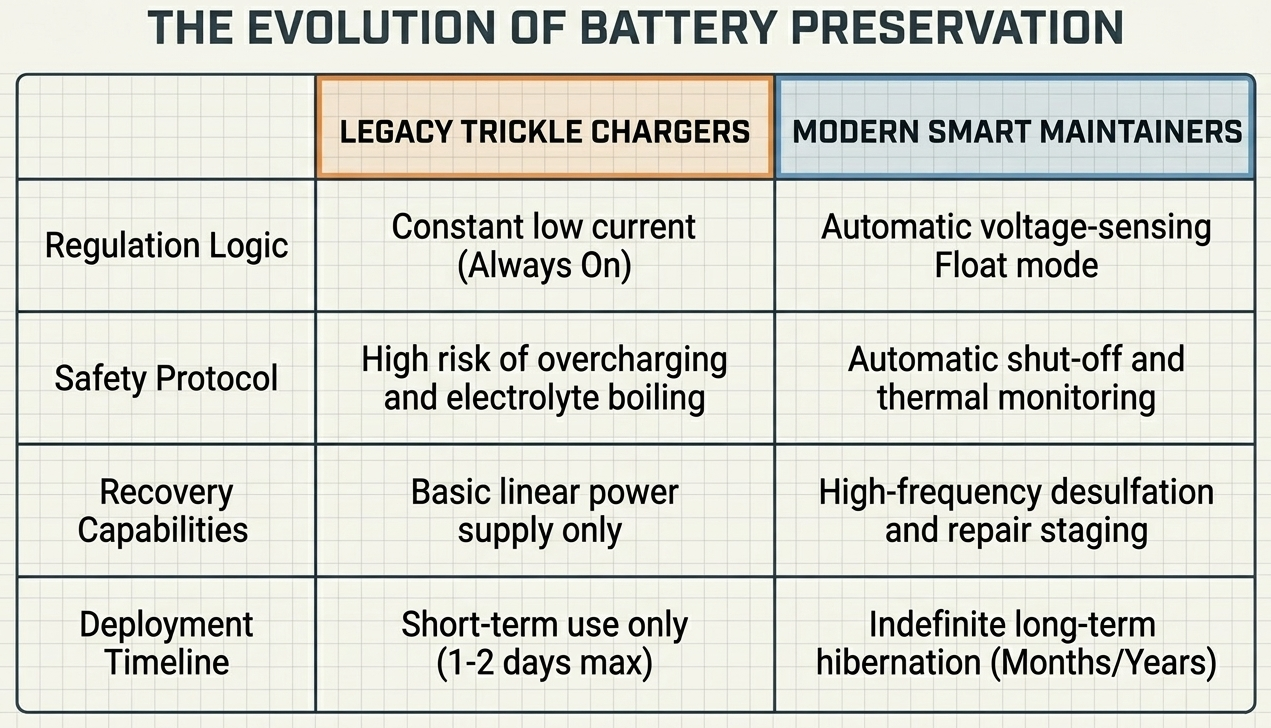
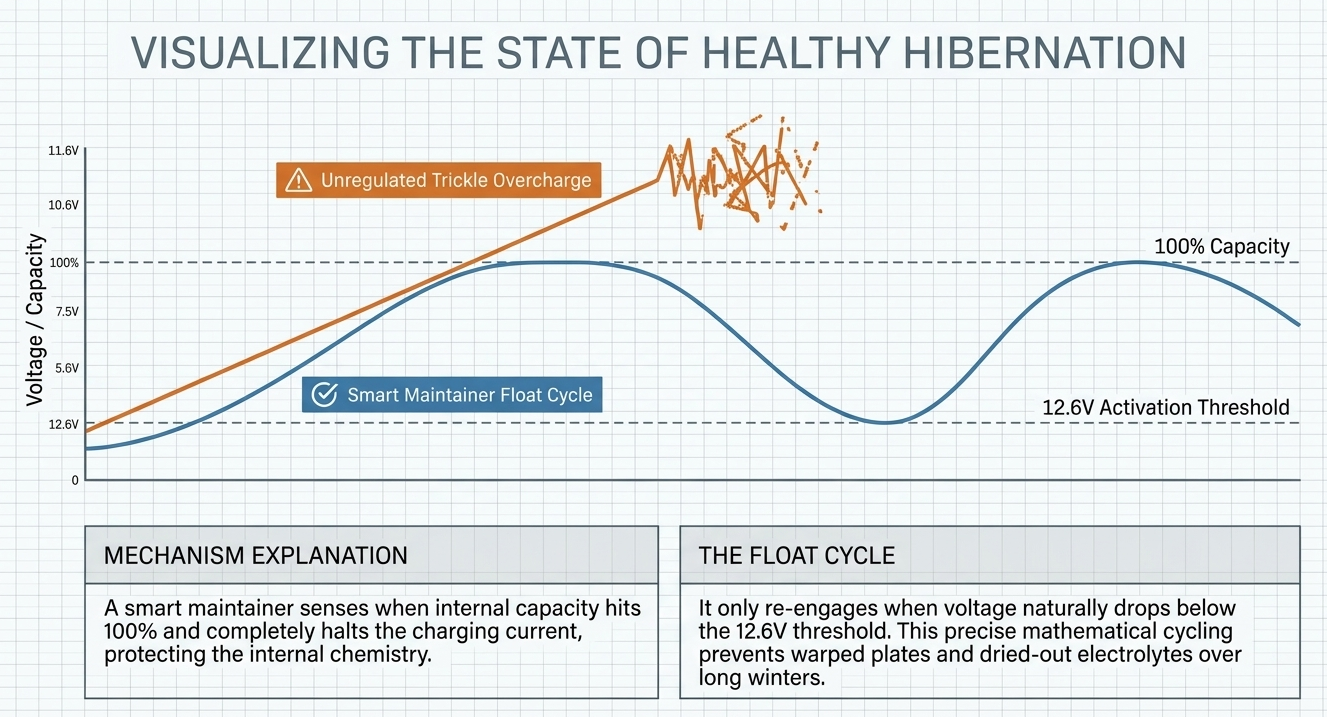
A smart maintainer monitors the battery’s voltage and “floats” the charge. When the battery hits 100%, the maintainer stops charging and only kicks back in when the voltage drops below a specific threshold (usually 12.6V to 12.8V). This specific “float and monitor” cycle prevents the internal plates from warping and the electrolyte from drying out—a common fate for batteries left on cheap, unregulated chargers.
| Feature | Trickle Charger | Smart Maintainer |
|---|---|---|
| Regulation | Constant low current (always on) | Automatic “Float” mode |
| Safety | Risk of overcharging/boiling | Automatic shut-off |
| Recovery | Basic charging only | Desulfation & Repair modes |
| Best Use | Short-term (1-2 days) | Long-term (Months/Years) |
Top Maintainer Brands: Professional Analysis
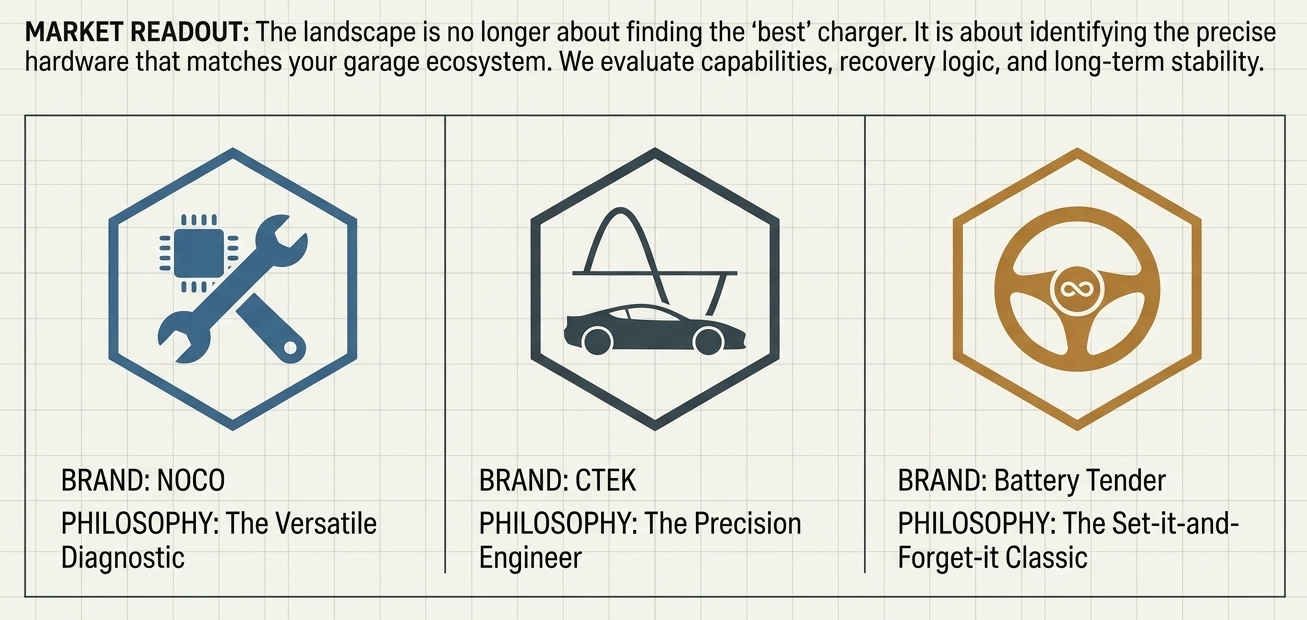
The choice of a brand often dictates the longevity of your battery. Each of the leading manufacturers has a different approach to battery chemistry, from high-frequency pulse desulfation to sophisticated thermal monitoring. Understanding these philosophies helps you match the charger to your specific vehicle needs.
1. NOCO Genius Series (The Versatile Diagnostic)
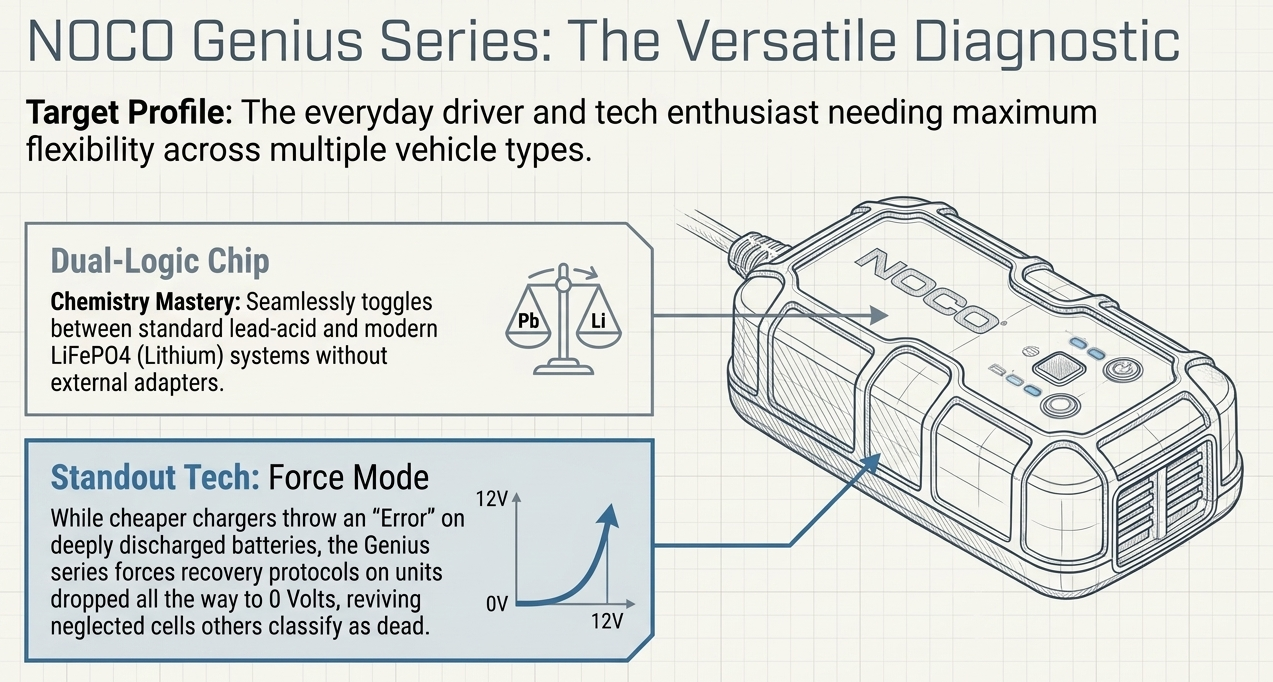
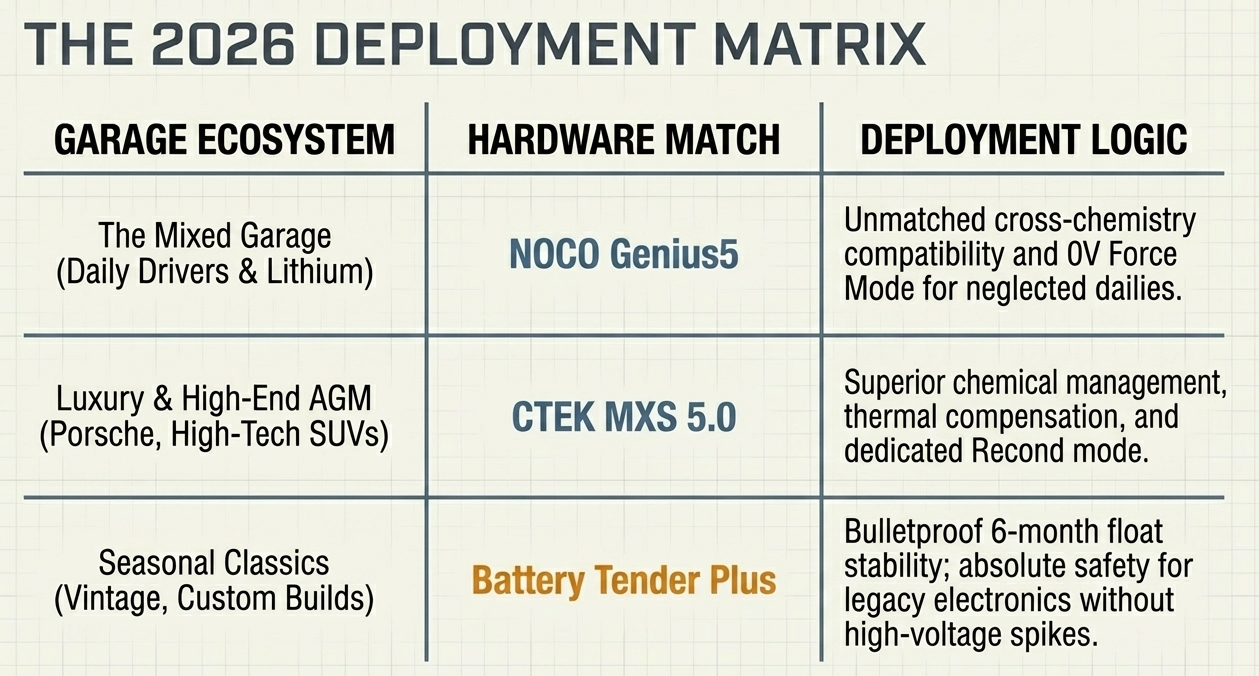
NOCO has set the standard for compact, high-efficiency chargers. The Genius5 and Genius10 are dual-purpose tools that handle both standard lead-acid and modern LiFePO4 (Lithium) batteries. Their standout feature is the Force Mode, which allows the charger to detect and attempt to recover batteries that have dropped as low as 0V. Most smart chargers require a minimum voltage (usually 2V) to even “see” the battery, but NOCO can bypass this, allowing you to manually start a charging cycle on a completely depleted unit.
2. CTEK MXS Series (The Precision Engineer)
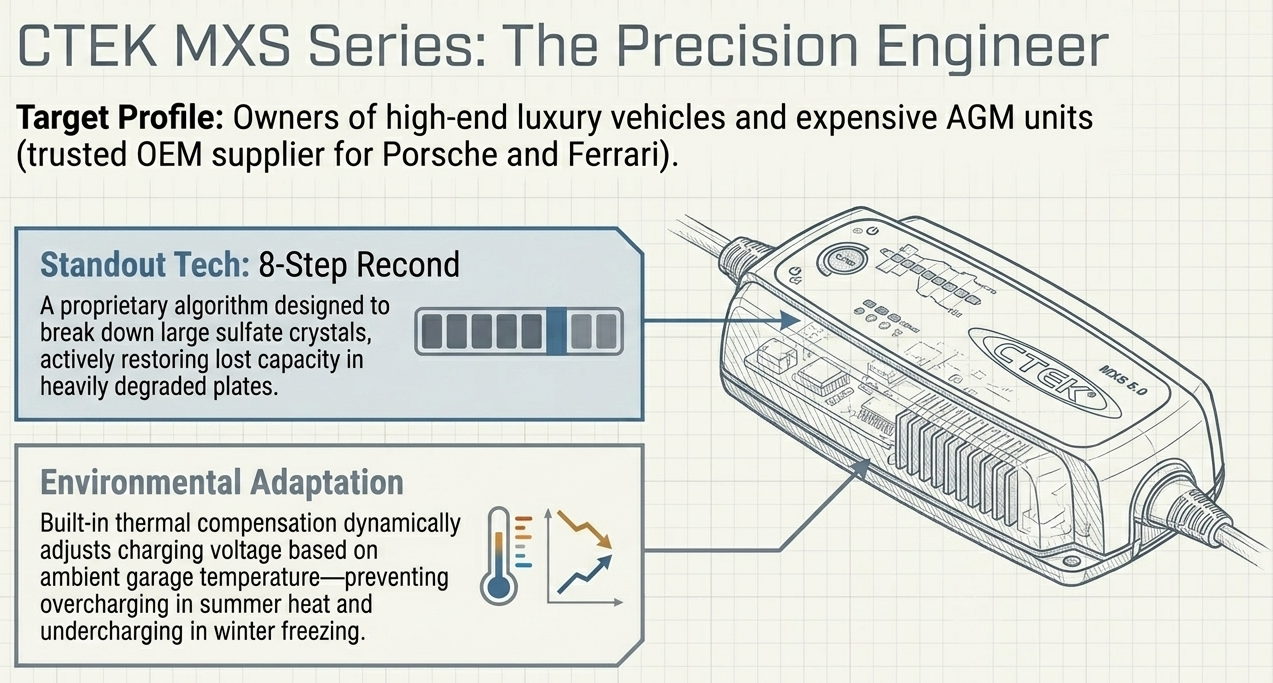
Used as the original equipment (OEM) supplier for prestigious brands like Ferrari, Porsche, and Lamborghini, CTEK focuses on the internal chemistry of the lead plates. Their 8-step charging program includes a dedicated “Recond” mode (Reconditioning). This mode uses controlled gassing to break down large sulfate crystals on the lead plates, theoretically restoring lost capacity. CTEK is also a pioneer in temperature compensation, automatically adjusting the charging voltage based on ambient heat to prevent overcharging in summer and undercharging in winter.
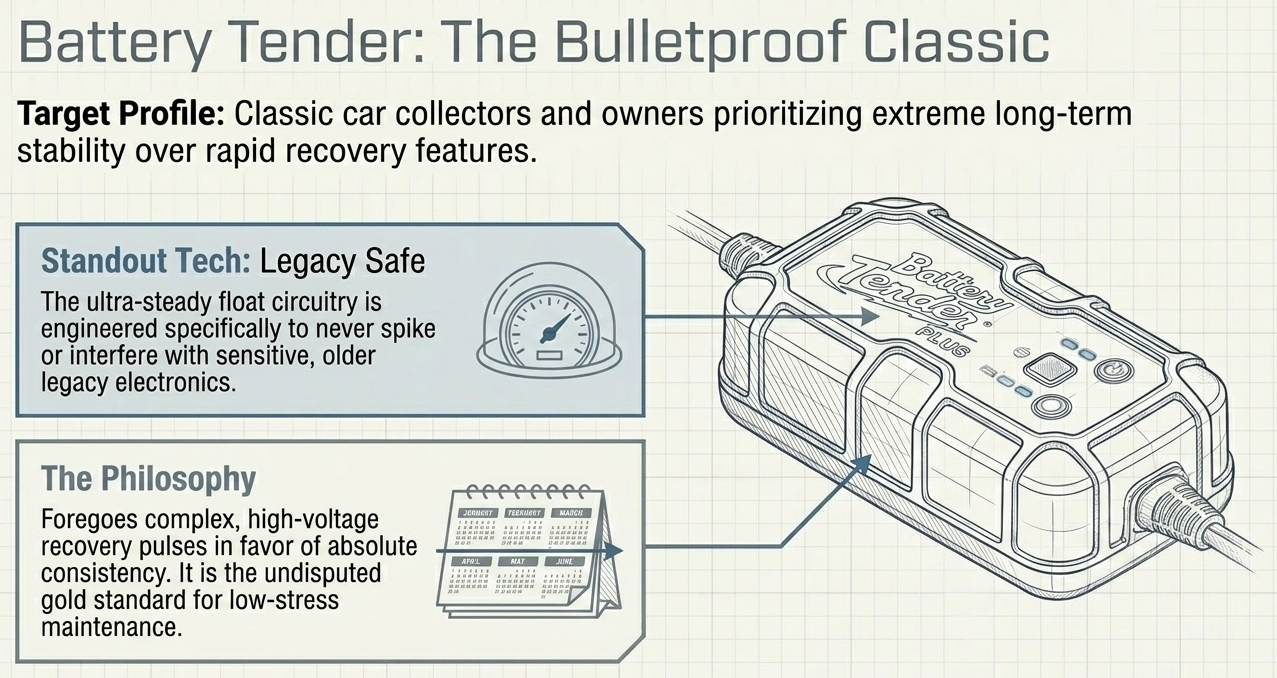
3. Battery Tender (The “Set it and Forget it” Classic)
While NOCO and CTEK focus on high-tech recovery and diagnostic modes, Battery Tender remains the king of simple, bulletproof maintenance. Their circuitry is specifically tuned for extreme long-term use. If you have a classic car or a collection of vehicles that stay in a garage for 6 months at a time, a Battery Tender Plus provides a steady, reliable float. It is famous for its “soft” start and stable voltage that won’t interfere with sensitive legacy electronics or dry out the electrolyte in older flooded batteries.
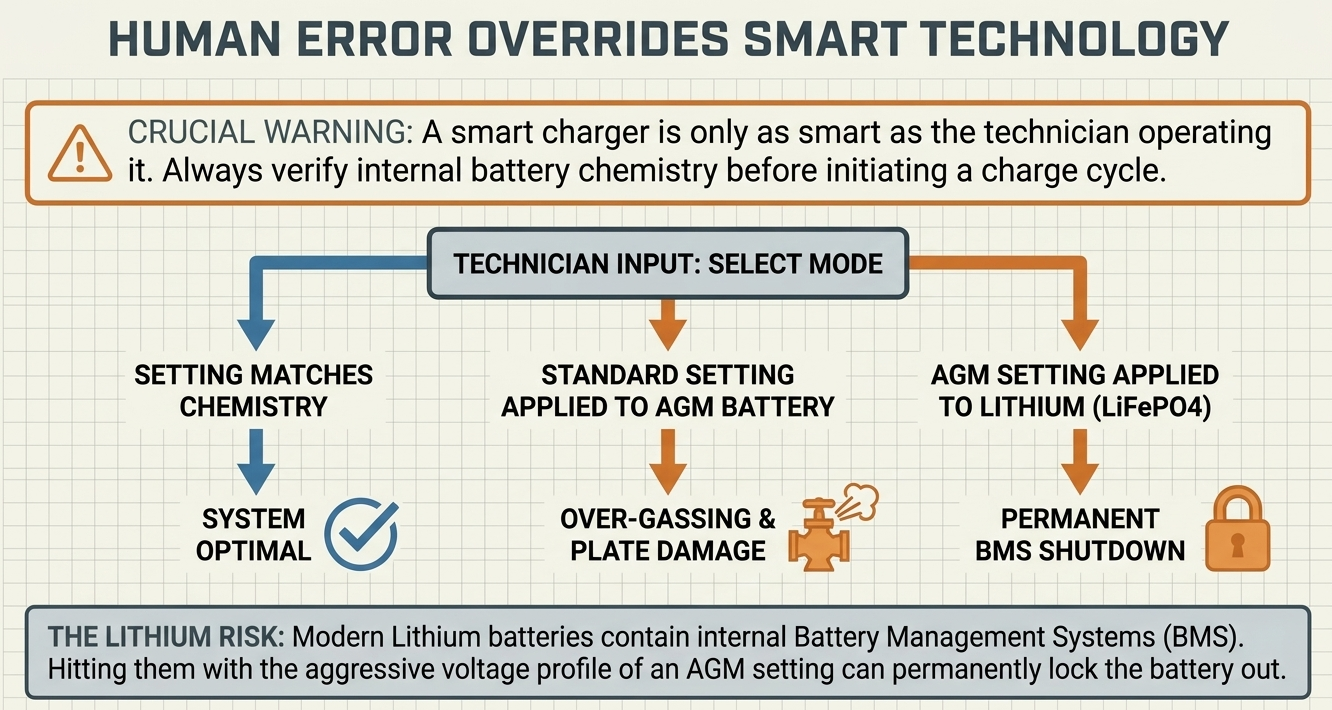
Technical Warning: Always verify your battery chemistry before selecting a charging mode. Using a standard “Flooded” setting on an AGM battery can lead to over-gassing, while using an “AGM” setting on a Lithium battery can trigger the internal Battery Management System (BMS) to shut down permanently. A “smart” charger is only as smart as the human selecting the mode.
Key Features to Look For in a Professional Maintainer
When selecting a maintainer, you should look beyond the amperage rating. The value of a high-end unit lies in its ability to manage the physical state of the lead plates and the chemical balance of the electrolyte over long periods of time.
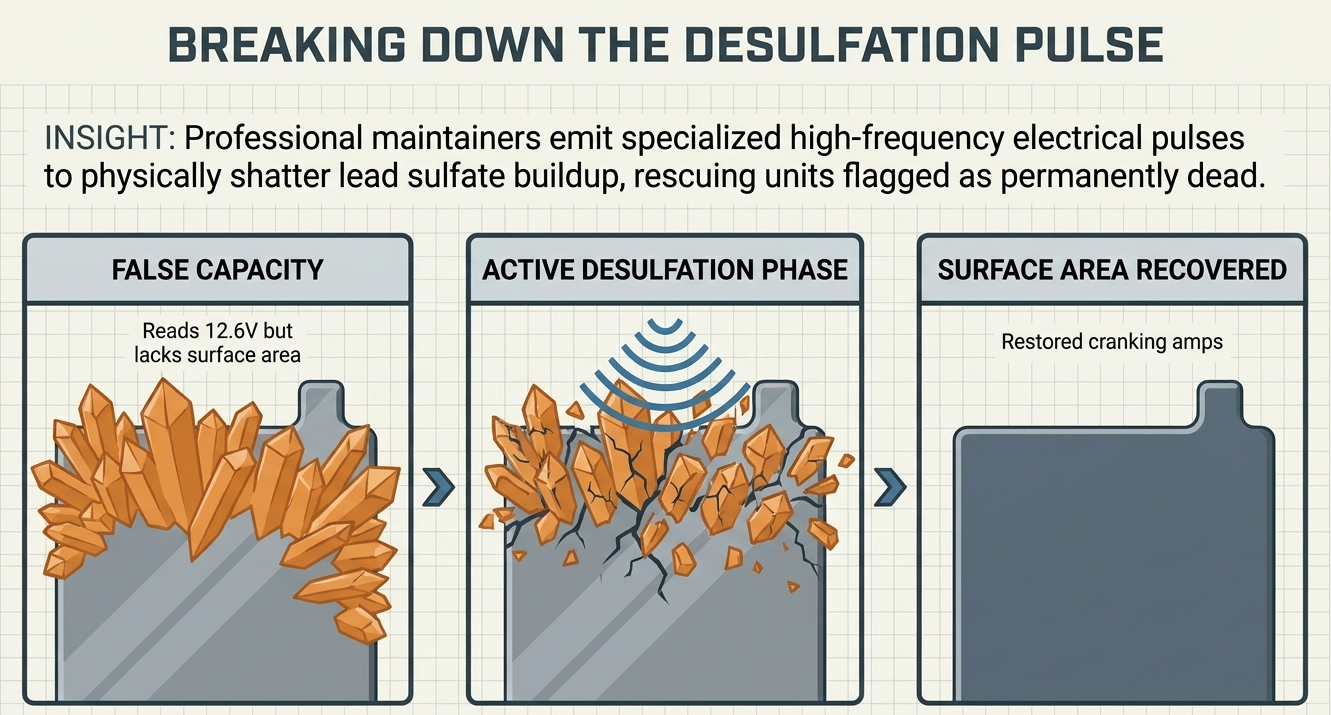
Desulfation (Repair) Mode: This feature uses high-frequency pulses to break down lead sulfate buildup on the plates. Lead sulfate is a natural byproduct of discharge, but if left alone, it hardens into crystals that block electricity. Desulfation is the only way to “revive” a battery that has been sitting at a low voltage for more than a few days, effectively cleaning the plates from the inside out.
Amperage Selection: For most passenger cars and SUVs, a 1A to 5A maintainer is ideal. Using a 10A+ charger for long-term maintenance can create excessive heat in the cells, which leads to plate degradation and fluid loss. In the world of battery maintenance, a slow, steady trickle is always superior to a high-amperage “blast.”
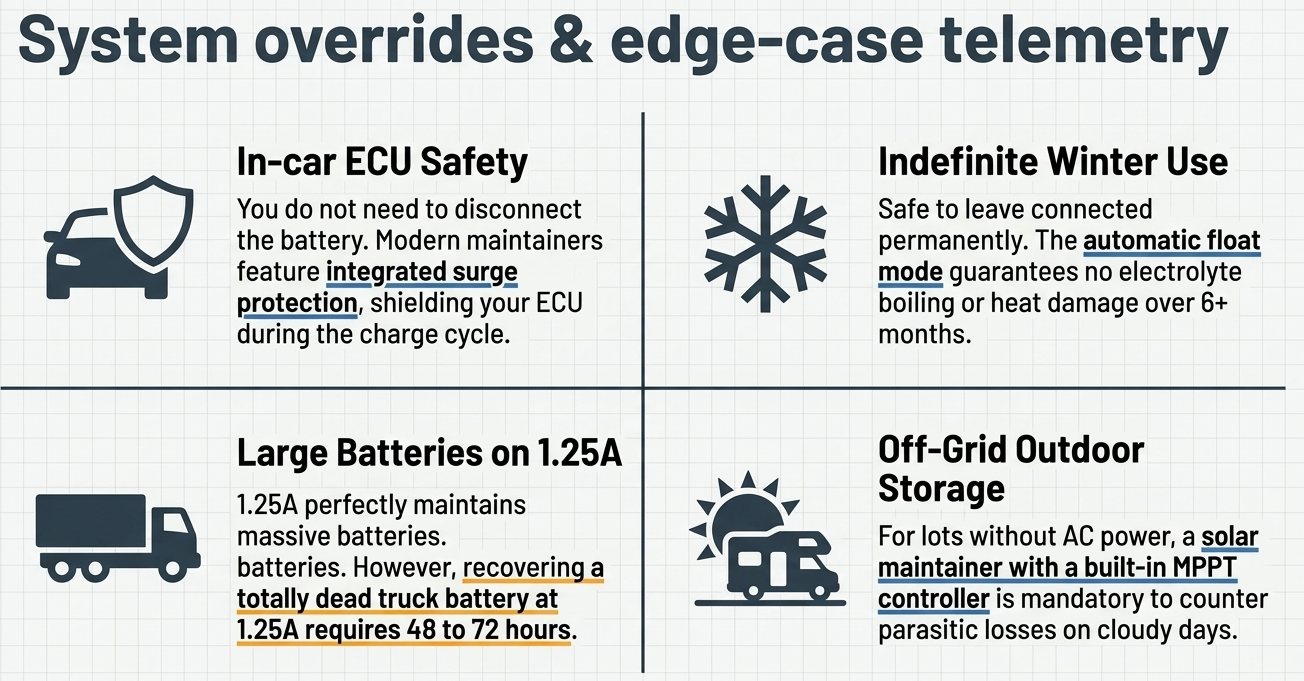
Solar Compatibility: For RVs, boats, or vehicles stored in outdoor lots without access to AC power, solar maintainers with built-in MPPT (Maximum Power Point Tracking) controllers are the only viable solution. They prevent winter drain by converting sunlight into a regulated charge, protecting your investment even in remote storage locations.
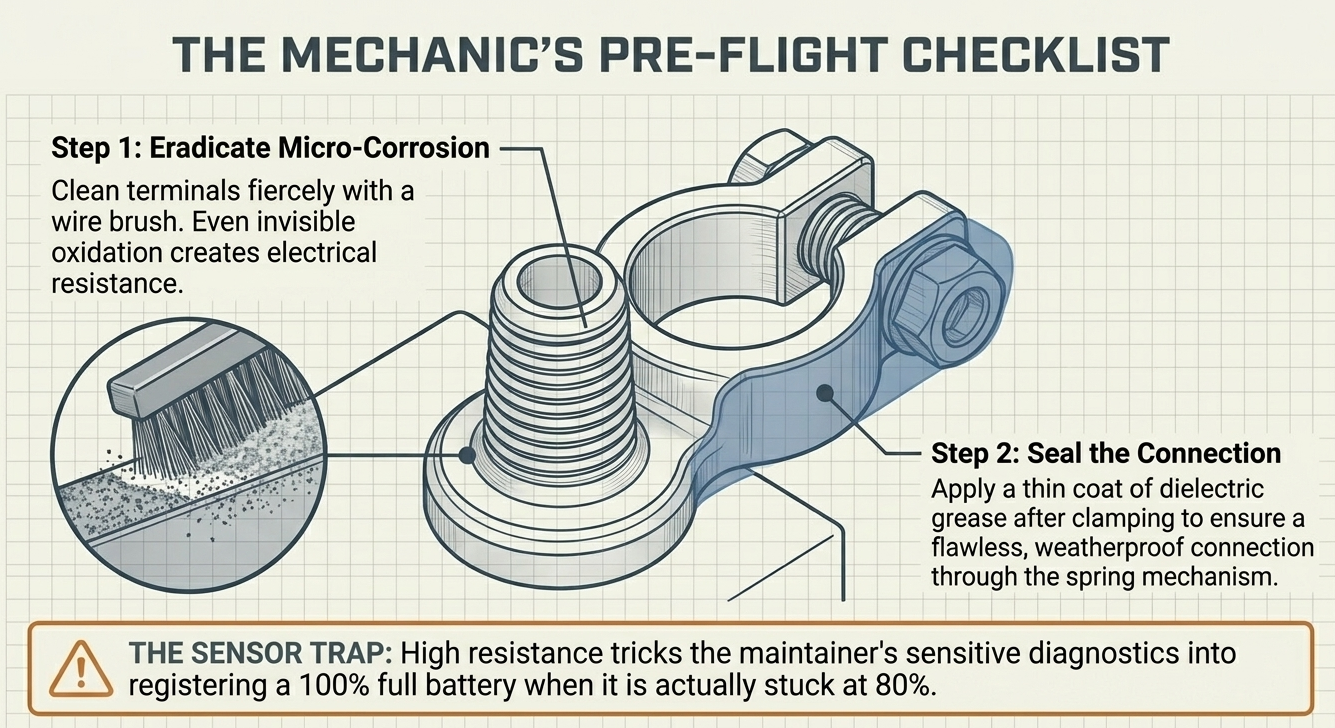
Mechanic’s Note: Before connecting your maintainer for the winter, clean the battery terminals with a wire brush to remove any oxidation. Even a tiny amount of corrosion creates electrical resistance that can trick the charger’s sensor into thinking the battery is full when it is actually at 80% charge. A thin coat of dielectric grease after cleaning ensures a perfect connection through the spring.
Frequently Asked Questions
Can I leave a trickle charger on all winter?
You can only do this safely if the device is a “smart maintainer” with an automatic float mode. A cheap, non-regulated trickle charger will continue to push current into the battery even after it is 100% full. This constant current will eventually “boil” the electrolyte, causing the battery to swell, leak, or even explode. Always ensure your device has an automatic shut-off feature.
Is a 1.25-amp charger enough for a large truck battery?
Yes, but specifically for maintenance. A 1.25A charger is perfectly adequate for keeping a large battery topped off against parasitic drain. However, if that truck battery is completely dead, a 1.25A charger might take 48 to 72 hours to bring it back to a full state. It is a maintenance tool designed for stability, not a jump-starter for speed.
Do I need to disconnect the battery from the car to charge it?
No, modern smart maintainers are designed to be used while the battery remains in the vehicle. They feature integrated surge protection and specialized logic that keeps your car’s ECU (Engine Control Unit) and other sensitive electronics safe during the charging process. Always connect the charger to the battery terminals or the designated jump-start points under the hood as per your owner’s manual.
Final Purchase Verdict: Which Charger Wins?
For the average car owner who needs the most flexibility, the NOCO Genius5 is the best overall choice due to its ability to handle both Lithium and Lead-acid at a fair price. If you own a high-end luxury vehicle or a car with an expensive AGM battery, the CTEK MXS 5.0 offers superior chemical management and recovery features. For classic car collectors with multiple vehicles, the simplicity and long-term reliability of the Battery Tender Plus remains unbeatable. Regardless of the brand, always prioritize a unit with automatic float mode—it is the only way to ensure your car is truly ready to start when spring arrives.

Eric Strong works in the automotive repair industry more than 20 years. His work included repairing electrical systems in various vehicle systems. A hybrid electric car battery replacement experience expanded his understanding of automotive battery technology.
Page Contents