The automotive industry is currently witnessing a massive shift in battery technology that challenges everything we knew about vehicle power. For decades, the Absorbent Glass Mat (AGM) battery was the pinnacle of performance for high-end luxury vehicles, heavy-duty trucks, and off-road builds. However, the rise of Lithium Iron Phosphate (LiFePO4) has introduced a radical, high-tech alternative. With price tags often exceeding $800, these lithium units are four times more expensive than a premium AGM. The question for enthusiasts is no longer just about raw cranking power, but whether the long-term benefits and advanced engineering justify such a massive upfront cost.
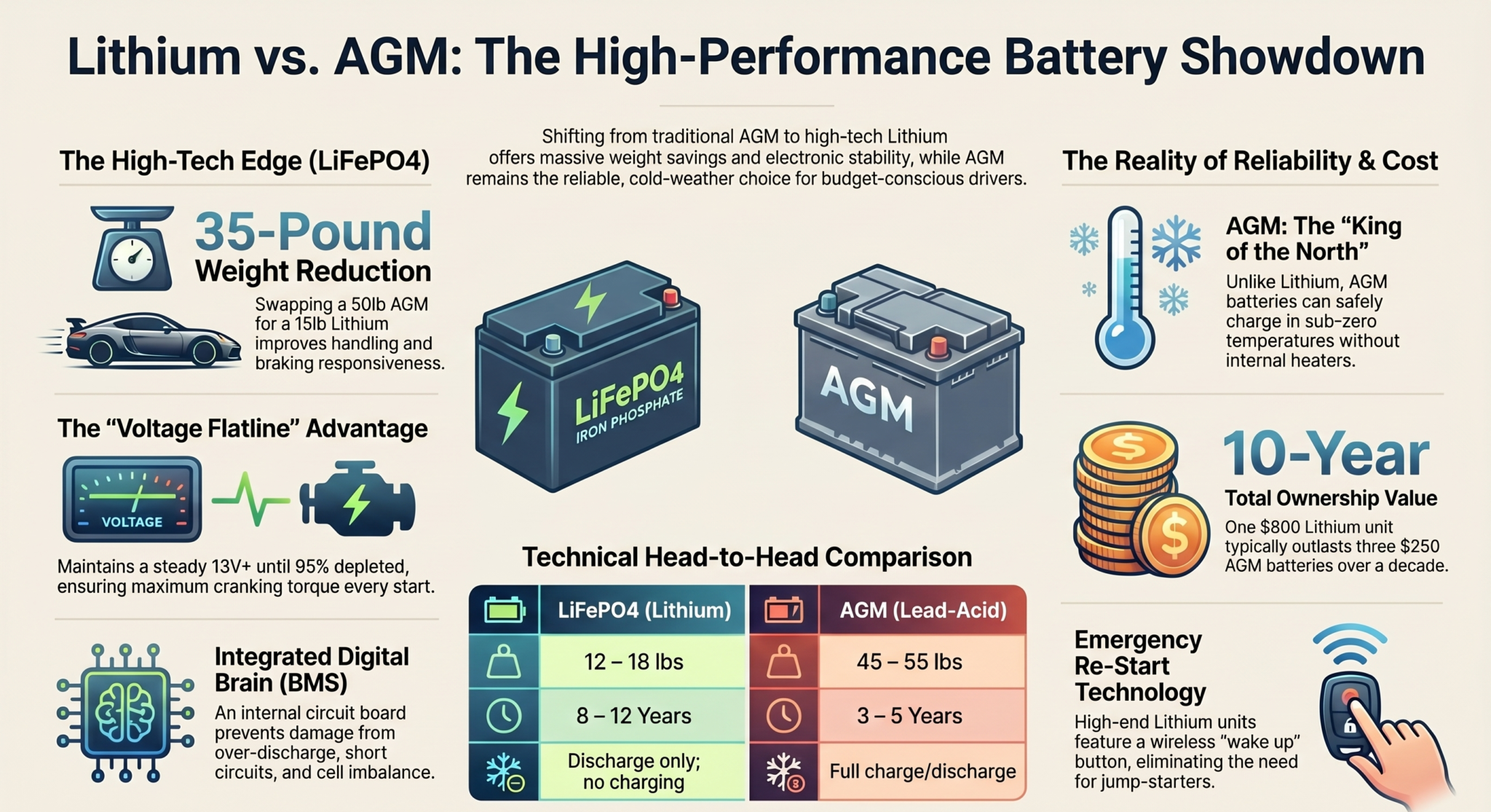
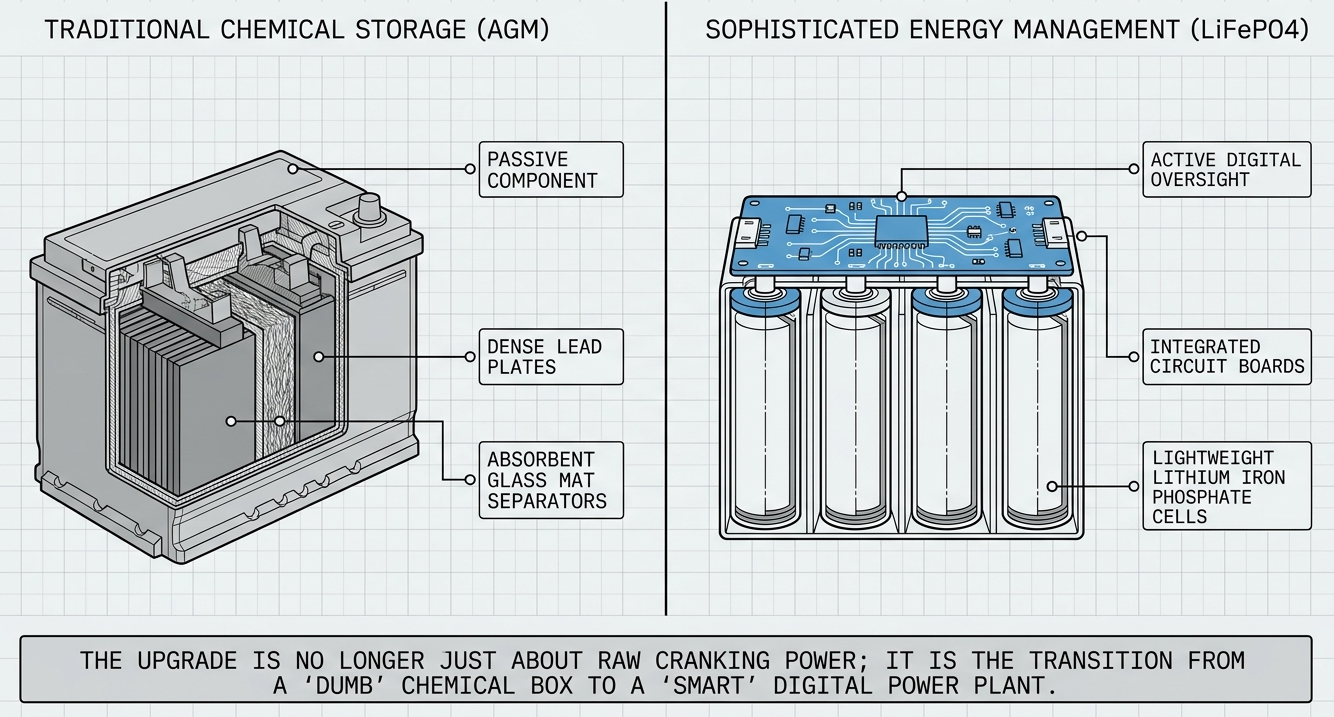
Comparing LiFePO4 and AGM is not an apples-to-apples evaluation; it is a comparison between a traditional chemical storage device and a sophisticated energy management system. These technologies differ in everything from chemical stability and weight to how they interact with your car’s alternator and electronics. In this guide, we dive deep into the technical advantages of Lithium—such as voltage flatlines and extreme weight reduction—while addressing the critical cold-weather limitations that often make AGM the safer choice for certain environments.
What Are Lifepo4 and AGM Batteries?
To understand the price gap, we must look at the internal chemistry. LiFePO4 batteries represent the modern frontier of automotive power, utilizing lithium iron phosphate as the cathode material. These are not the volatile lithium batteries found in laptops; they are engineered for extreme stability and high current output. They function more like a sophisticated energy management system than a simple bucket of chemicals, offering a digital approach to energy storage that monitors cell health in real-time.
On the other hand, AGM batteries are the ultimate evolution of the traditional lead-acid design. Instead of liquid acid sloshing around, they use fine glass mats to “soak up” the electrolyte. This makes them spill-proof, resistant to vibration, and significantly more durable than old-school flooded batteries. While they are a legacy technology, they remain the standard for millions of vehicles worldwide due to their proven reliability in the harshest engine bay environments where extreme heat and vibration are constant factors.
Weight Difference: Lifepo4 is Much Lighter
In automotive engineering, weight is the enemy of every performance metric, from braking distance to cornering speed. The most immediate and staggering difference between these two technologies is their physical mass. A standard lead-acid battery is effectively a heavy block of lead and acid, whereas lithium uses much lighter, energy-dense materials to achieve the same electrical results. This mass reduction is felt the moment you take a turn or hit the brakes, as the vehicle’s inertia is fundamentally changed.
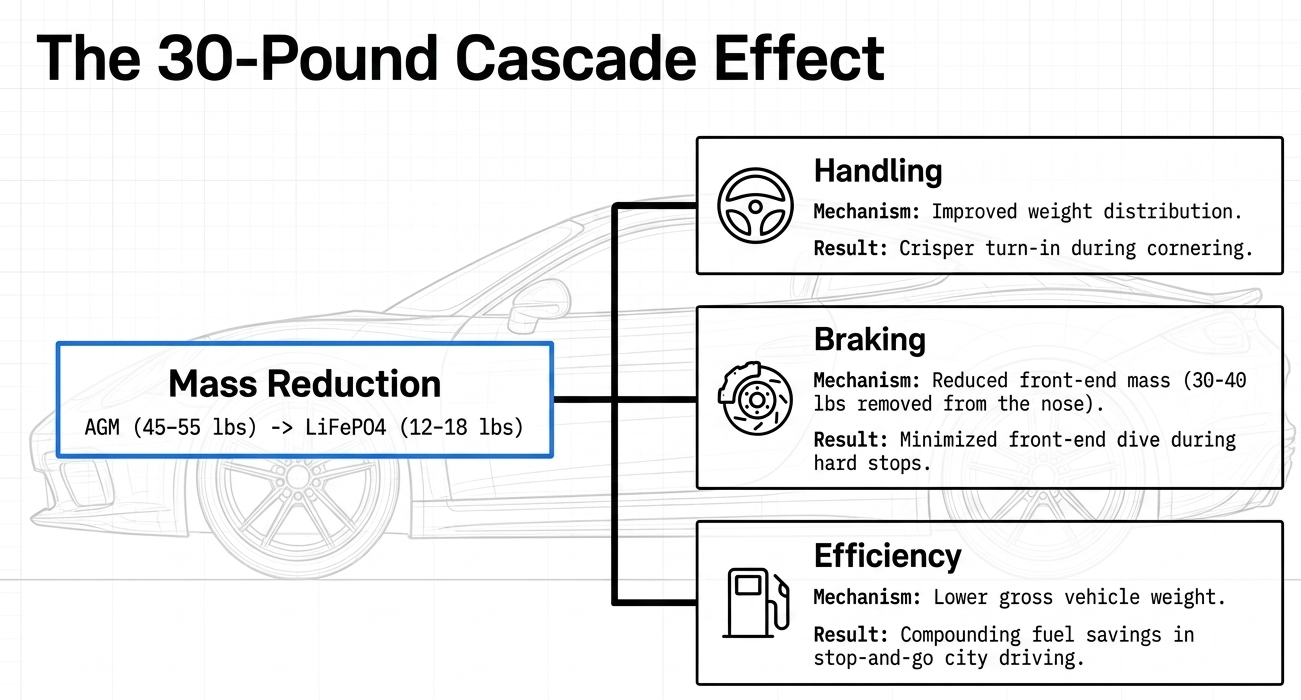
When you compare them on the scale, the results are clear: a typical LiFePO4 battery weighs about 30 pounds less than its AGM counterpart. Removing 30 to 40 pounds from the engine bay (usually located far forward or high up) dramatically improves the vehicle’s center of gravity and reduces front-end dive during hard braking. For performance enthusiasts, this is often the most cost-effective way to shave significant weight from a car without stripping out the comfort of the interior.
- Lifepo4 battery: Typically weighs between 15-25 pounds, allowing for easy handling during installation and significantly better front-rear weight distribution.
- AGM battery: Typically weighs between 50-60 pounds, requiring significant physical effort to secure and adding heavy “ballast” to the front of the vehicle.
Voltage Stability: Lifepo4 Keeps Power Steady
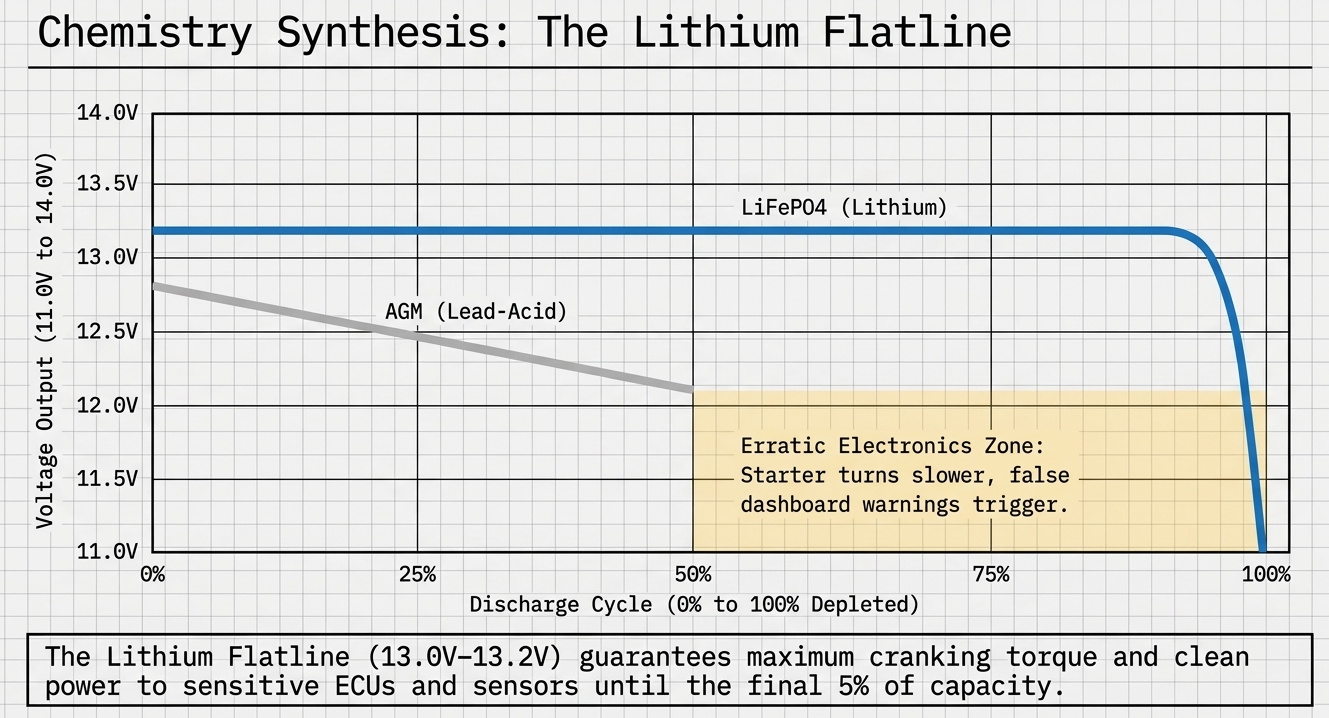
Voltage is the “electrical pressure” that pushes current through your car’s system. A unique technical advantage of LiFePO4 is its incredibly flat discharge curve. While a lead-acid battery begins to lose voltage almost immediately as it is used, lithium stays remarkably consistent. It provides nearly full power until it is almost completely empty, ensuring your starter motor gets a strong, high-torque “kick” every single time you turn the key, regardless of the state of charge.
AGM batteries, unfortunately, suffer from a steady voltage drop. As the battery capacity decreases, the voltage slides from 12.8V down to 12.1V or lower. This can cause the starter motor to crank slower and may even lead to “flickering” dashboard lights or erratic behavior in sensitive modern infotainment systems. Lithium eliminates this “weak start” feeling entirely, maintaining “like-new” performance until the very end of its charge cycle.
Why Is Voltage Stability Important?
For modern vehicles, voltage stability is not just about starting the car; it’s about protecting the entire electrical architecture. Modern cars are packed with sensors, microprocessors, and Engine Control Units (ECUs) that require a clean, steady power signal. Inconsistent voltage or “voltage sag” during cranking can lead to “phantom” error codes and increased electrical noise that stresses sensitive electronic components over time.
When the voltage stays steady, your ignition system can produce more consistent sparks, and your fuel pumps can operate at their intended speed. This translates to a smoother idle and more reliable performance, especially in vehicles that have been sitting for a few days. Lithium ensures that even at 20% charge, the battery behaves as if it were at 100%, providing peace of mind that the car’s “brain” is getting the high-quality power it needs to function correctly.
Cold Weather Performance: Which Battery Starts Better?
Cold weather is the ultimate test for any battery. In sub-zero temperatures, the chemical reactions inside a battery slow down, and the engine oil thickens, making it much harder to crank. Traditionally, AGM batteries have been the “King of the North” because their chemistry remains active and capable of accepting a charge even in extreme cold without the need for complex protection circuits or internal heating.
LiFePO4 batteries have historically struggled in freezing temperatures. While they can still discharge to start a car in the cold, they cannot safely *accept* a charge if the internal cells are below freezing (32°F / 0°C). Attempting to charge a frozen lithium battery can cause “lithium plating,” which leads to permanent damage. However, the latest professional-grade lithium batteries from brands like Antigravity or Dakota have solved this with built-in internal heaters that warm the cells before allowing the alternator’s charge to enter.
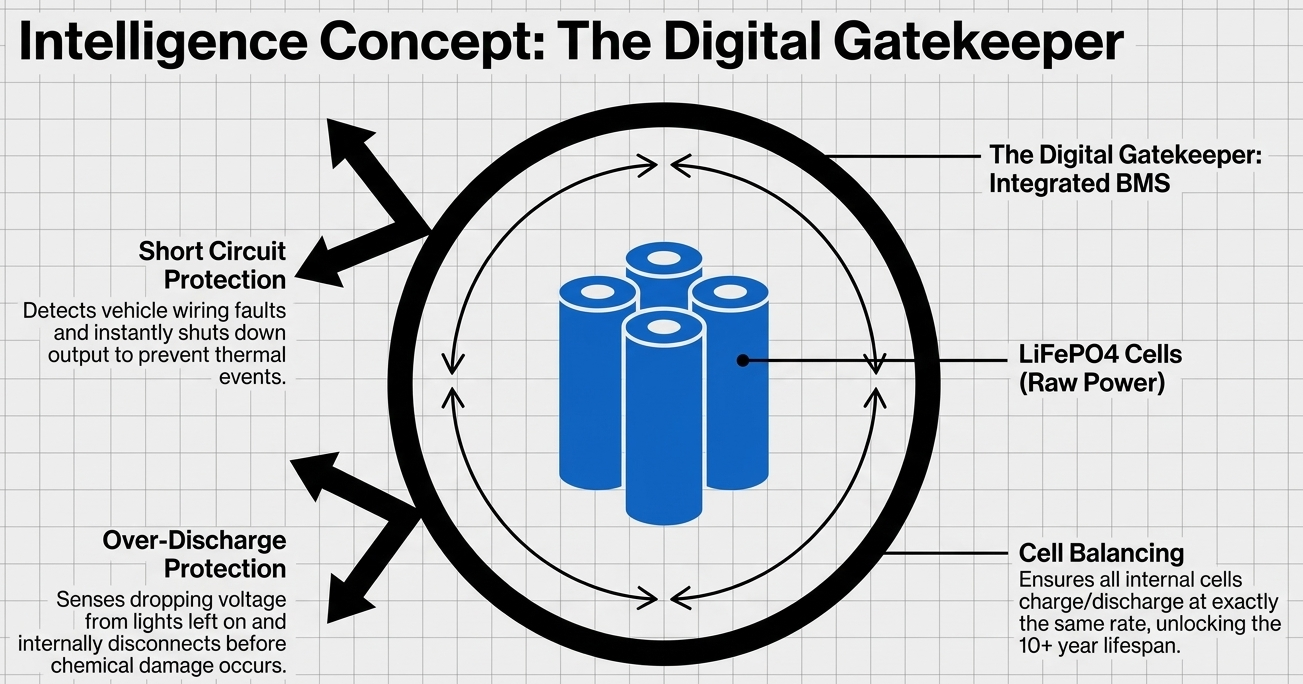
Mechanic’s Note: If you live in a climate where temperatures stay below freezing for months and you don’t have access to a heated garage, a high-quality AGM like an Odyssey is often the more reliable “fit and forget” choice. Lithium is fantastic tech, but it requires more thermal awareness in Arctic conditions.
Battery Management System (BMS): A Lifepo4 Safety Feature
One of the primary reasons for the $800 price tag is the “brain” inside the lithium battery: the Battery Management System (BMS). An AGM battery is a “dumb” device—it will allow itself to be drained until it dies or overcharged until it swells and leaks. A LiFePO4 battery is a smart device that actively protects itself from both user error and faults in the car’s charging system, ensuring maximum safety.
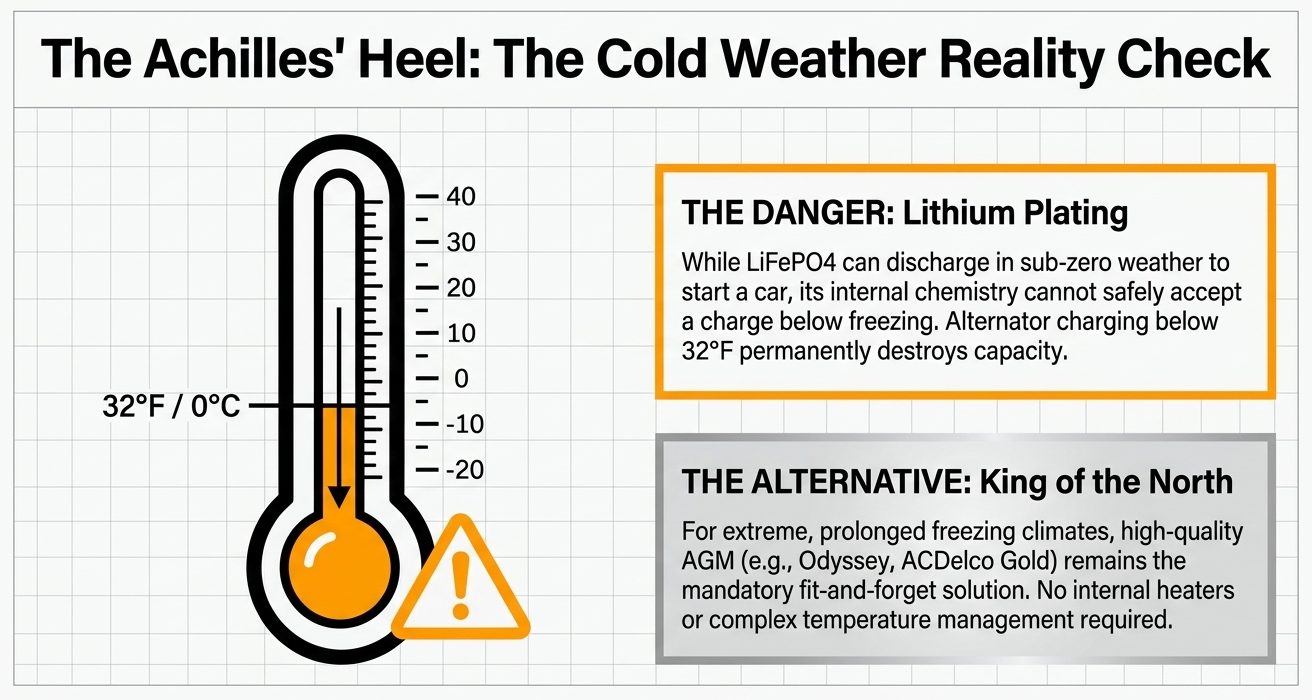
The BMS acts as a digital gatekeeper, monitoring every individual cell within the casing. It provides several layers of protection that are physically impossible in an AGM battery. This intelligence is the reason lithium batteries can safely last for a decade, as the system prevents the chemical abuse that typically kills lead-acid batteries in just a few seasons.
- Overcharge Protection: Instantly stops the alternator from “cooking” the cells if a regulator fails.
- Deep Discharge Protection: Disconnects the battery before it hits a critically low voltage level.
- Cell Balancing: Ensures that all internal cells charge and discharge at the same rate.
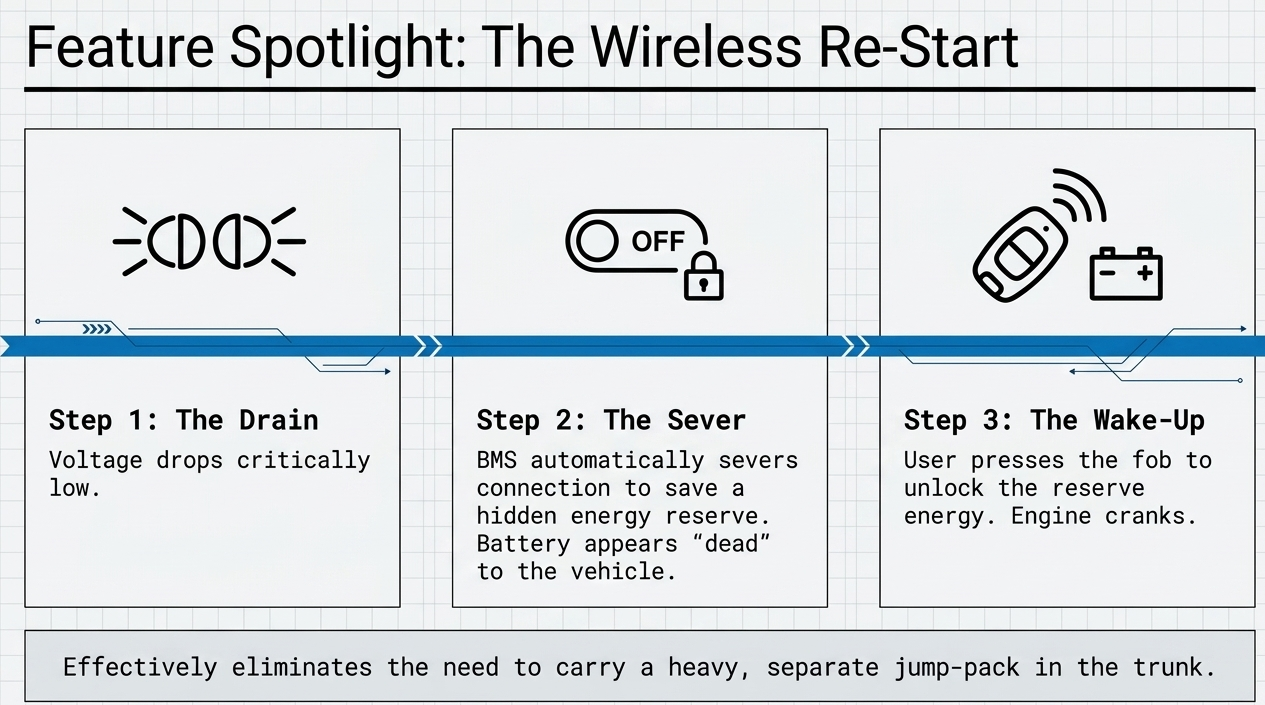
Technical Warning: High-end Lithium batteries, such as the Antigravity Automotive series, feature a “RE-START” or “Remote Jump Start” feature. If the BMS shuts the battery down to prevent a total drain, you don’t need a jump-starter. You simply press a button on a wireless fob to “wake up” a reserve of energy and start your car, effectively eliminating the need for carrying extra gear.
Comparing Brands: Antigravity vs Dakota Lithium
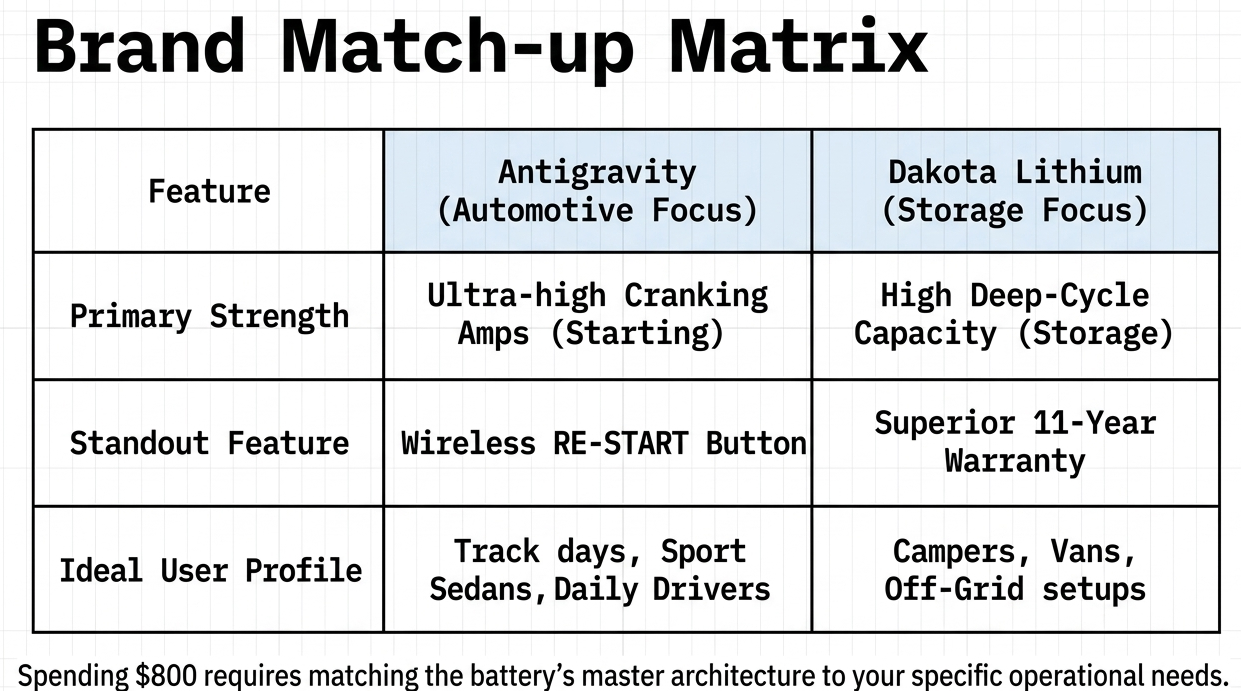
When you are ready to invest in a premium power source, the brand you choose dictates the features you get. Antigravity and Dakota Lithium are the two titans of the industry, but they serve different masters. Antigravity is the darling of the automotive performance world, focusing on extreme cranking power and clever recovery features, while Dakota Lithium is built for endurance, deep-cycle reliability, and off-grid power storage for vans and campers.
The choice between them often comes down to your vehicle’s primary use. If you have a high-performance sports car, a luxury sedan, or a daily driver you want to save weight on, Antigravity’s automotive-specific designs with built-in jump-start reserves are hard to beat. If you are building an overlanding rig or a camper where you need to run lights and fridges for days without the engine running, Dakota Lithium’s deep-cycle expertise is the superior choice.
| Feature | Antigravity (Automotive) | Dakota Lithium |
|---|---|---|
| Primary Focus | Starting & Weight Reduction | Deep Cycle & Capacity |
| BMS Quality | Automotive Grade (High Peak) | Storage Grade (Steady Drain) |
| Unique Feature | Wireless “RE-START” Button | Unbeatable 11-Year Warranty |
AGM Batteries: Reliable and Affordable
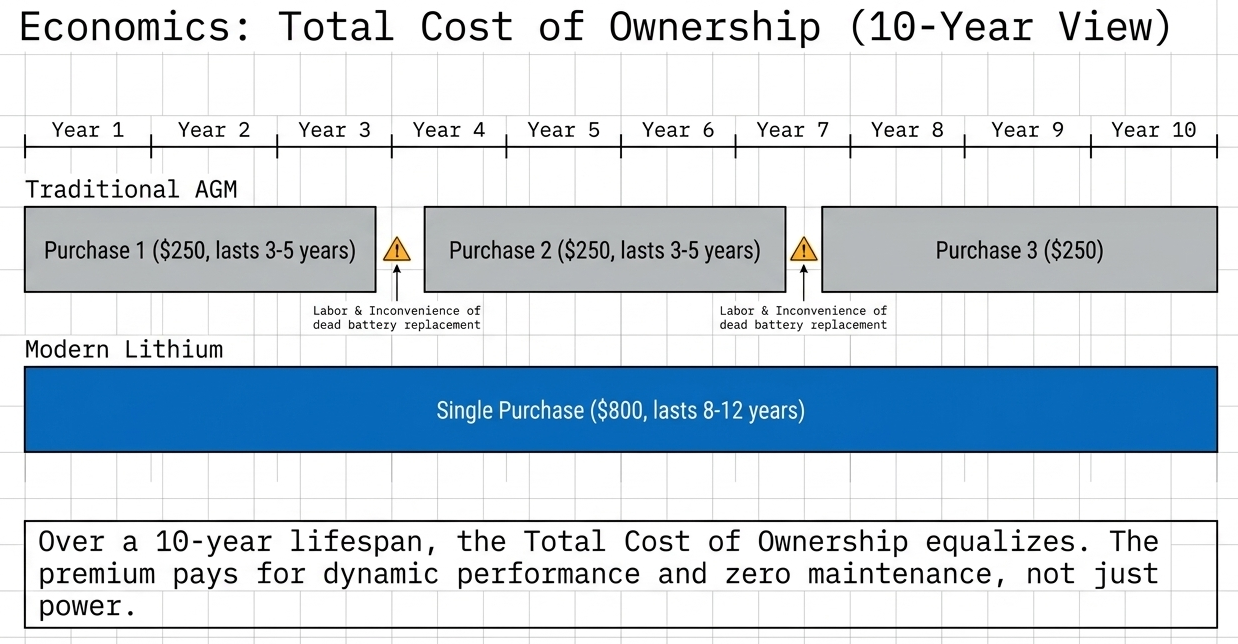
Despite the rise of lithium, the AGM battery remains a formidable and practical choice for the majority of drivers. At a price range of $150 to $300, they offer incredible value for the money. They are “maintenance-free,” meaning you never have to add water, and they are built to handle the rough vibrations of off-road driving or the intense heat generated in a crowded engine bay without the need for complex electronics.
The primary advantage of AGM is its absolute predictability. Every mechanic in the world knows how to test, jump, and charge an AGM battery. They don’t require special chargers, they aren’t afraid of being charged in the cold, and they provide excellent starting power for 3 to 5 years. For many daily drivers, the $500 savings over lithium is better spent on other maintenance or fuel, making AGM the most “sensible” choice for many.
Lifepo4 Batteries: Higher Price But Longer Life
The $800 price tag is a classic case of “pay more now to save more later.” While an AGM battery is a 3-to-5-year investment, a LiFePO4 battery is a 10-year investment. Because lithium can handle thousands of charge cycles (compared to a few hundred for lead-acid), it effectively replaces 2 or 3 AGM batteries over its total lifespan. When you calculate the cost per year of ownership, lithium often comes out ahead in the long run.
Beyond longevity, the faster charging rates of lithium are a hidden benefit. A LiFePO4 battery can accept current much faster than an AGM. This means your alternator doesn’t have to work as hard for as long to top the battery up after a start, which can lead to a slight increase in alternator lifespan and a minor reduction in engine load, further proving that lithium is an efficiency-focused upgrade.
Is Lithium Worth the $800 Price?
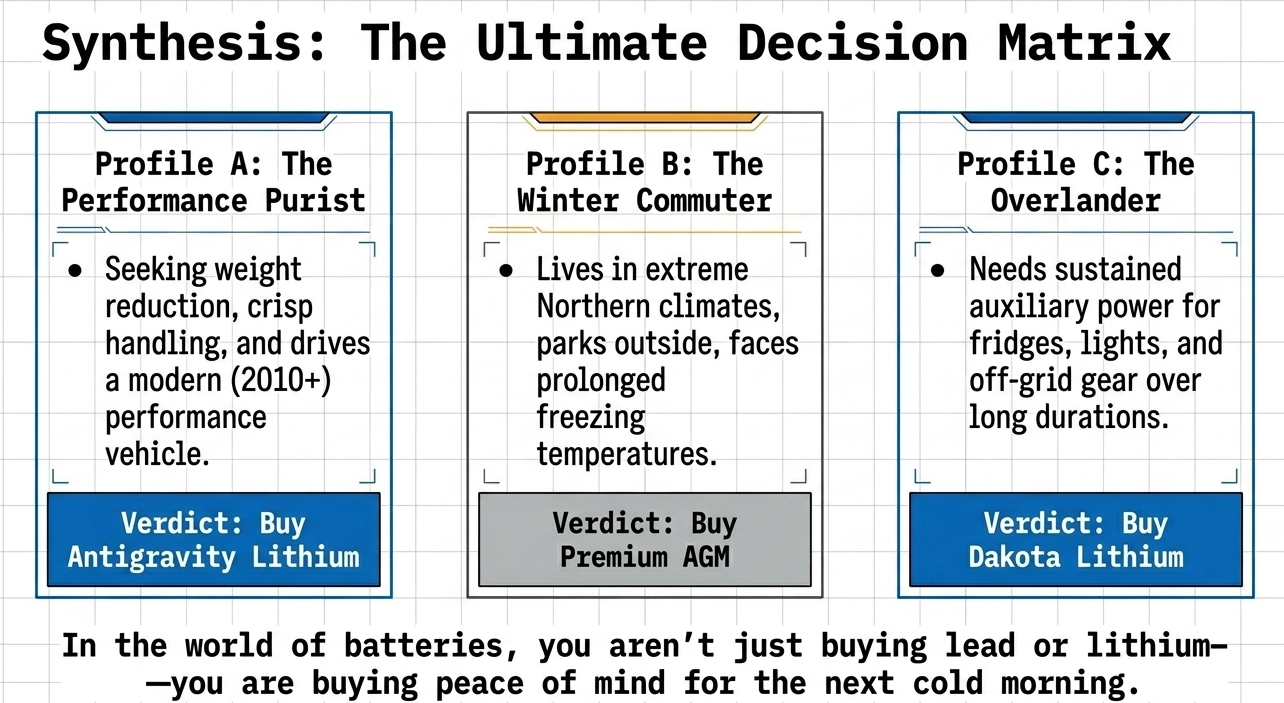
Deciding if lithium is “worth it” depends entirely on your vehicle goals. If you are building a track car or a high-performance sedan, saving 30 pounds off the front end is worth every penny of that $800—it’s cheaper than buying carbon fiber body panels to achieve the same result. If you are an overlander who spends weeks off the grid, the built-in safety of the BMS and the ability to jump-start yourself with a remote fob is a priceless insurance policy.
However, if you own a standard commuter car and plan to sell it in two or three years, you will never see the return on investment for a lithium battery. In that case, a high-quality AGM provides all the performance you need at a fraction of the cost. Lithium is a long-term commitment to vehicle technology and weight efficiency, designed for those who want the absolute best performance.
Top Amazon Picks for Lifepo4 Batteries
If you have decided that the benefits of LiFePO4 outweigh the cost, choosing a reputable manufacturer is vital. You want to ensure you are getting a genuine BMS and high-quality cells that won’t fail prematurely. Brands like Antigravity, Dakota, and Renogy have established themselves as the most reliable options available for online purchase with proven track records in the US market.
When shopping, pay close attention to the Cranking Amps (CA) rather than just the Amp-Hours (Ah). A battery meant for a solar house might have lots of storage capacity but won’t be able to provide the massive burst of energy needed to start a large V8 engine. Always choose an “Automotive” or “Starter” designated lithium battery for your vehicle to ensure full compatibility with your charging system.
Frequently Asked Questions (FAQ)
What Is The Main Difference Between Lifepo4 And Agm Batteries?
The main difference is the chemistry and physical weight. LiFePO4 uses energy-dense lithium and a digital management system (BMS), making it 30 pounds lighter and capable of lasting 10 years. AGM uses traditional lead-acid chemistry with glass mats, making it heavier and shorter-lived, but much more affordable and better suited for charging in extreme sub-zero cold.
Why Do Lifepo4 Batteries Cost Around $800?
The high price reflects the cost of raw lithium materials and the complex internal electronics (BMS) required to keep the battery safe. You are also paying for a lifespan that is 2-3 times longer than a standard battery, meaning you are essentially pre-paying for three future AGM batteries in one purchase.
How Much Weight Can Lifepo4 Batteries Save In A Car?
You can typically save between 30 and 40 pounds. A standard AGM battery for a passenger vehicle weighs about 50-60 lbs, while an equivalent LiFePO4 starter battery weighs only 15-20 lbs. This is one of the most effective and easiest ways to reduce “dead weight” in a vehicle’s engine bay.
Do Lifepo4 Batteries Perform Better In Cold Weather?
They can start a car well in the cold, but they struggle with *charging* in freezing temperatures. AGM batteries are generally superior in Arctic conditions. However, high-end LiFePO4 batteries with internal heating elements can overcome this issue, though they require more energy management.
Final Purchase Verdict: Is Lithium Worth the $800?
The $800 price tag is only worth it if you value performance, advanced tech, and extreme longevity over initial cost. If you are building a performance car where every pound matters, or if you want a battery that lasts a decade and has a built-in “emergency jump start” button, the Antigravity Lithium is an unbeatable piece of technology. However, if you live in a freezing climate or simply need a reliable daily driver for a few more years, a high-quality AGM battery at $250 provides the best real-world value. In the world of batteries, you aren’t just buying lead or lithium—you are buying peace of mind for the next cold morning.

Eric Strong works in the automotive repair industry more than 20 years. His work included repairing electrical systems in various vehicle systems. A hybrid electric car battery replacement experience expanded his understanding of automotive battery technology.
Page Contents