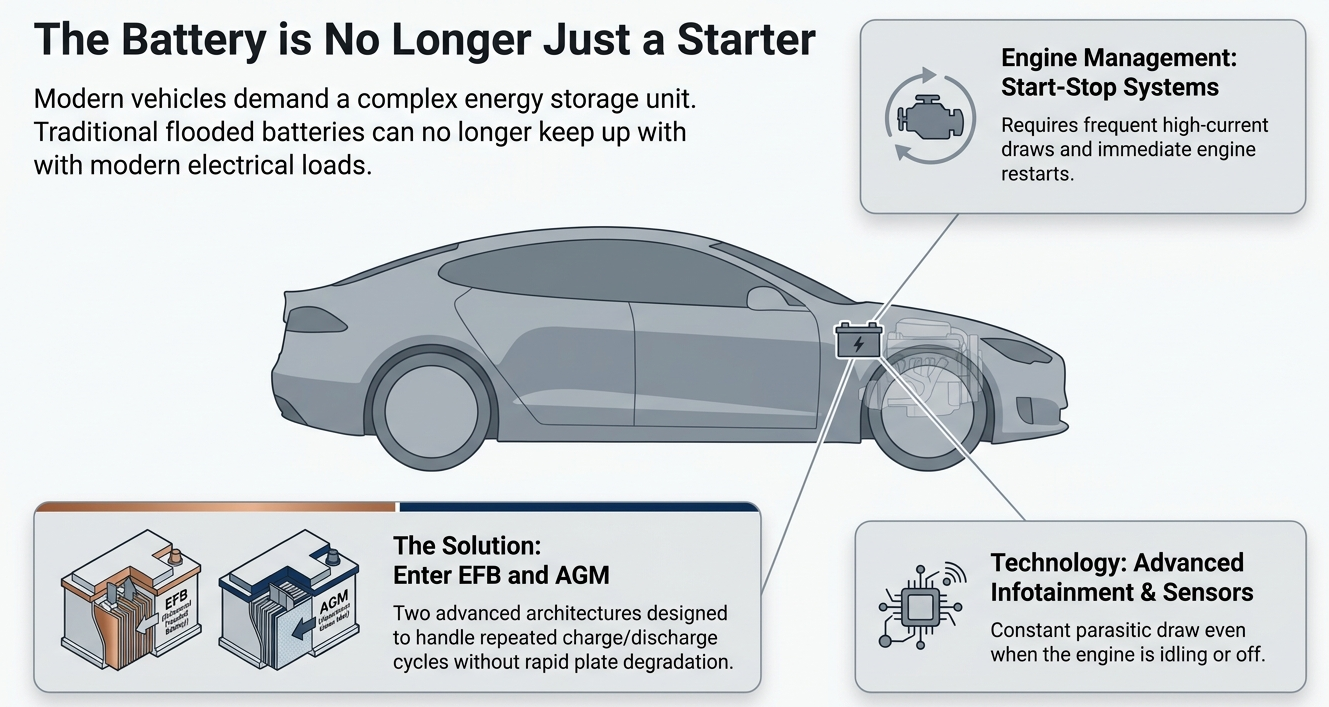
Are you confused about which battery is best for your vehicle—EFB or AGM? Choosing the right battery can save you money, improve your car’s performance, and prevent unexpected breakdowns. In an era where vehicles are packed with sensitive sensors, advanced infotainment, and eco-friendly engine management systems, the battery has evolved from a simple starter to a complex energy storage unit.
 Both EFB and AGM batteries have their strengths, but knowing which one fits your needs isn’t always easy. You’ll discover the key differences between EFB and AGM batteries, helping you make a smart choice that keeps your vehicle running smoothly. Keep reading to find out which battery matches your lifestyle and driving habits perfectly.
EFB Battery Basics
EFB Battery Basics introduce an important option in the world of automotive and energy storage batteries. EFB stands for Enhanced Flooded Battery. These batteries offer improvements over traditional flooded lead-acid types. EFB batteries combine durability and cost-effectiveness, making them popular in many vehicles. Understanding their design, performance, and applications helps users choose the right battery for their needs. This section explains the fundamentals of EFB batteries, comparing them with AGM batteries and showing why they matter.
Design And Construction
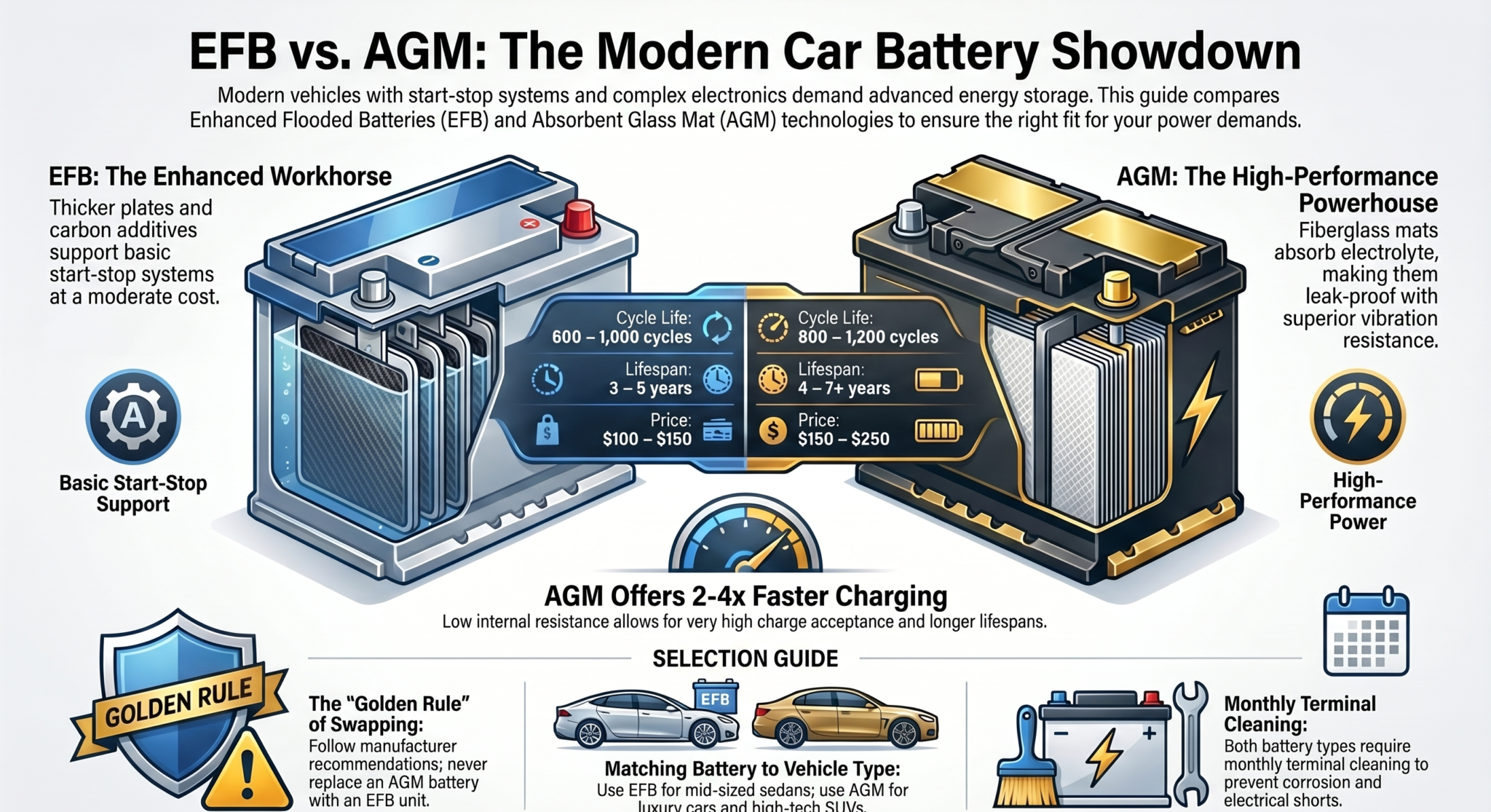
EFB batteries are built on the foundation of standard flooded lead-acid batteries but include key upgrades for better performance. They are designed to handle the frequent high-current draws required for engine restarts without the rapid plate degradation seen in cheaper alternatives.
- Plate Structure: Thicker plates with special alloys improve strength and lifespan.
- Active Material: Enhanced paste composition with a polyester “scrim” to reduce shedding during use.
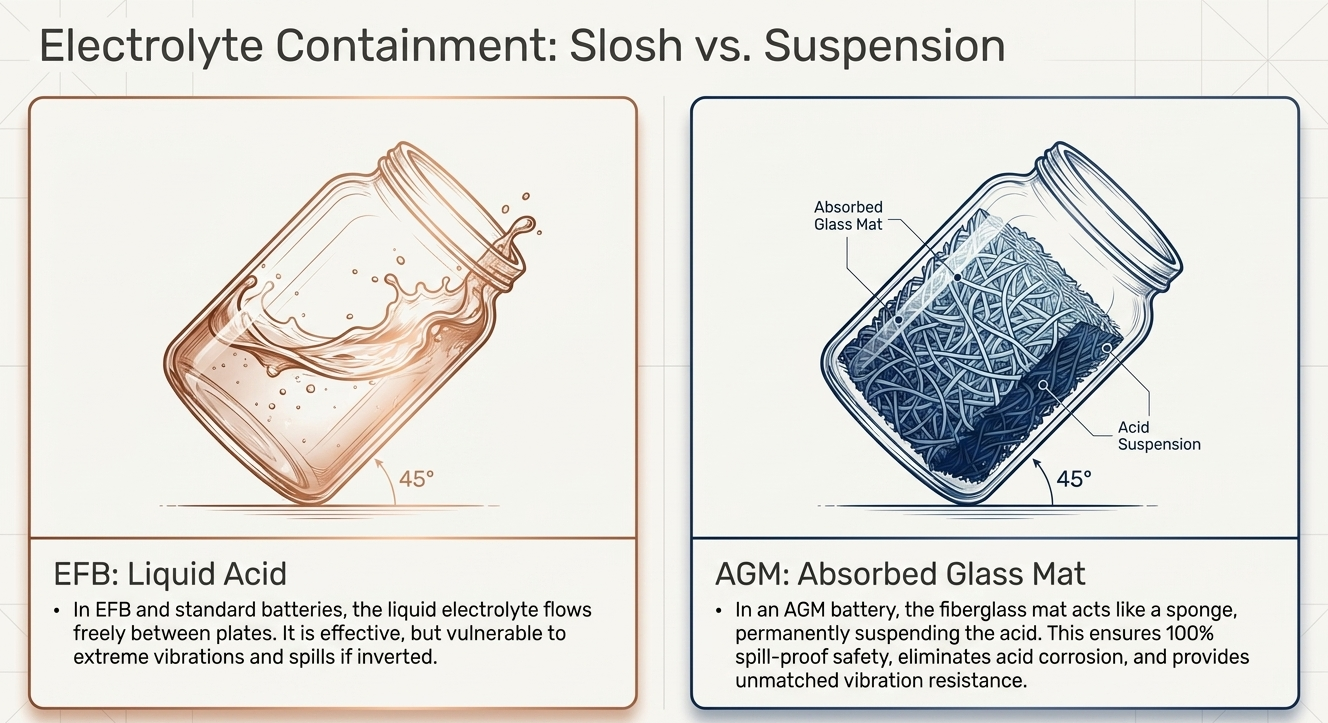
- Electrolyte: Uses liquid sulfuric acid, similar to traditional flooded batteries.
- Separators: Improved separators prevent short circuits and help maintain battery health.
The design focuses on resisting vibrations and sustaining repeated charge/discharge cycles better than standard flooded batteries.
| Feature | EFB Battery | Standard Flooded Battery |
|---|---|---|
| Plate Thickness | Thicker, reinforced | Thinner, standard |
| Electrolyte Type | Liquid acid | Liquid acid |
| Durability | Higher resistance to wear | Lower resistance |
| Cycle Life | Up to 2-3 times longer | Standard |
Performance Characteristics
EFB batteries deliver reliable power with improved endurance. They support vehicles that use start-stop systems and require frequent restarting. Key performance traits include:
- High Charge Acceptance: Faster and more efficient charging than standard flooded batteries.
- Longer Cycle Life: Can handle more charge/discharge cycles before capacity drops.
- Improved Vibration Resistance: Construction reduces damage from engine vibrations.
- Moderate Deep Cycling Capability: Better than flooded batteries but less than AGM types.
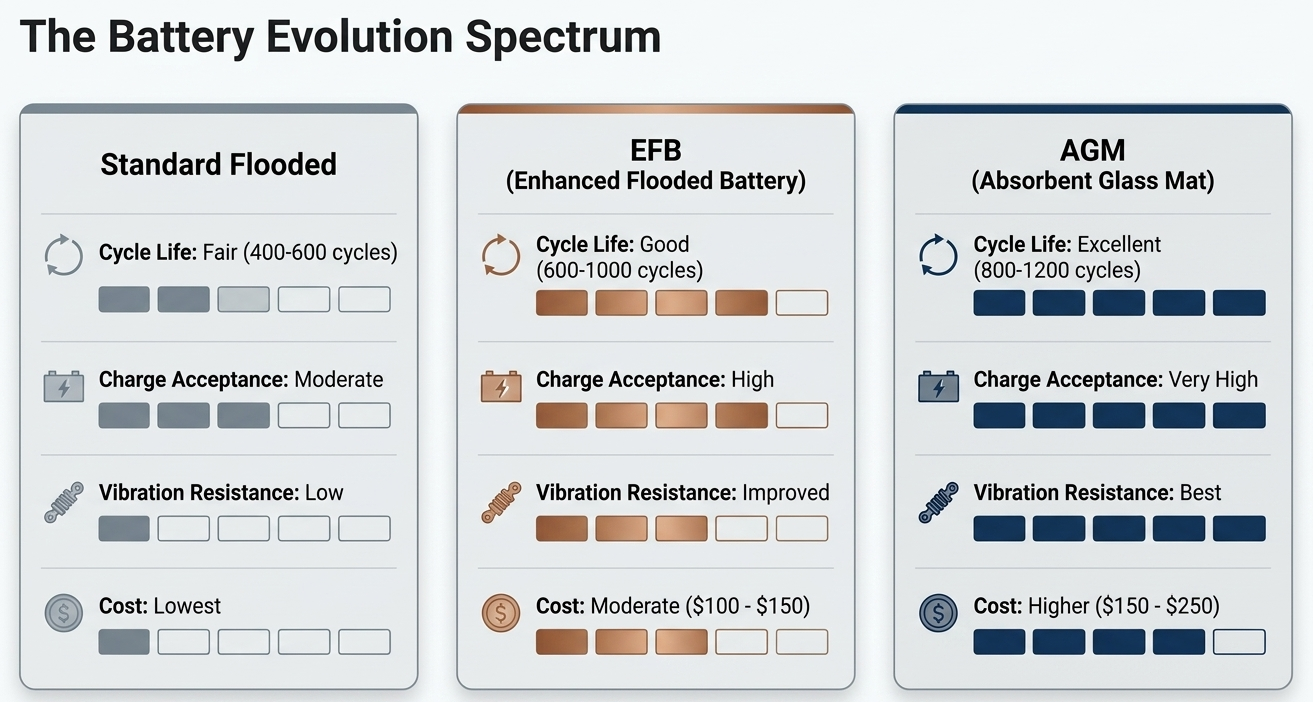
| Characteristic | EFB Battery | AGM Battery | Standard Flooded |
|---|---|---|---|
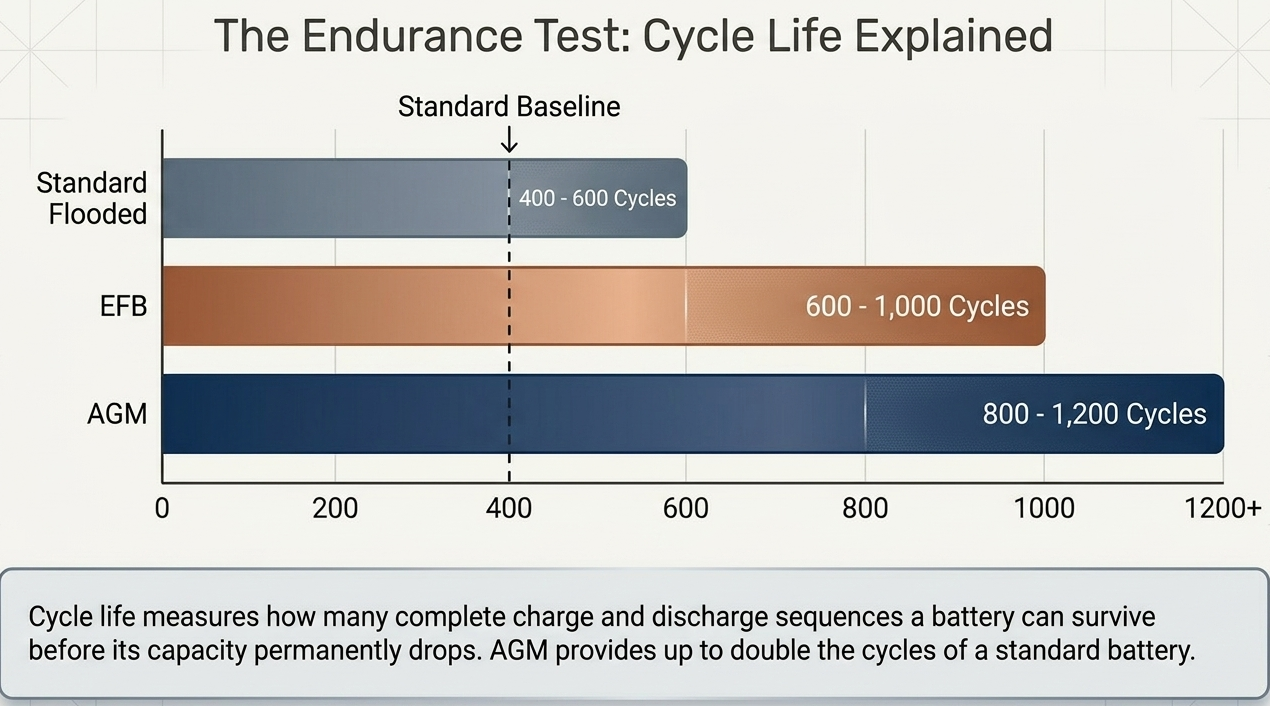
| Cycle Life | Good (600-1000 cycles) | Excellent (800-1200 cycles) | Fair (400-600 cycles) |
| Charge Acceptance | High | Very High | Moderate |
| Vibration Resistance | Improved | Best | Low |
| Cost | Moderate | Higher | Lowest |
The Role Of Carbon Additives In EFB Tech
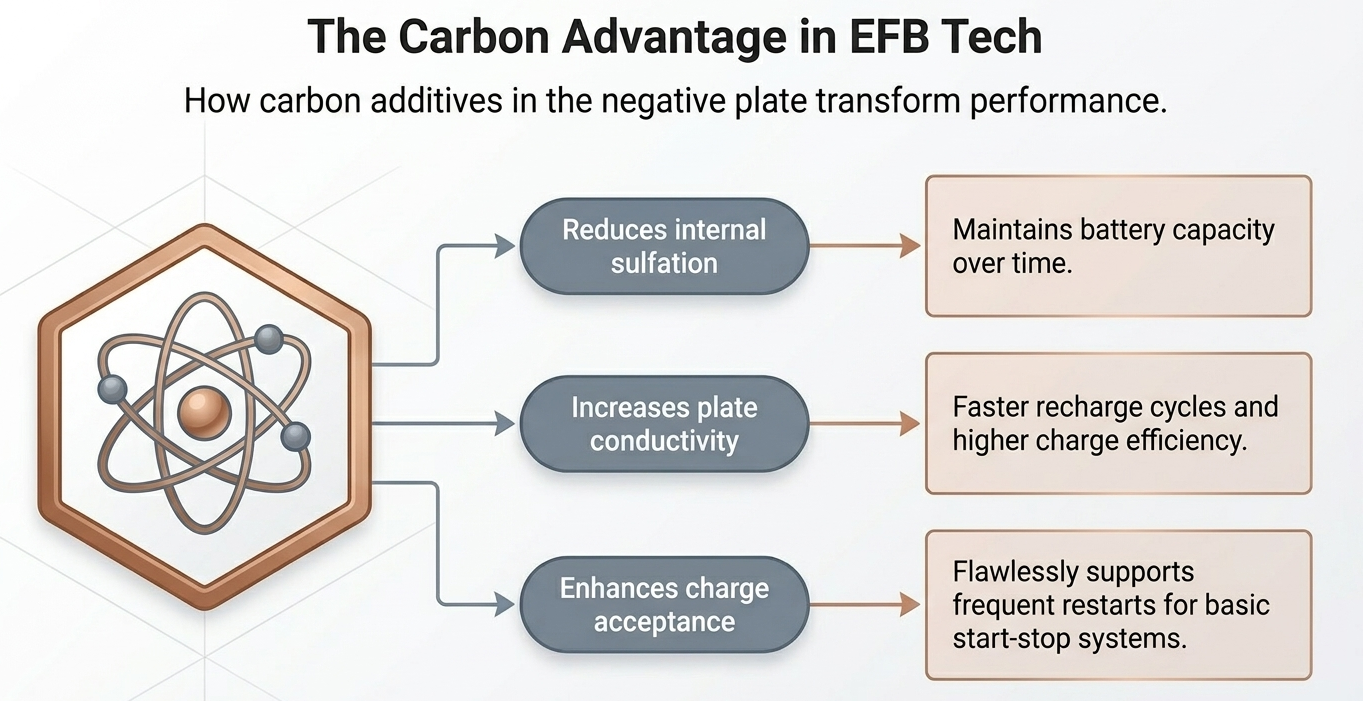
Carbon additives improve EFB battery performance by enhancing the negative plate’s ability to accept and hold charge. This is a key reason EFB batteries perform well in modern vehicles. These additives work by:
- Reducing sulfation, a common cause of capacity loss.
- Increasing conductivity inside the battery plates.
- Improving charge acceptance during frequent start-stop cycles.
| Benefit | Effect on EFB Battery |
|---|---|
| Reduced Sulfation | Maintains capacity over time |
| Higher Charge Efficiency | Faster recharge cycles |
| Improved Durability | Longer cycle life |
| Better Start-Stop Performance | Supports frequent restarts |
AGM Battery Essentials
AGM Battery Essentials play a vital role in many modern power systems. AGM, or Absorbent Glass Mat batteries, have become popular for their reliability and efficiency. They differ greatly from traditional batteries in design and use. Understanding AGM batteries helps in choosing the right power source for various needs. Their unique features make them suitable for many applications, from luxury vehicles to solar power setups.
Design And Construction
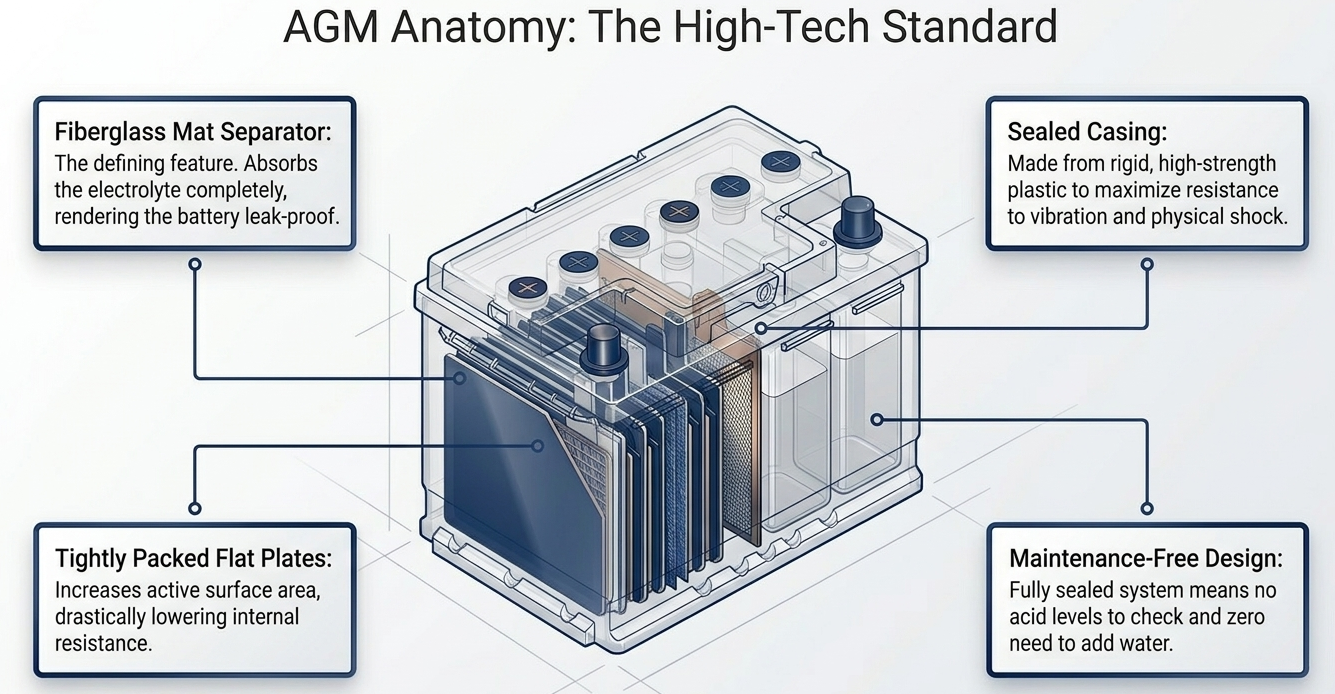
The design of AGM batteries is distinct. They use a fiberglass mat separator that absorbs the electrolyte. This mat keeps the acid in place and prevents spills, making the battery leak-proof. The absorbed electrolyte also improves safety by reducing acid corrosion.
- Sealed and maintenance-free: No need to add water or check acid levels.
- Flat plate design: Plates are tightly packed, increasing surface area.
- Durable casing: Made from strong plastic to resist vibration and shock.
| Feature | Description |
|---|---|
| Electrolyte | Absorbed in glass mats |
| Separator | Fiberglass mat |
| Maintenance | None required |
Performance Characteristics
AGM batteries deliver strong performance in many areas. They offer low internal resistance, which means faster charging and higher current output. This makes them ideal for starting engines or powering devices that need bursts of energy.
| Characteristic | Value/Benefit |
|---|---|
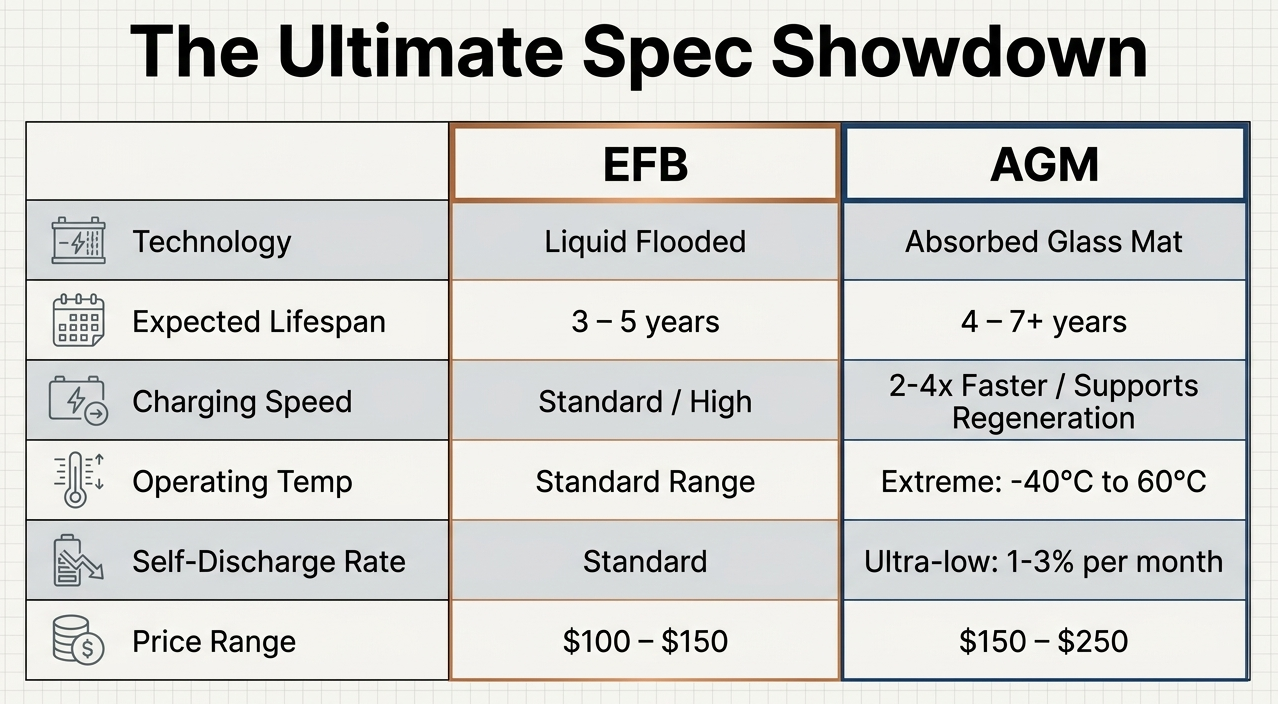
| Charge Time | 2-4 times faster than traditional |
| Self-Discharge | 1-3% per month |
| Operating Temp | -40°C to 60°C |
Key Technical Differences: EFB vs. AGM
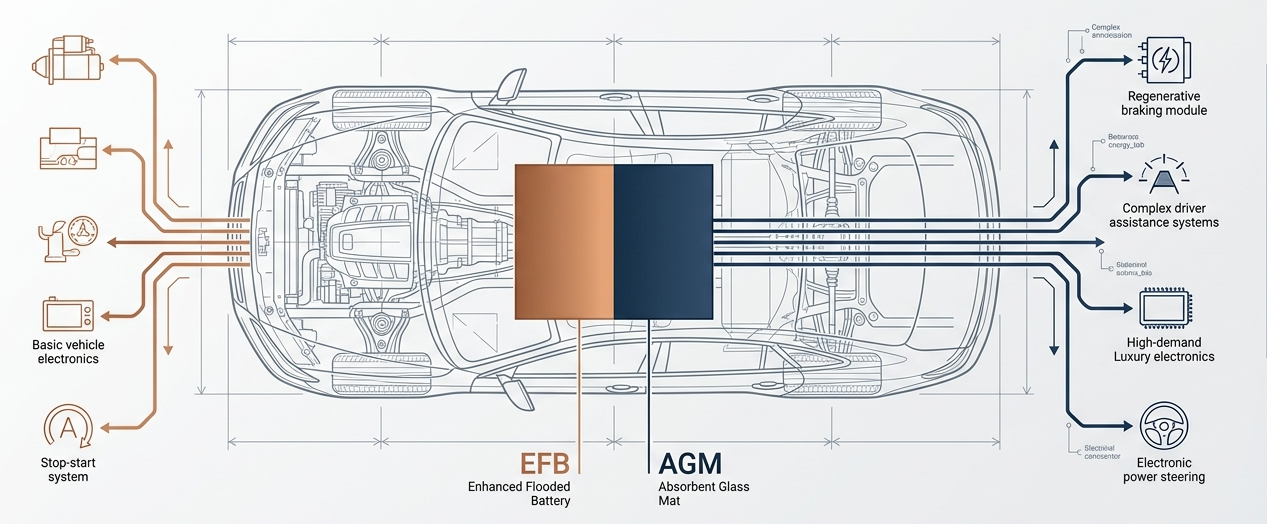
Understanding the main contrasts in durability, charging, and compatibility is essential for the long-term health of your vehicle. Choosing between EFB and AGM can be confusing. Both serve as reliable power sources for vehicles but differ in key aspects. Below, we explore the main contrasts in durability, charging, cost, and compatibility.
| Feature | EFB Battery | AGM Battery |
|---|---|---|
| Cycle Life | 600 – 1,000 cycles | 800 – 1,200 cycles |
| Electrolyte | Liquid (Flooded) | Absorbed in Glass Mats |
| Charging | Standard / High | Very High (Supports Regeneration) |
| Lifespan | 3 – 5 years | 4 – 7+ years |
| Price | $100 – $150 | $150 – $250 |
Durability And Lifespan
EFB batteries are designed to handle frequent starts and stops, making them suitable for vehicles with basic start-stop systems. AGM batteries offer superior durability, especially in harsh conditions. AGM batteries last longer, often maintaining voltage better under heavy loads. EFB batteries typically last around 2 to 4 years, while AGM units often reach 5 years or more.
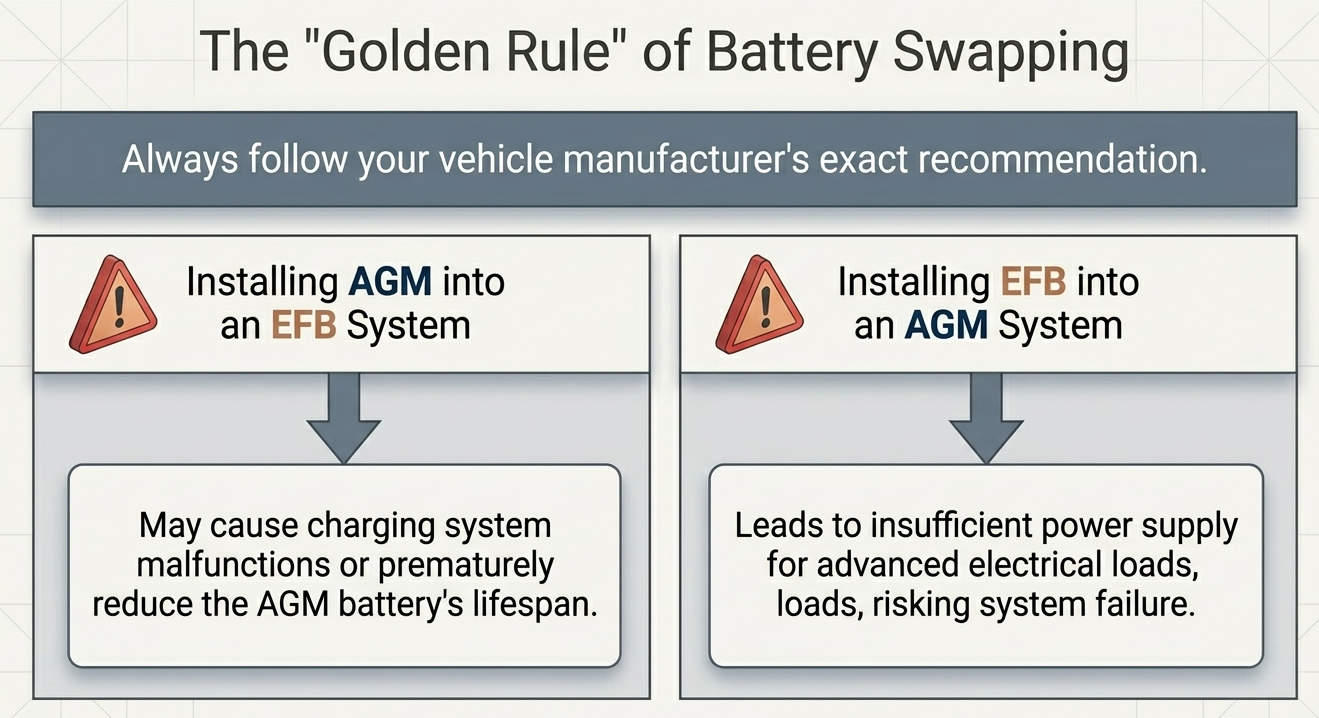
Can You Swap AGM with EFB? (The “Golden Rule”)
The “Golden Rule” is to follow the manufacturer’s recommendation for your car model. Using an AGM battery in a system designed for EFB may cause charging problems or reduce battery life. Similarly, using EFB in place of AGM can lead to insufficient power supply. Check your vehicle manual for battery type requirements and consider the start-stop system and electrical load.
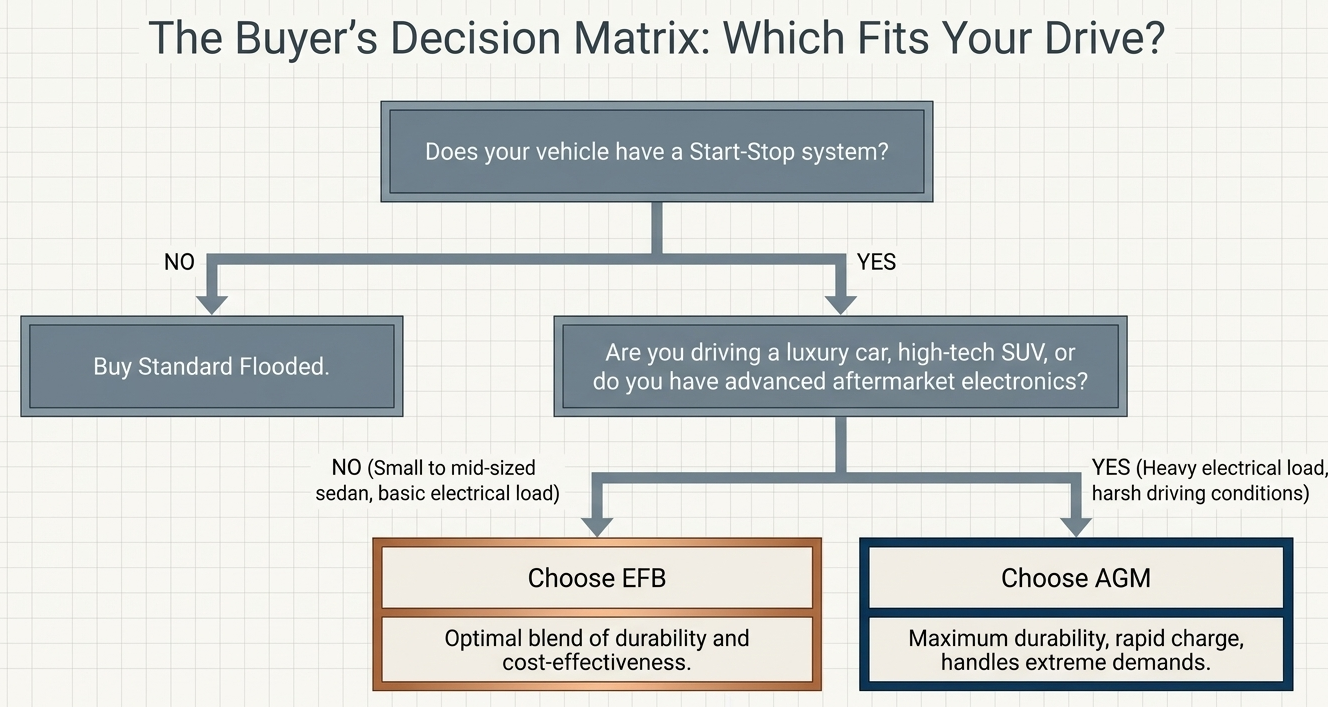
Choosing The Right Battery
Choosing the right battery for your vehicle is important for its performance and reliability. Picking the right one depends on several factors. This guide helps you decide by looking at vehicle compatibility, driving conditions, and budget considerations.
| Battery Type | Best For | Vehicle Examples |
|---|---|---|
| EFB | Basic start-stop systems | Small to mid-sized sedans |
| AGM | Advanced electrical loads | Luxury cars, high-tech SUVs |
Installation And Care Tips
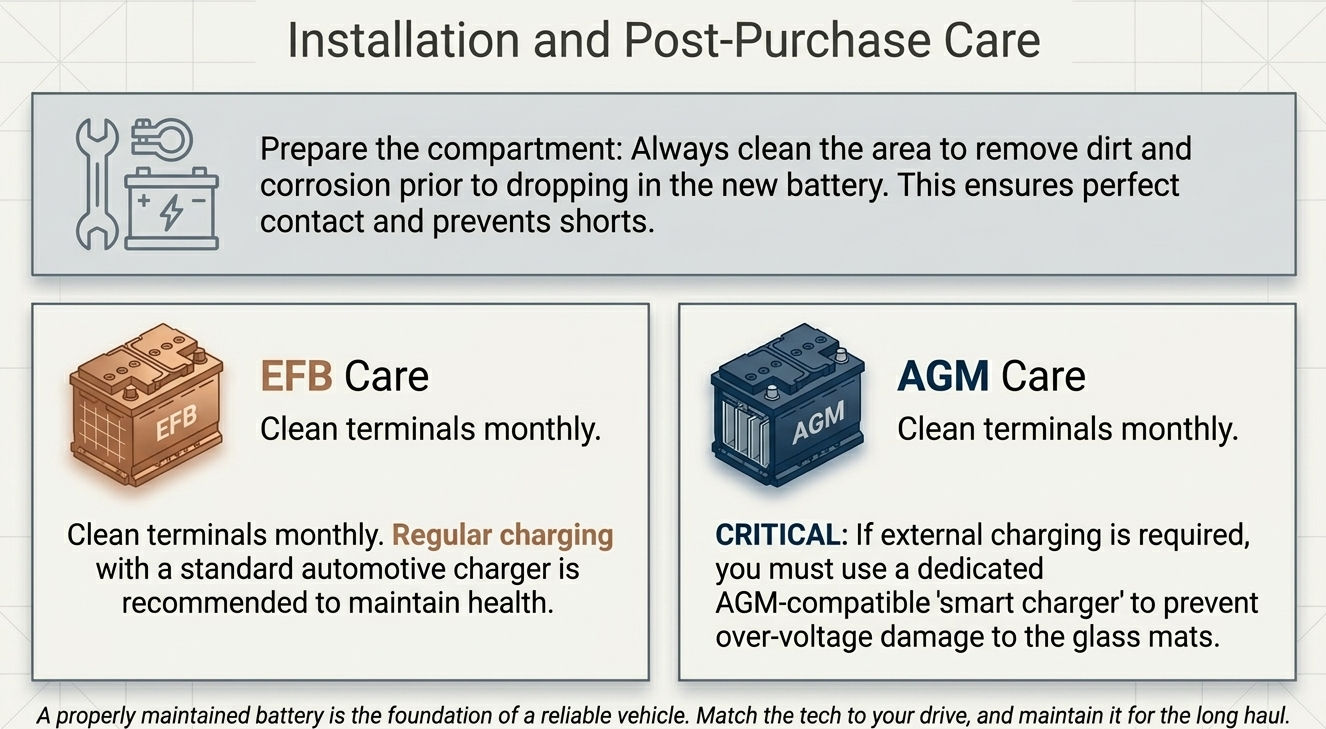
Proper installation and routine maintenance are key to getting the best performance and lifespan from either battery type. Both batteries have unique features that require specific steps during setup and upkeep. Start by preparing the battery compartment: clean the area to remove dirt and corrosion. This ensures good contact and prevents electrical shorts.
Maintenance Practices
| Task | EFB Battery | AGM Battery |
|---|---|---|
| Cleaning | Clean terminals monthly | Clean terminals monthly |
| Charging | Regular charging recommended | Use AGM-compatible charger |
Frequently Asked Questions
What Is The Main Difference Between EFB And AGM Batteries?
EFB batteries use enhanced flooded technology for durability. AGM batteries feature absorbed glass mat for better performance and vibration resistance.
Can Efb Batteries Replace Agm Batteries In Cars?
EFB batteries can replace AGM in some cases but with limitations. AGM offers higher performance and durability for modern vehicles. Always check vehicle compatibility before swapping battery types.
Final Verdict: Matching the Battery to Your Vehicle’s Needs
Choosing between EFB and AGM batteries depends on your needs. EFB batteries are great for everyday use and cost less. AGM batteries handle tougher conditions and last longer. Remember, a good battery keeps your car running smoothly. Keep these points in mind to make a smart choice.

Eric Strong works in the automotive repair industry more than 20 years. His work included repairing electrical systems in various vehicle systems. A hybrid electric car battery replacement experience expanded his understanding of automotive battery technology.
Page Contents