Selecting the ideal power source for your vehicle involves more than just matching a BCI number; it requires understanding how environmental stressors interact with internal chemistry. For owners of Toyota, Honda, and Nissan trucks or SUVs, the Group 24F battery remains the standard for heavy-duty performance and reliable cold-weather cranking. This guide evaluates the top performers on the market, focusing on how specific internal architectures—from traditional lead-acid to modern lithium-ion—handle the unique demands of high-compression engines and accessory-heavy electrical systems.
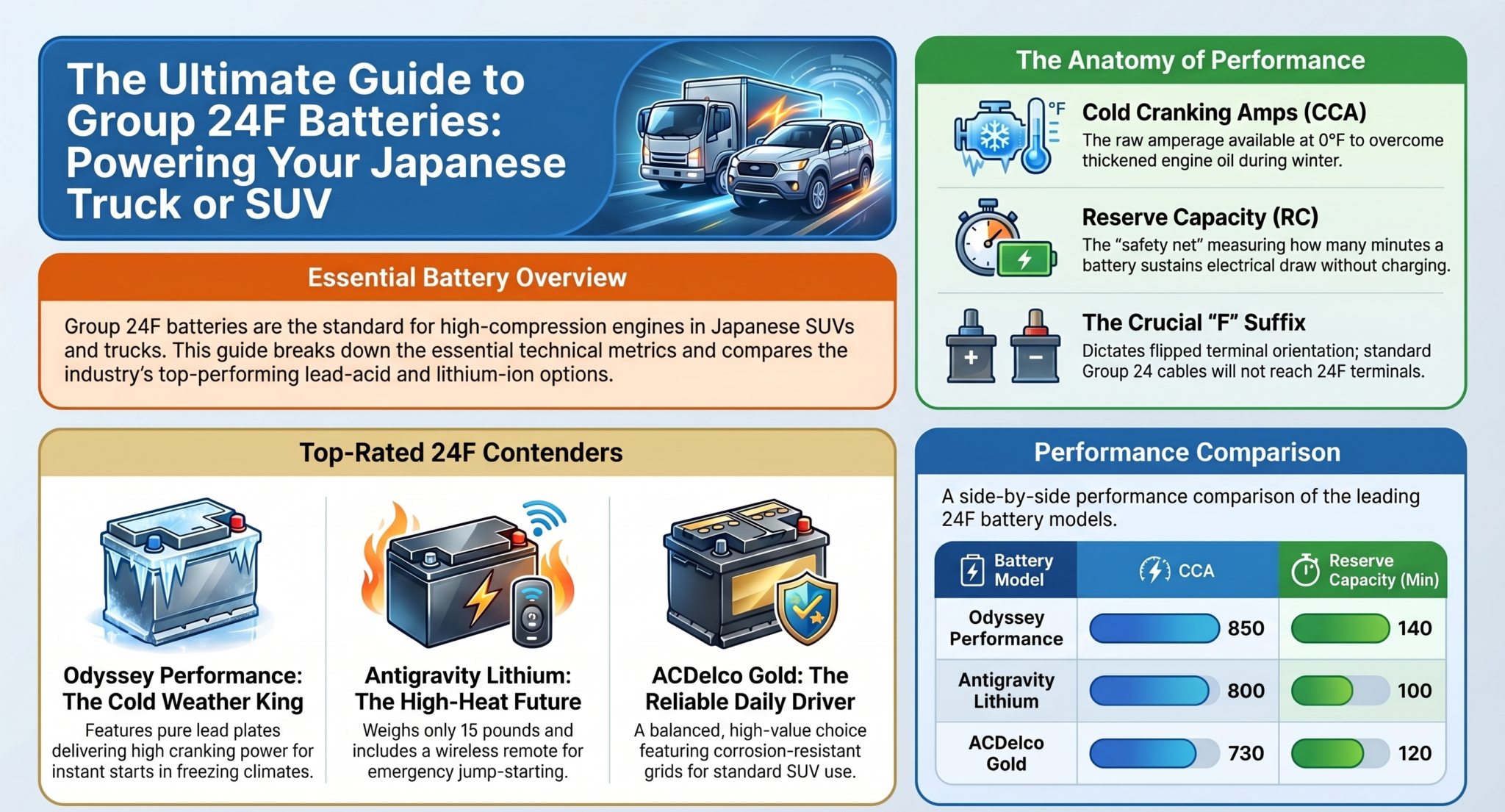
When searching for a replacement, drivers often overlook the “F” suffix, which dictates the flipped terminal orientation necessary for passenger-side cable routing. In this comprehensive review, we break down the leading options by their Cold Cranking Amps (CCA), Reserve Capacity (RC), and their ability to survive the high-vibration environments typical of off-road and utility use.
Key Metrics: What Defines a High-Performance 24F?
To differentiate between a budget-grade unit and a premium power cell, you must look beyond the sticker price. In my years under the hood, I’ve found that a battery’s true value is revealed only when the temperature drops below zero or when the alternator fails on a remote trail. Here are the primary benchmarks we use for our evaluation:
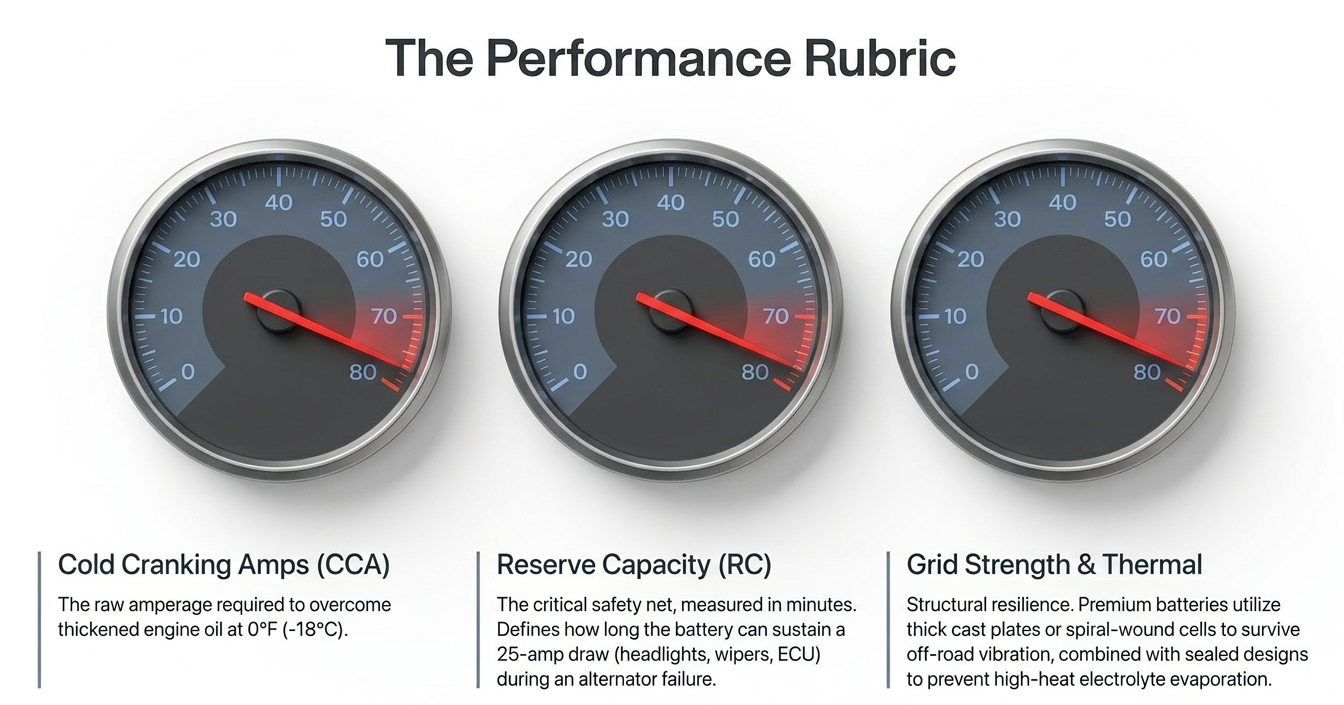
- Cold Cranking Amps (CCA): The raw amperage available at 0°F (-18°C). A higher CCA rating ensures the starter motor can overcome the resistance of thickened engine oil during winter.
- Reserve Capacity (RC): The “safety net” measured in minutes. This indicates how long the battery can sustain 25 amps of draw (headlights, wipers, ECU) if the charging system fails.
- Grid Strength and Vibration Resistance: Standard batteries use thin, stamped grids that can crack under heavy vibration. Premium units utilize thicker, cast plates or spiral-wound cells to survive rough terrain.
- Thermal Management: Heat is the number one killer of batteries. We look for designs that resist electrolyte evaporation and internal corrosion in high-heat climates.
| Image | Product | |
|---|---|---|
Best Choice 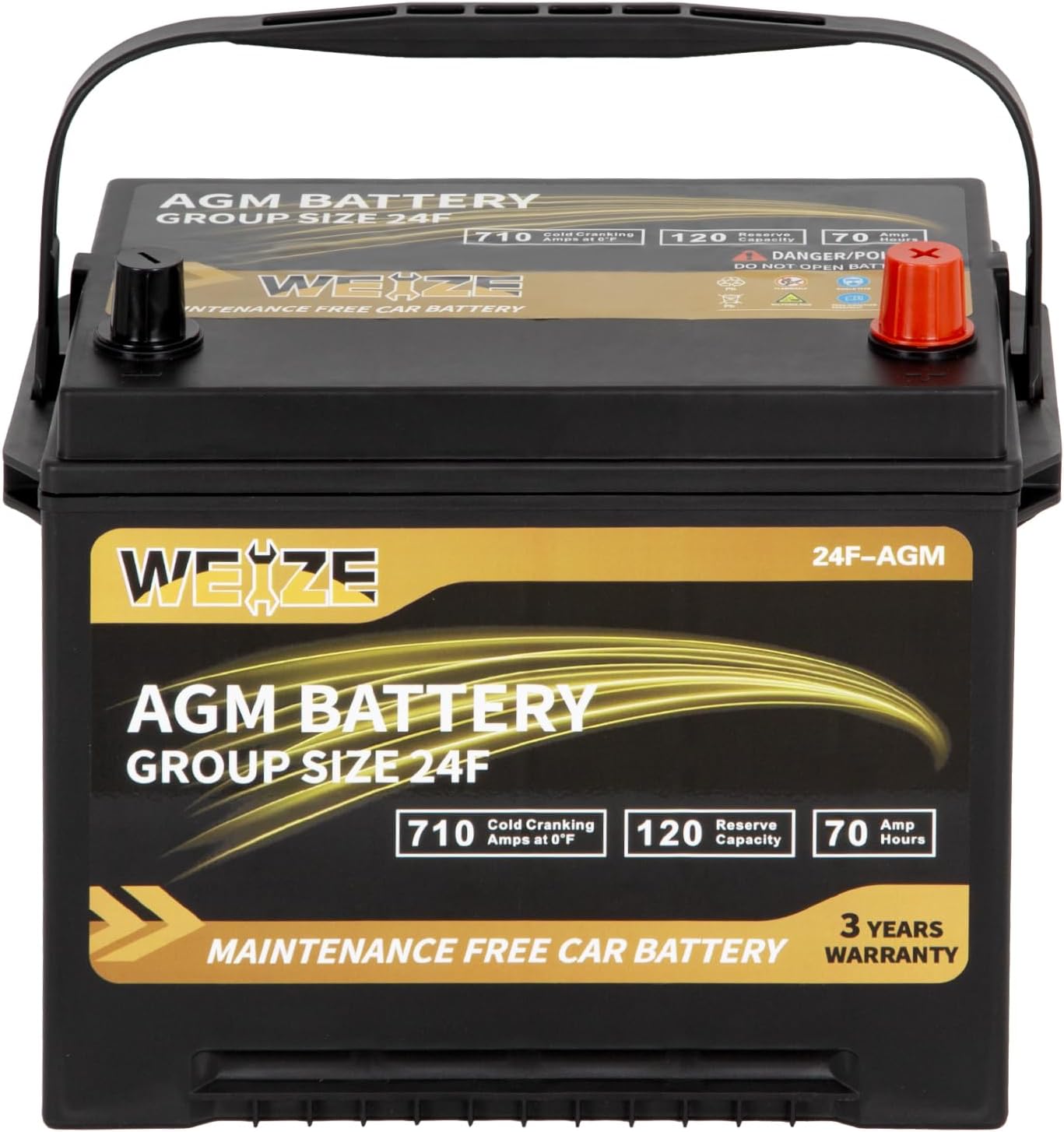 | DieHard Platinum AGM Battery, Group Size 24F
| Check Price |
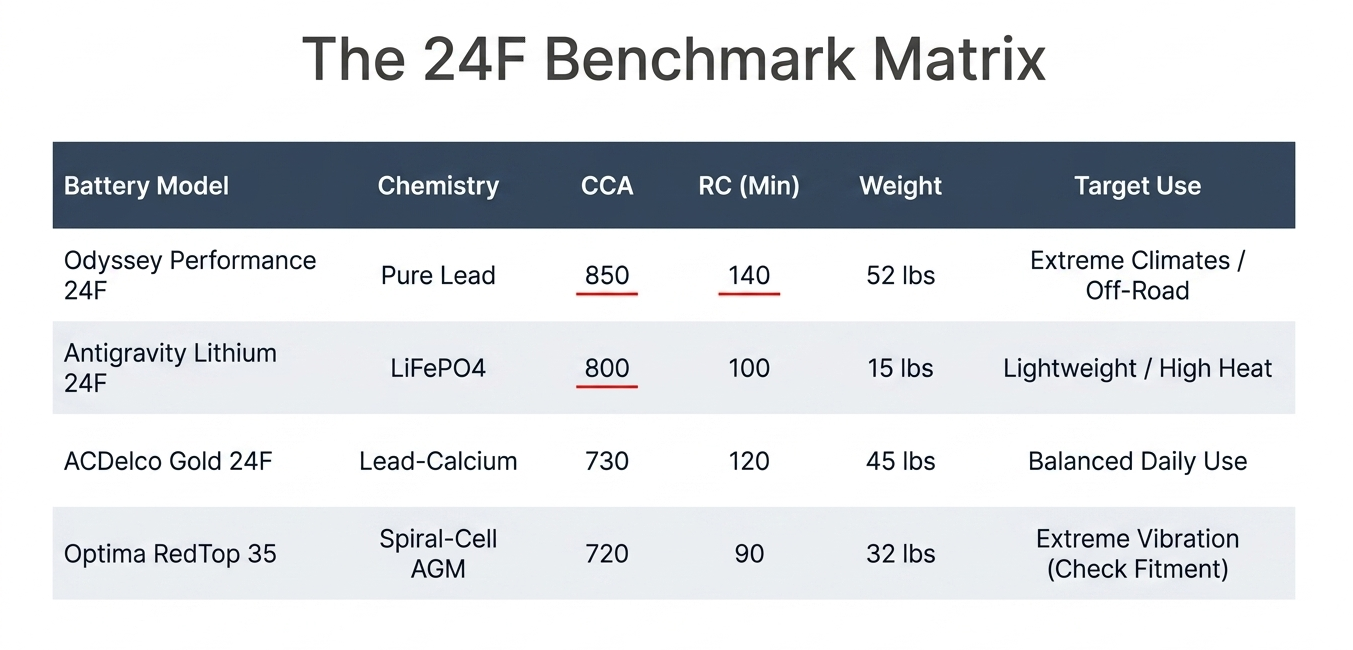
Top Group 24F Batteries Compared
| Battery Model | CCA | RC (Min) | Best For |
|---|---|---|---|
| Odyssey Performance 24F | 850 | 140 | Extreme Climates / Off-Road |
| Antigravity Lithium 24F | 800 | 100 | Lightweight / High Heat |
| ACDelco Gold 24F | 730 | 120 | Balanced Daily Use |
| Optima RedTop 35* | 720 | 90 | Extreme Vibration (Check Fitment) |
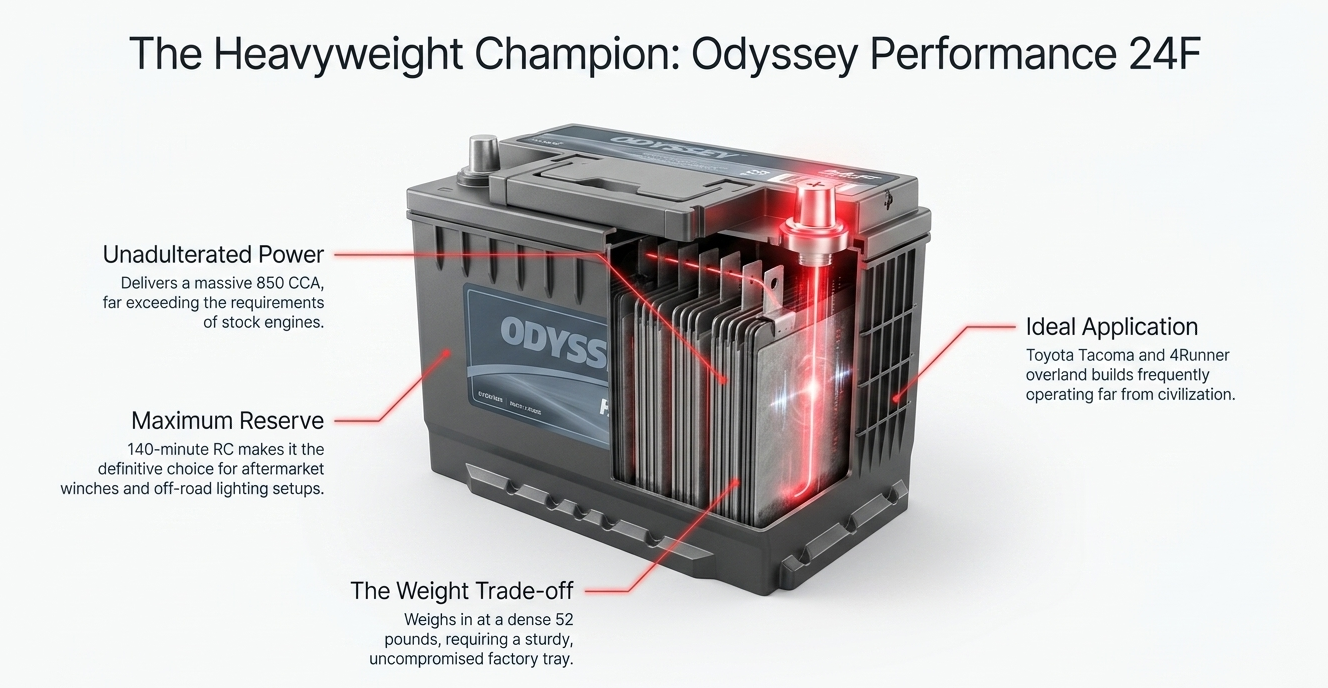
1. Odyssey Performance 24F: The Heavyweight Champion
If your priority is pure, unadulterated power, the Odyssey 24F is the industry gold standard. Utilizing Pure Virgin Lead plates, it delivers 850 CCA—far exceeding the requirements of most stock engines. Its massive 140-minute reserve capacity makes it ideal for vehicles with aftermarket winches or off-road lighting.
However, quality comes at a cost: weight. At 52 pounds, it is a dense, heavy unit that requires a sturdy factory tray. In the shop, I recommend this for Toyota Tacoma and 4Runner owners who frequently find themselves far from civilization.
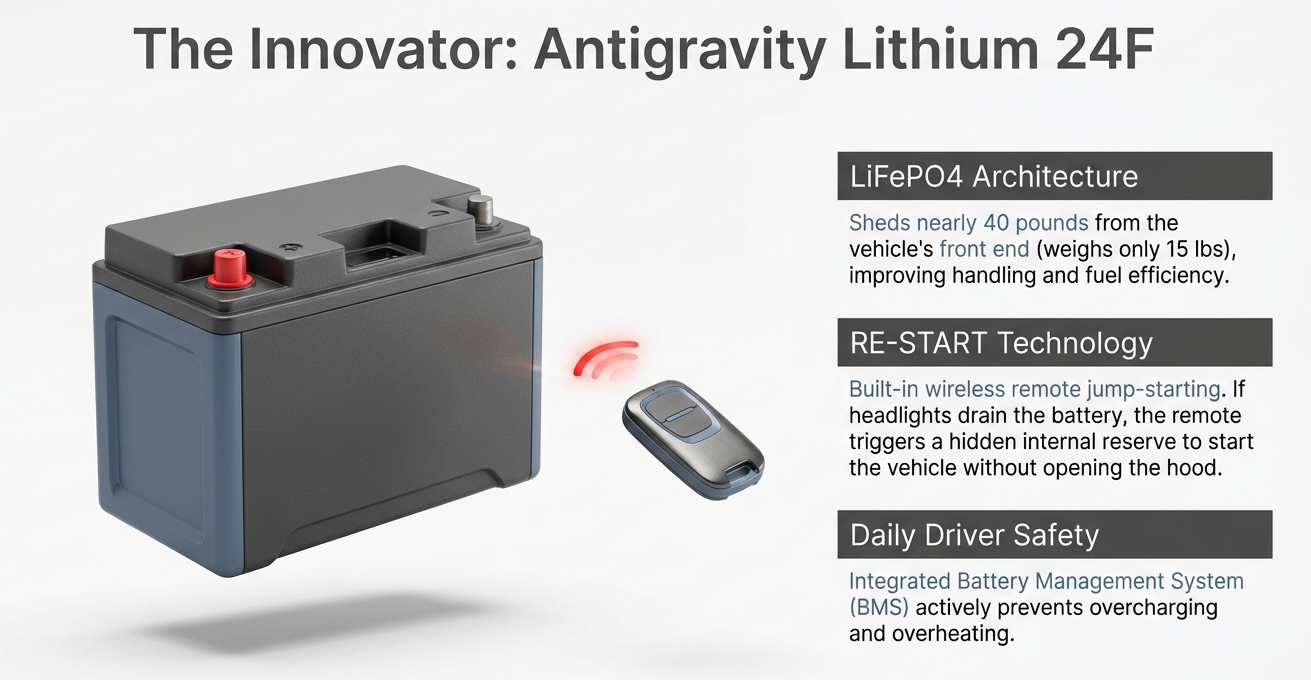
2. Antigravity Lithium 24F: The Future of Starting Power
Modern lithium (LiFePO4) technology has finally reached the automotive sector, and Antigravity is leading the charge. At only 15 pounds, it sheds nearly 40 pounds from your vehicle’s front end, improving handling and fuel efficiency. More importantly, it features an “RE-START” technology—a wireless remote that allows you to jump-start the car using the battery’s built-in reserve if you accidentally leave the lights on.
3. ACDelco Gold 24F: The Reliable Alternative
For the average driver who wants a “set it and forget it” solution, the ACDelco Gold is a balanced choice. It offers high-quality lead-calcium grids that resist corrosion in hot climates. While it doesn’t have the extreme vibration resistance of an AGM battery, it provides exceptional value for standard sedans and SUVs like the Toyota Camry or Honda Accord.
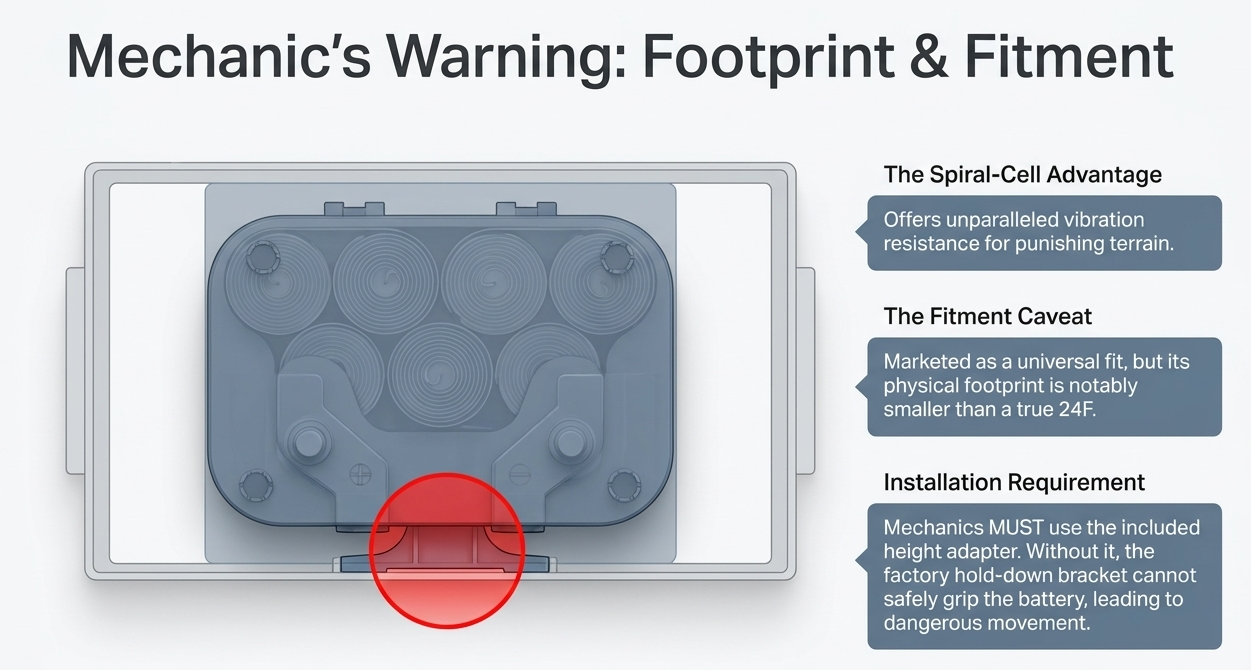
Mechanic’s Warning: The Optima RedTop 35 is often marketed as a universal fit, but be careful. While its spiral-cell design handles vibration better than anything else, its physical footprint is smaller than a true 24F. You may need to use the height adapter included in the box to ensure the factory hold-down bracket can actually grip the battery.
Heat vs. Cold: Choosing for Your Climate
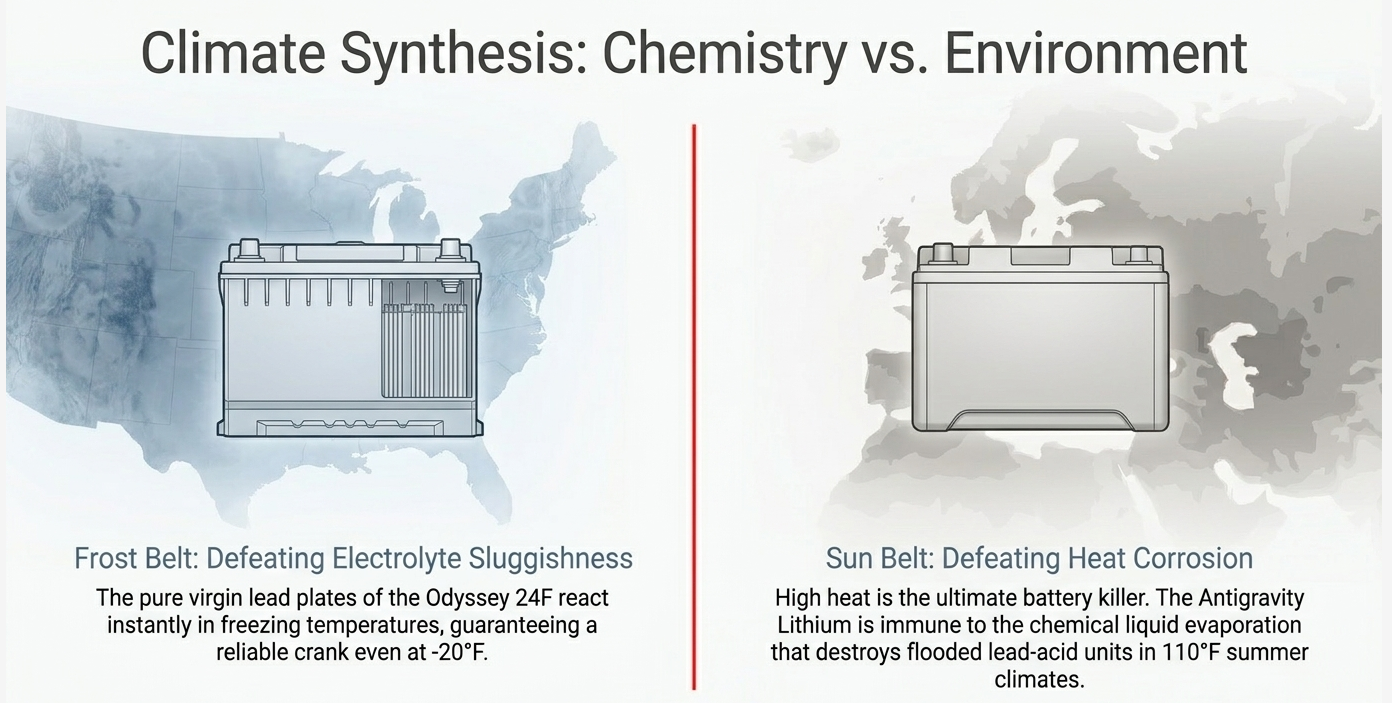
Environmental conditions dictate which internal chemistry will last longest in your engine bay. In regions like the Southwest, heat-induced corrosion is the primary threat, while in the North, electrolyte sluggishness is the enemy. Here is how our top picks stack up:
- For the Frost Belt: Focus on the Odyssey Performance 24F. Pure lead plates react faster in freezing temperatures, providing that “instant” crank even at -20°F.
- Для “Sun Belt” (Hot Climates): The Antigravity Lithium is superior. Lithium batteries do not suffer from the same chemical evaporation issues as flooded lead-acid batteries, meaning they won’t “dry out” in 110°F Arizona summers.
Professional Installation Checklist
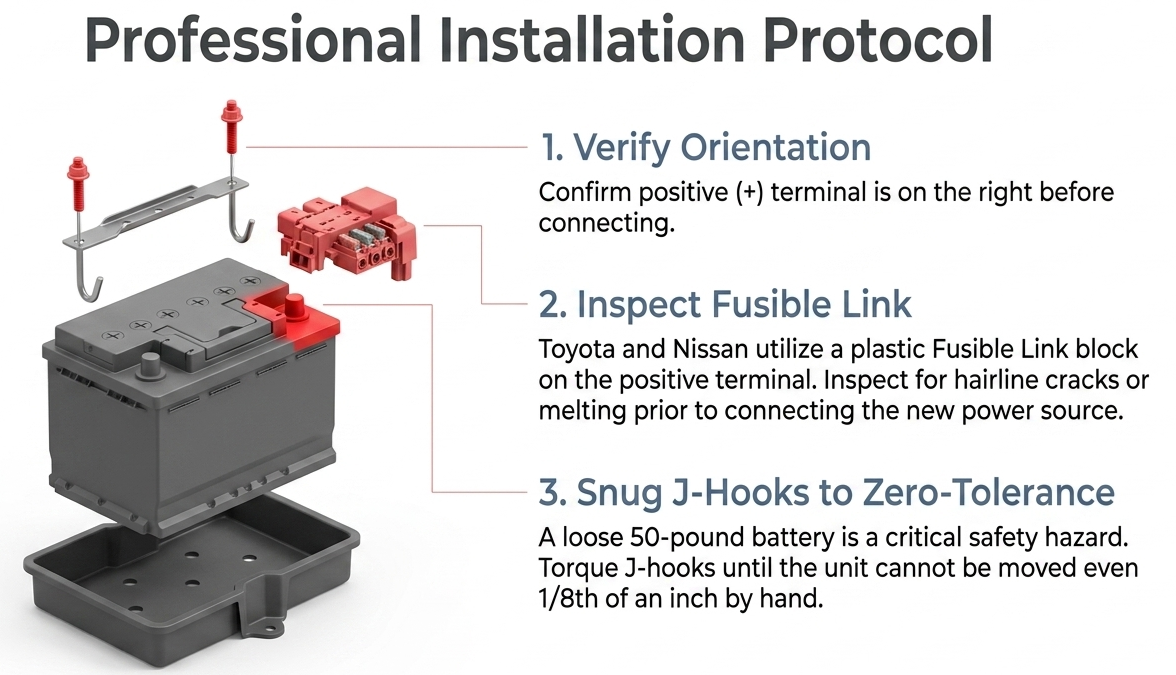
Once you have selected your Group 24F battery, ensuring a safe installation is critical for protecting your car’s electrical system. Modern Japanese vehicles are particularly sensitive to voltage spikes during a swap. Follow these expert steps:
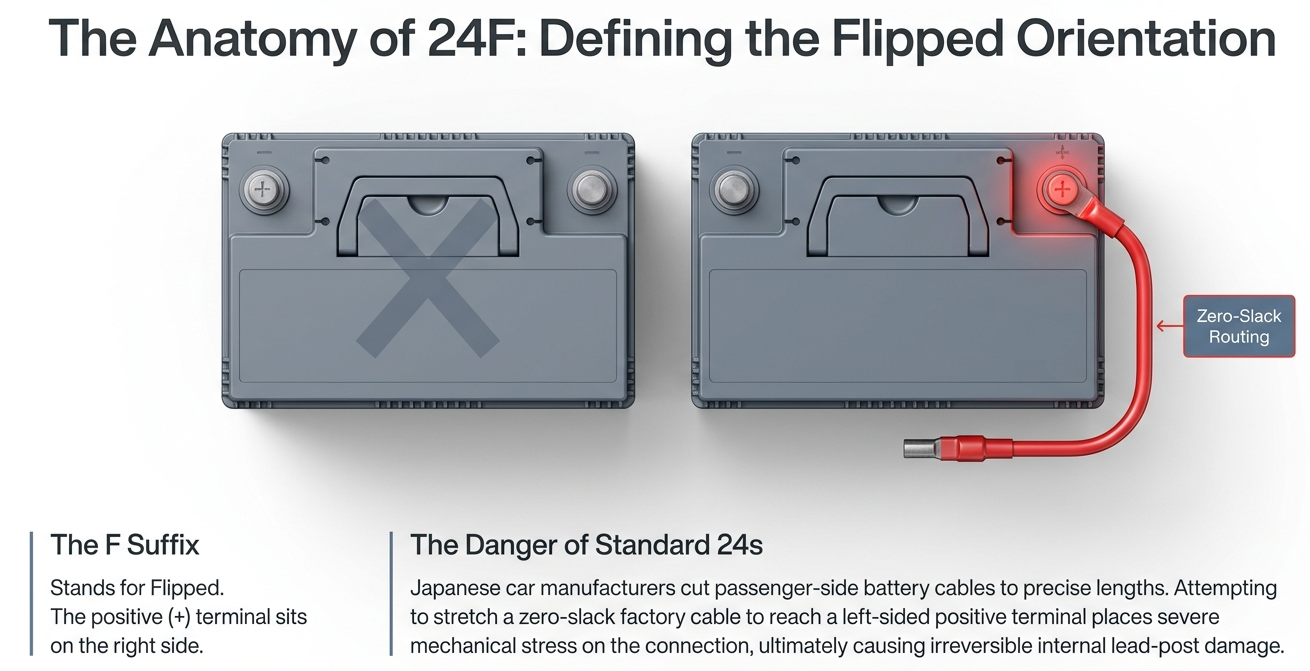
- Verify the “F” Orientation: Ensure the positive (+) terminal is on the right side. Attempting to stretch the factory cable to a standard Group 24 terminal can cause internal lead-post damage.
- Inspect the Fusible Link: Nissan and Toyota often use a “Fusible Link” block on the positive terminal. Ensure this plastic housing isn’t cracked or melted before connecting the new battery.
- Snug the J-Hooks: A loose 50-pound battery is a safety hazard. The unit should not move even an eighth of an inch when pushed by hand.
Frequently Asked Questions
What is the main difference between Group 24 and 24F?
The “F” stands for Flipped. In a standard Group 24, the positive terminal is on the left. In a Group 24F, it is on the right. Because car manufacturers cut battery cables to precise lengths (Zero-Slack), you must use the 24F orientation for vehicles designed for it.
Can I upgrade from a Group 35 to a Group 24F?
In many Toyota and Lexus vehicles, yes. The Group 24F is about 1.5 inches longer but often fits in the same tray. This upgrade gives you significantly more CCA and Reserve Capacity, but always measure your tray clearance first.
Is a Lithium battery safe for daily driving?
Yes, modern LiFePO4 automotive batteries like the Antigravity 24F are designed with built-in Battery Management Systems (BMS) that prevent overcharging and overheating, making them just as safe as traditional batteries but with much lower weight.

Eric Strong works in the automotive repair industry more than 20 years. His work included repairing electrical systems in various vehicle systems. A hybrid electric car battery replacement experience expanded his understanding of automotive battery technology.
Page Contents