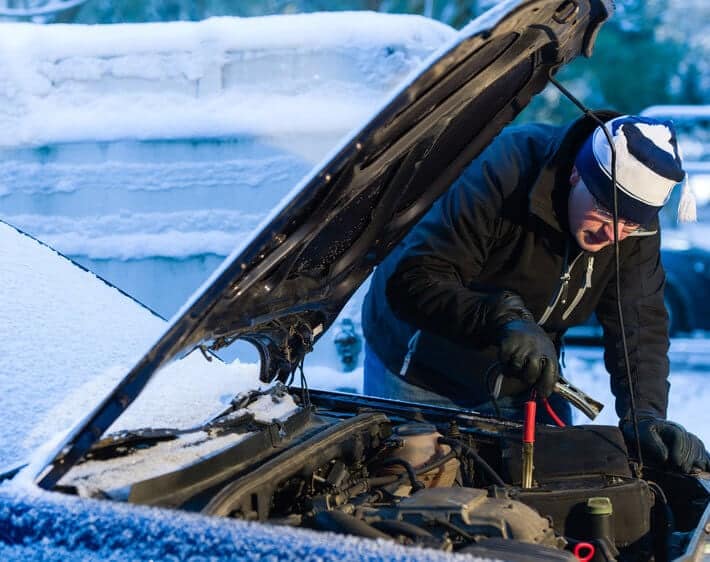
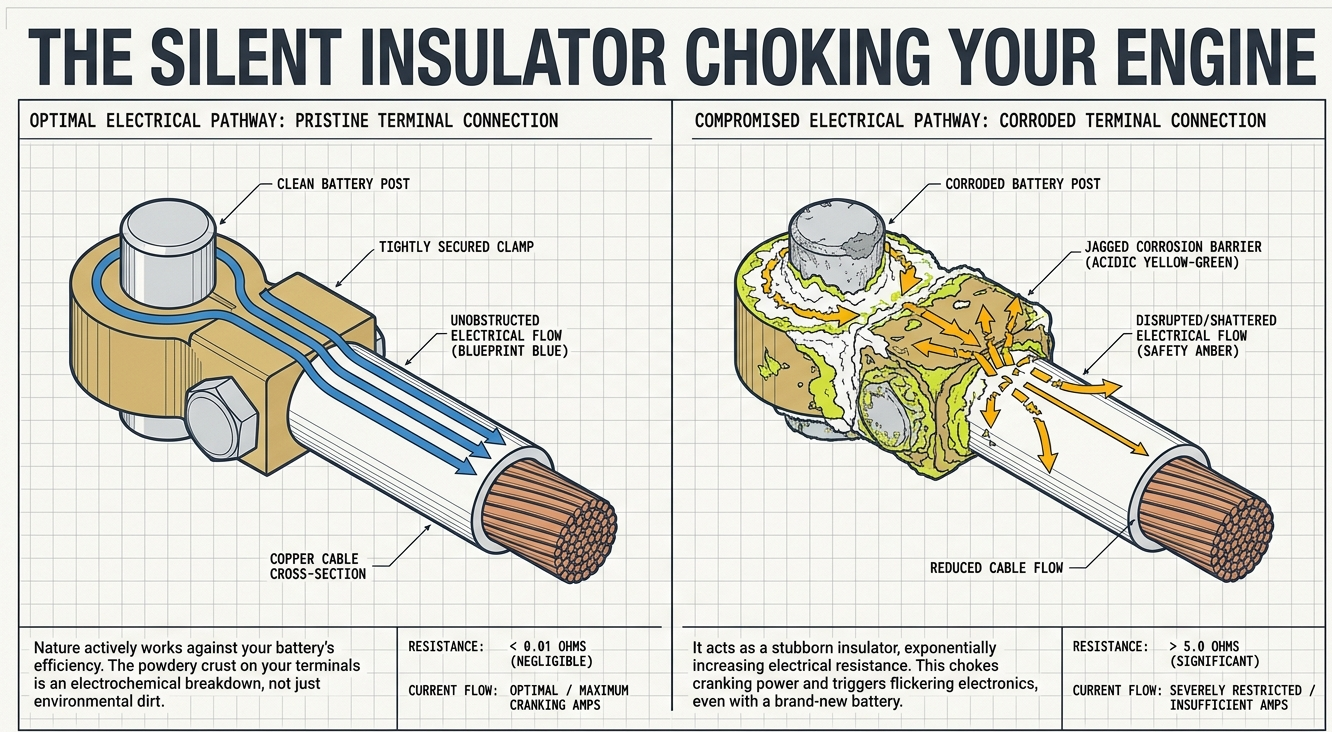
Your vehicle’s reliability starts with a clean flow of electricity, yet nature often works against your battery’s efficiency. When you open the hood and spot a white, green, or blue powdery crust on your battery, you are witnessing a chemical breakdown known as terminal corrosion. This buildup acts as a stubborn insulator, choking the power needed to crank your engine and potentially causing permanent damage to expensive battery cables. Instead of just brushing it off, understanding how to neutralize this chemical reaction is the first step toward professional-level car care that ensures your engine starts every time.
What Is Battery Terminal Corrosion?
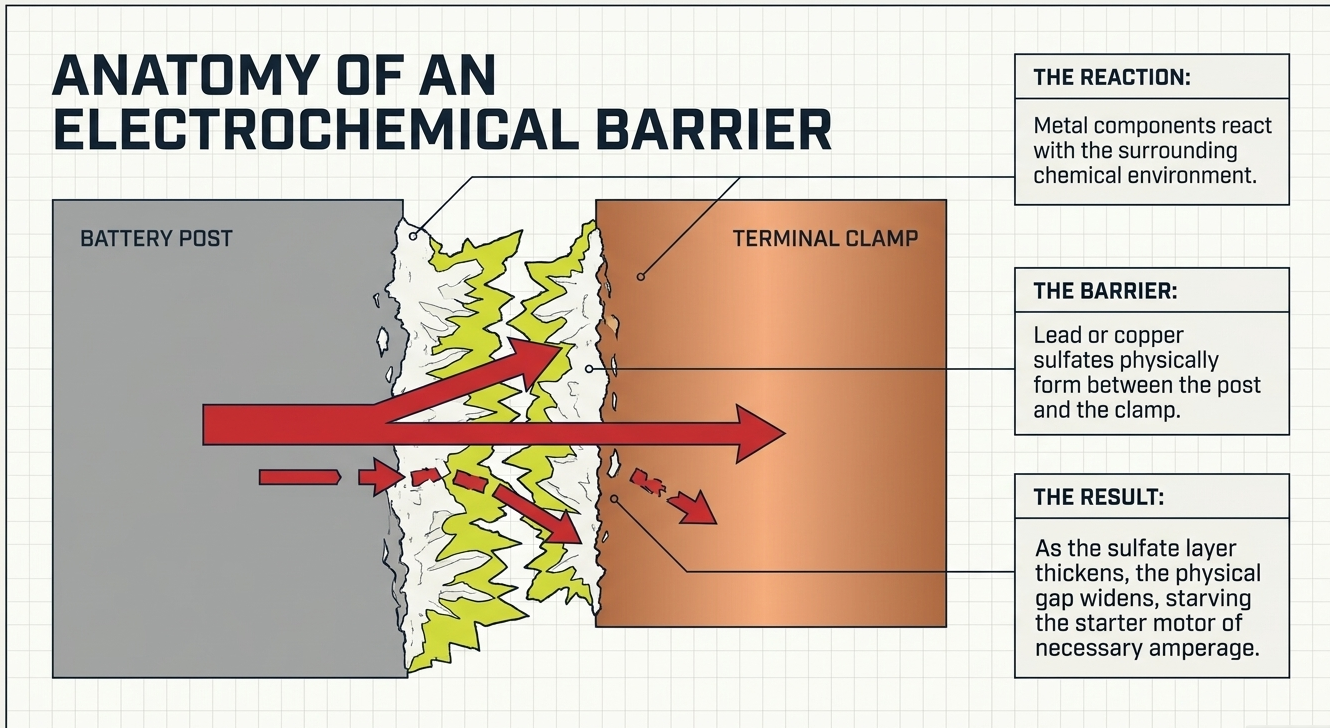
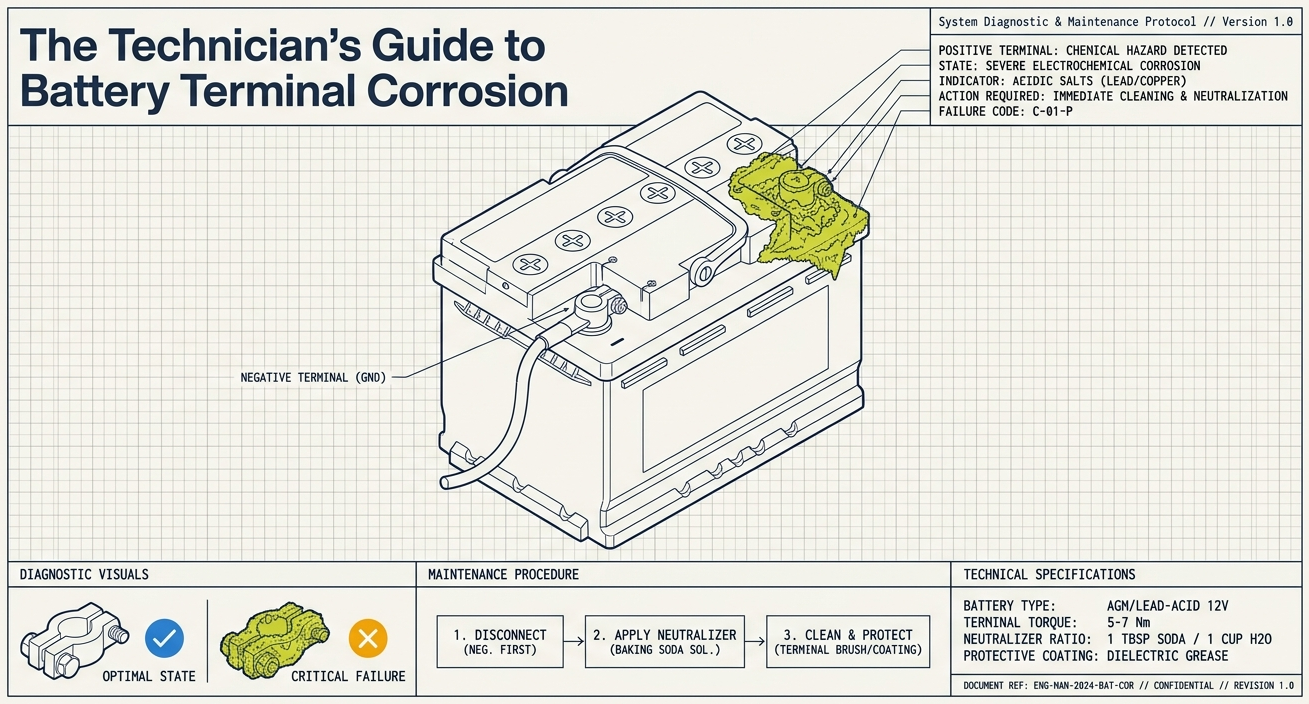
At its core, battery terminal corrosion is an electrochemical reaction between the metal components of your battery and the chemical environment surrounding them. This crusty layer isn’t just dirt; it’s a physical manifestation of lead or copper sulfates forming a barrier between the battery posts and the terminal clamps. When this layer thickens, it significantly increases electrical resistance, which is why your car might struggle to start or experience “flickering” electronics despite having a relatively new battery.
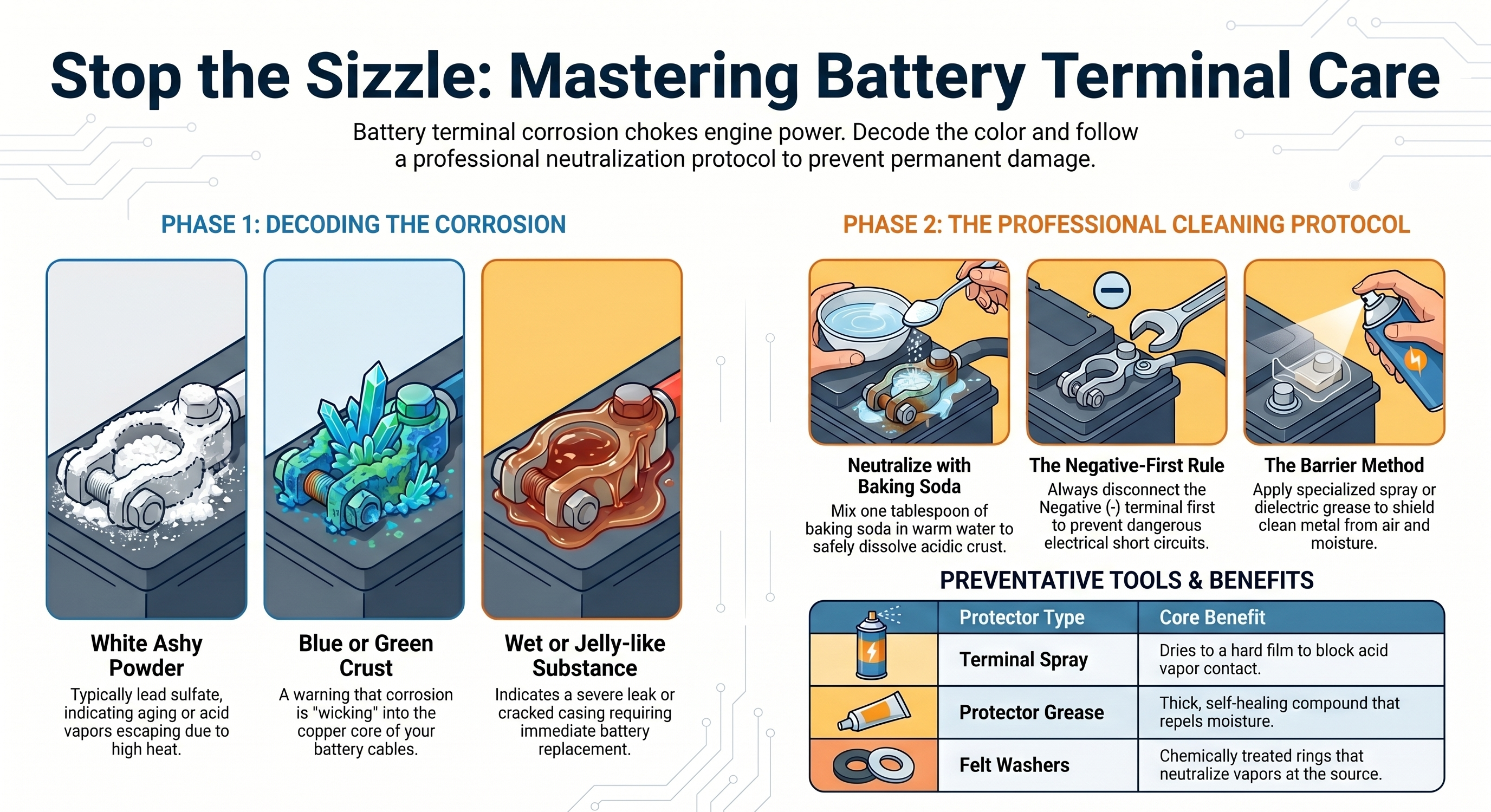
The Color Code: What Your Corrosion is Telling You
Not all corrosion is created equal. The specific color of the buildup on your terminals acts as a diagnostic snapshot of what is happening inside your electrical system. Paying attention to these shades can help you catch a failing component before it leaves you stranded.
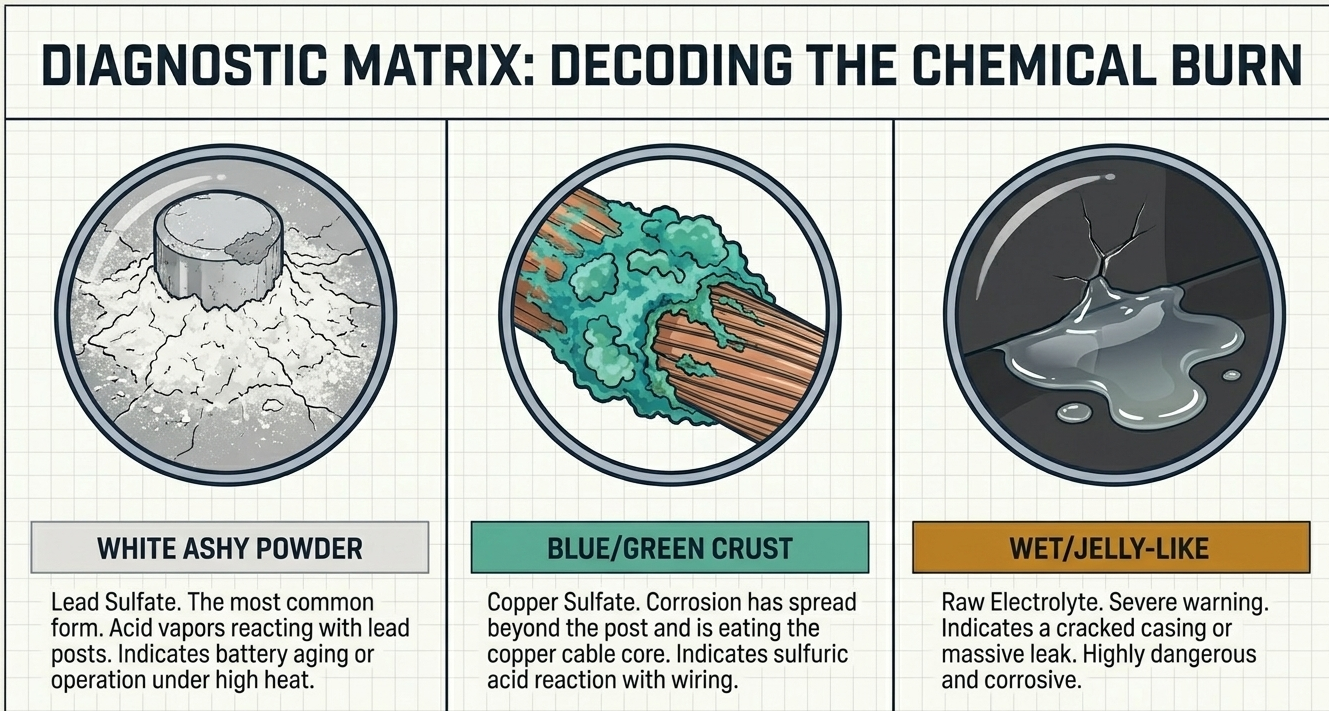
- White Ashy Powder: This is typically lead sulfate. It’s the most common form of corrosion and usually indicates that acid vapors are escaping from the battery and reacting with the lead posts. It often suggests the battery is aging or working under high heat.
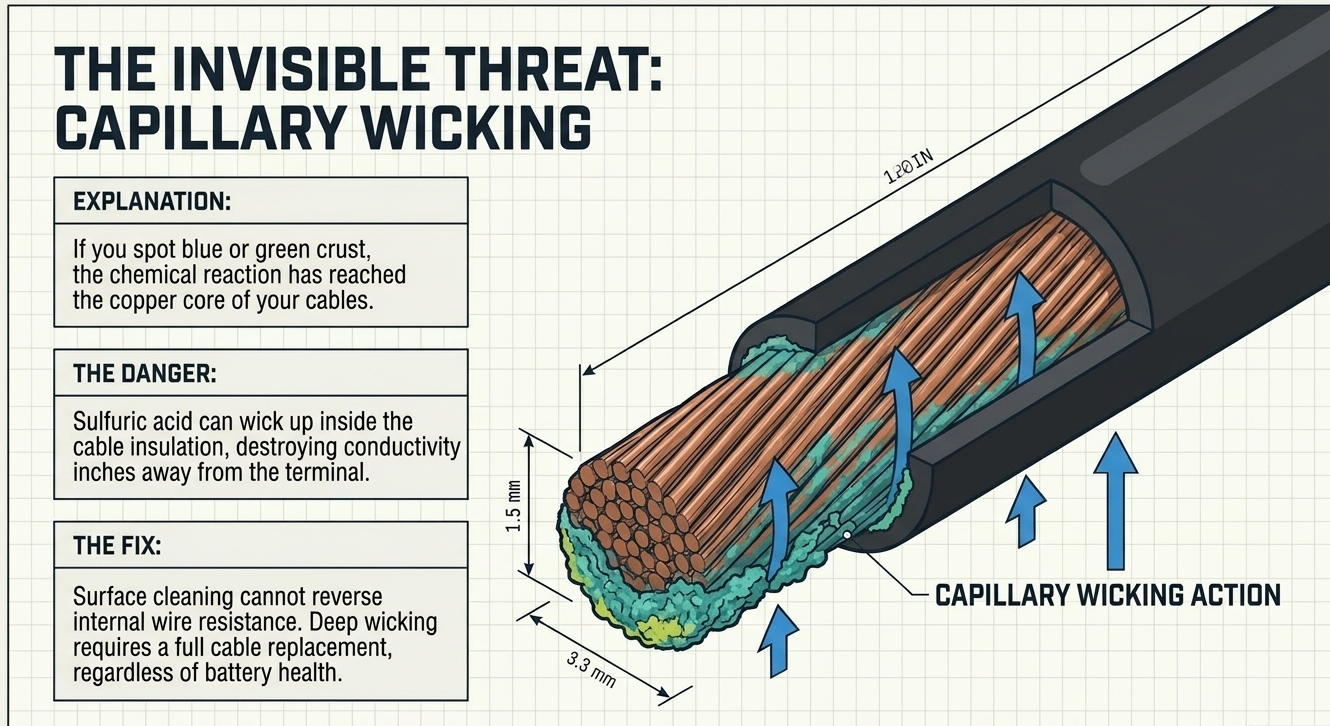
- Blue or Green Crust: This is a sign that the corrosion has moved beyond the battery post and is now eating into the copper core of your battery cables. The blue/green tint comes from the copper reacting with the sulfuric acid. If you see this, you need to check if the acid has “wicked” up inside the cable insulation.
- Wet or Jelly-like Substance: This is a warning sign of a severe leak or a cracked casing. It indicates raw liquid electrolyte is escaping, which is far more dangerous and corrosive than simple vapor.
Common Causes of Battery Terminal Corrosion
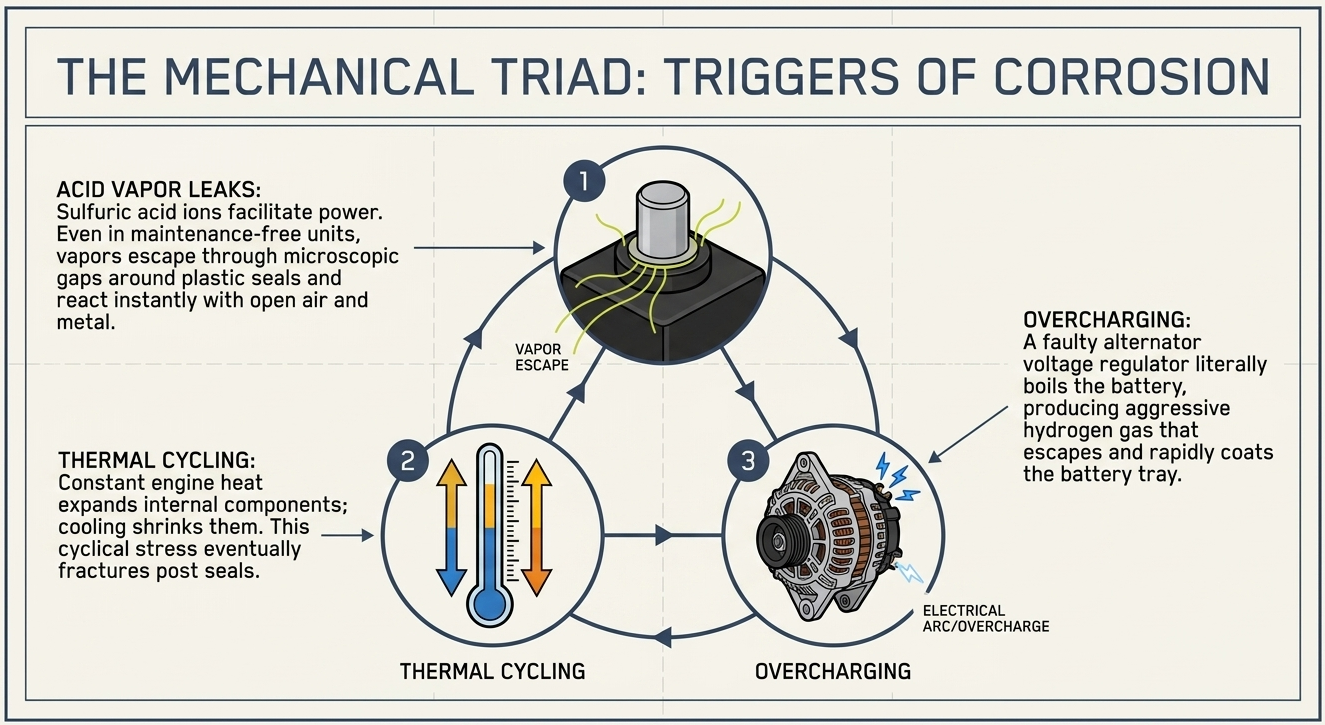
Knowing the “why” allows you to diagnose the health of your entire charging system rather than just treating the symptoms. Most corrosion stems from three primary mechanical triggers.
Acid Vapor Leaks: Inside every lead-acid battery, sulfuric acid facilitates the flow of ions. Even in “maintenance-free” batteries, acid vapors can escape through microscopic gaps around the plastic seals of the battery posts. Once these vapors hit the open air and contact the metal terminals, they react instantly.
Thermal Expansion and Contraction: During operation, the battery generates heat, causing its internal components to expand. When the engine shuts off, the battery cools and shrinks. This constant cycle puts immense stress on the seals around the terminals, eventually allowing corrosive gasses to “burp” out onto the metal surfaces.
Overcharging the Battery: If your alternator’s voltage regulator is faulty, the battery can “boil.” This overcharging produces excessive hydrogen gas, which escapes rapidly and causes aggressive corrosion on both the terminals and the battery tray.
How to Prevent Battery Terminal Corrosion Effectively
In the world of automotive maintenance, an ounce of prevention is worth a gallon of cleaning solution. You can create a nearly impenetrable shield for your terminals using a few specialized materials and simple habits.
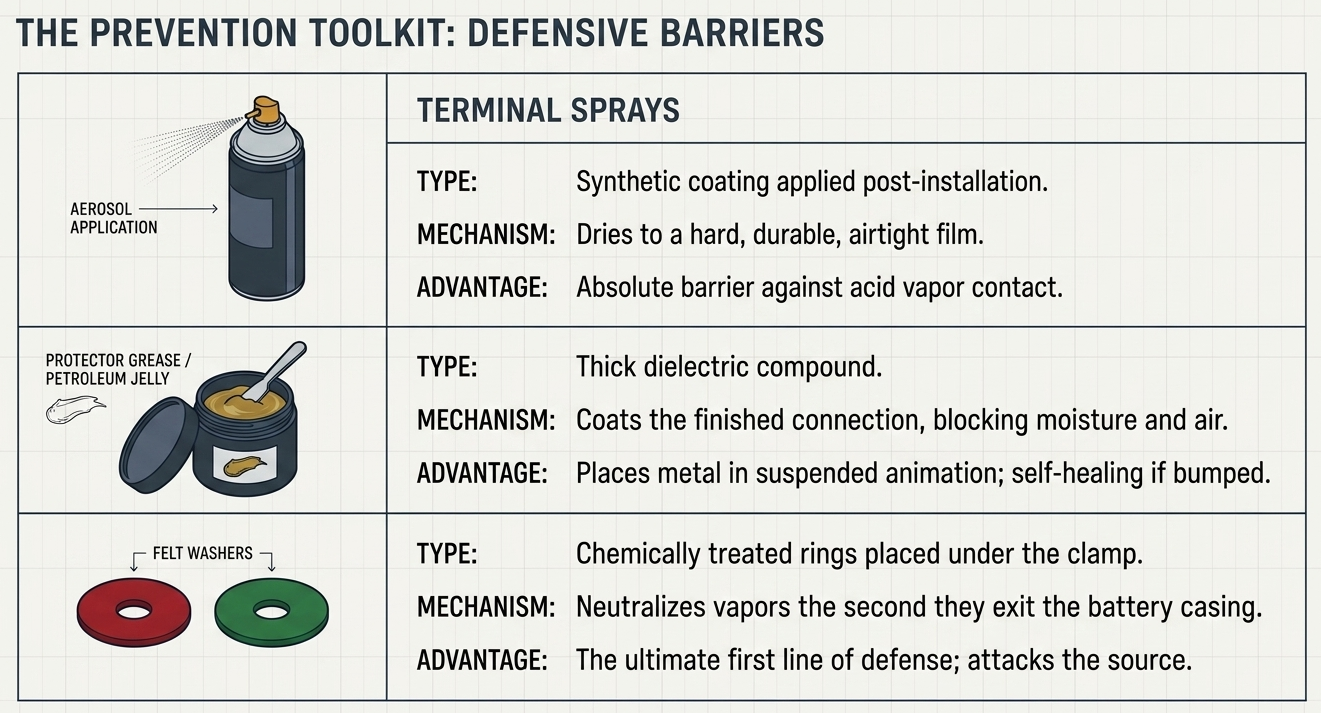
Use Specialized Protectors: Battery terminal protector sprays leave a durable, airtight film over the metal. For the best results, use felt terminal washers soaked in an anti-corrosion solution. These act as the first line of defense, neutralizing acid vapors the moment they exit the battery casing.
The Barrier Method: Grease and Petroleum Jelly: If you don’t have specialized sprays, a thin layer of high-quality dielectric grease or simple petroleum jelly works wonders. By coating the finished connection, you prevent moisture and air from reaching the lead, essentially putting the metal in “suspended animation.”
Professional Cleaning: The “Memory Saver” Protocol
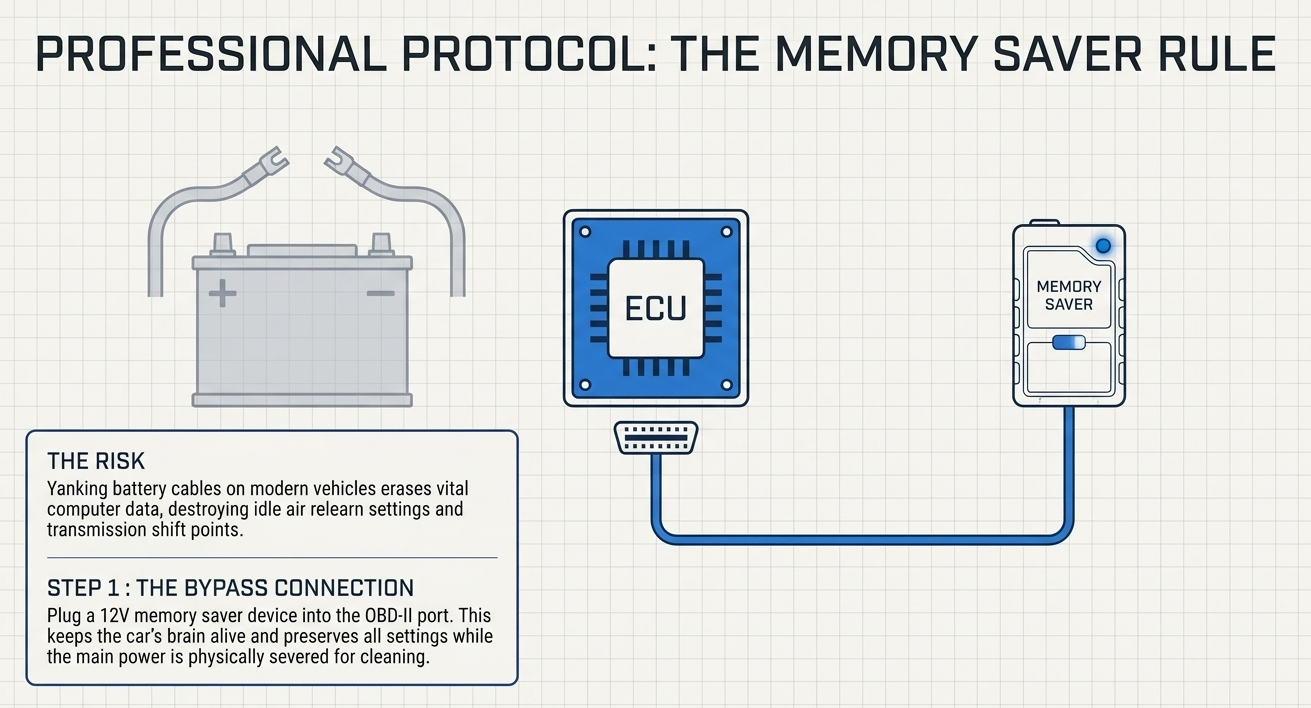
In modern vehicles, simply yanking off the battery cables can be a costly mistake. You risk losing your ECU’s idle air relearn settings and transmission shift points. To clean like a professional, you must maintain 12V power to the system throughout the process so the car never “knows” the battery was gone.
Step 1: The Bypass Connection: Plug a 12V memory saver device into the OBD-II port. This keeps the car’s computer “alive” and preserves all settings while the main battery terminals are disconnected.
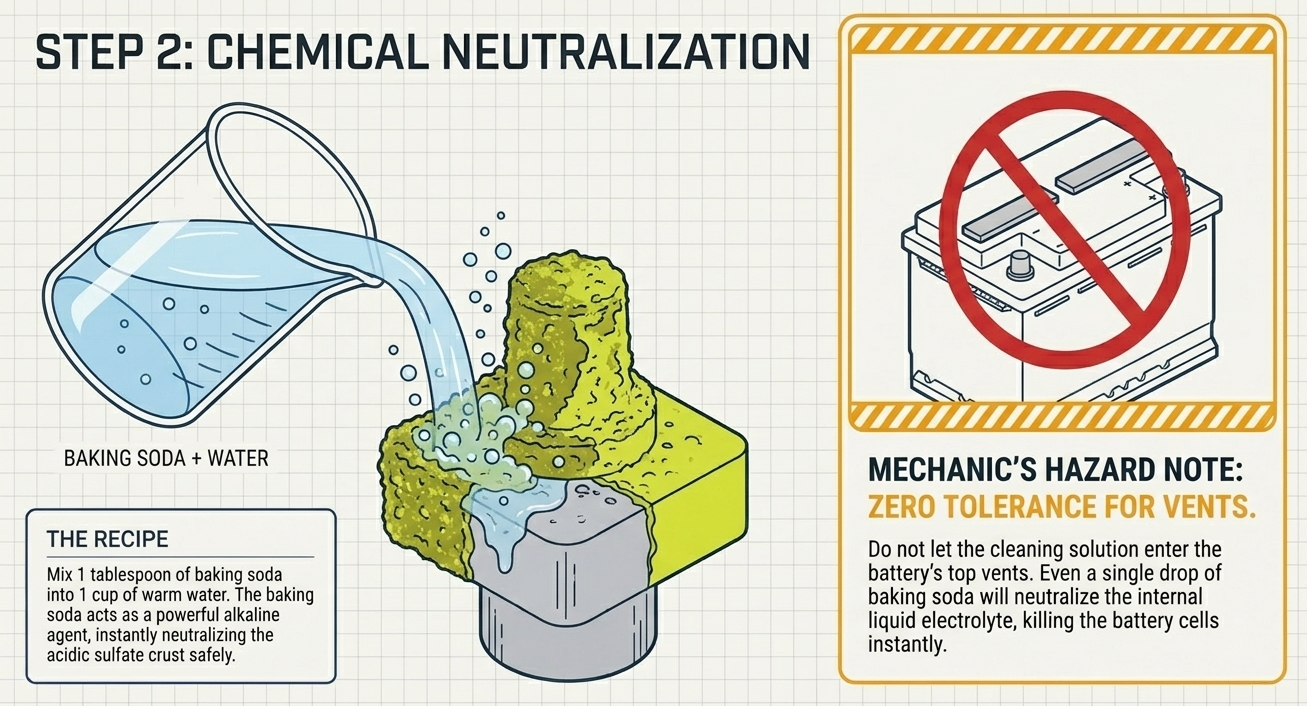
Step 2: Chemical Neutralization: Prepare a solution of one tablespoon of baking soda mixed into a cup of warm water. The baking soda is an alkaline agent that safely neutralizes the acidic sulfate crust.
Mechanic’s Note: Do not let the cleaning solution enter the battery vents. Even a tiny amount of baking soda will neutralize the internal electrolyte and kill the battery cells instantly.
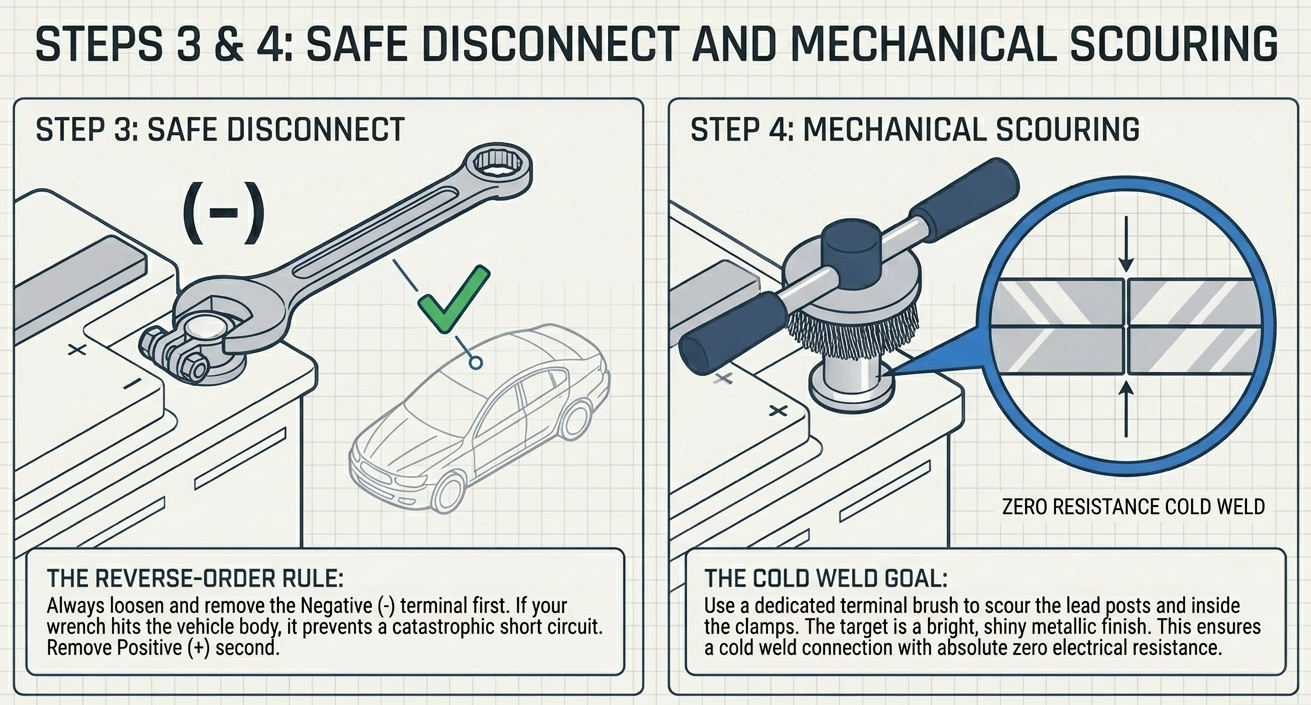
Step 3: Safe Disconnection: Use a wrench to loosen and remove the Negative (-) terminal first. This ensures that if your wrench touches the car’s body, it won’t create a short circuit. Once the negative is clear, remove the Positive (+) terminal.
Step 4: Mechanical Scouring: Use a dedicated battery terminal brush to scrub the lead posts and the inside of the clamps until they reach a bright, shiny metallic finish. A shiny post ensures a “cold weld” style connection with the lowest possible resistance.
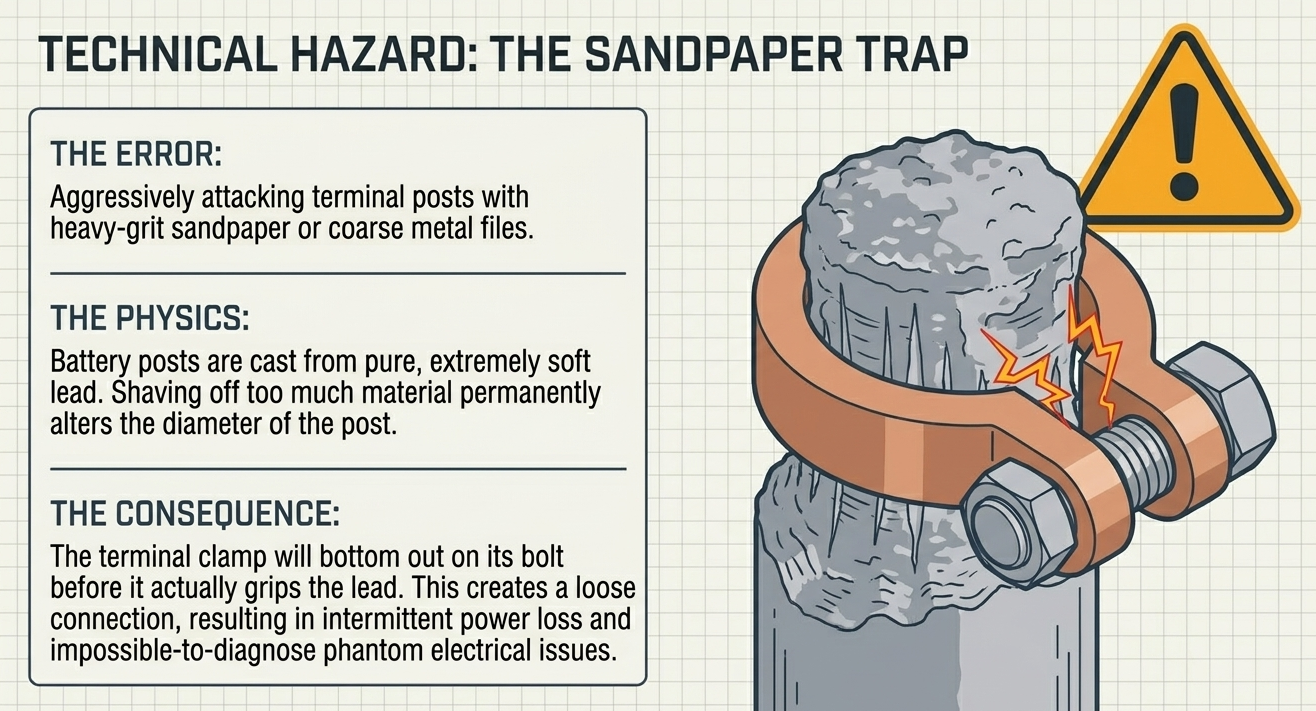
Technical Warning: Avoid using heavy sandpaper or coarse files on battery posts. Lead is soft; if you shave off too much material, the terminal clamp will never get tight enough again, leading to intermittent power loss and “phantom” electrical issues.
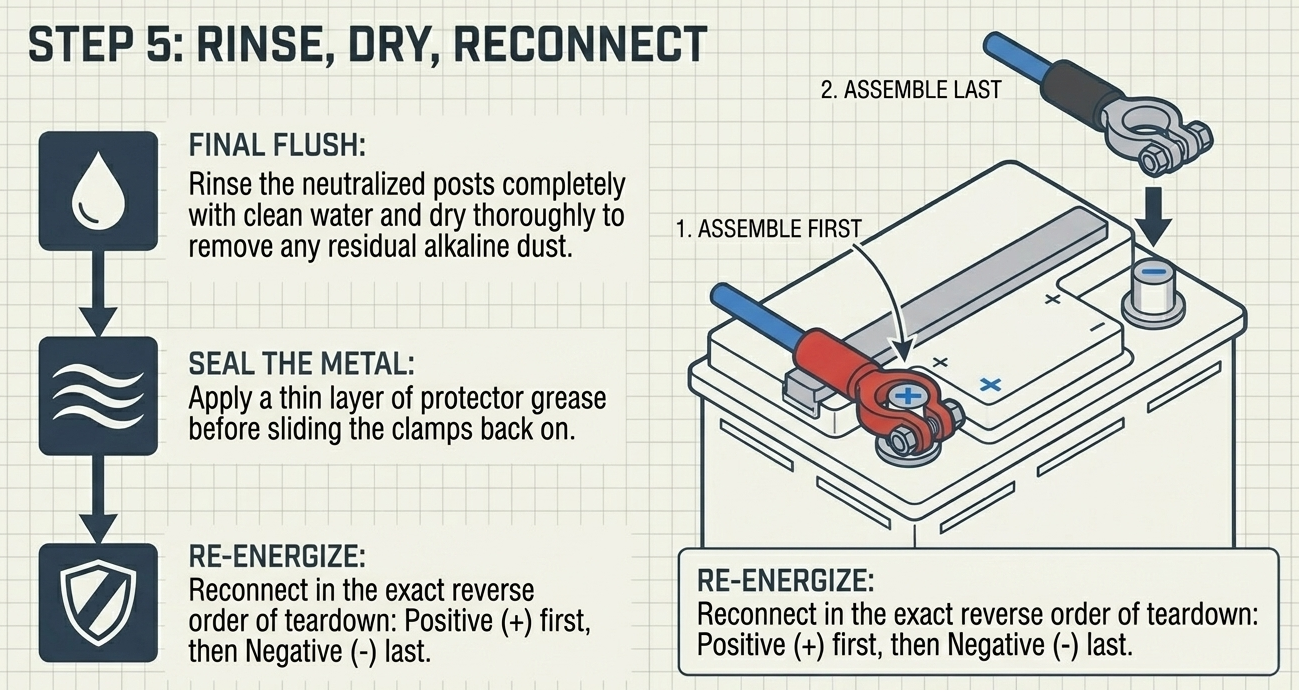
Step 5: Rinse, Dry, and Protect: Rinse the terminals with clean water and dry them completely. Apply a thin layer of protector grease before sliding the clamps back on. Reconnect in the reverse order: Positive (+) first, then Negative (-).
Popular Battery Terminal Protectors
| Product Type | Description | Core Benefits |
|---|---|---|
| Terminal Spray | A synthetic coating applied after installation. | Dries to a hard film; prevents acid vapor contact. |
| Protector Grease | Thick, moisture-repellent dielectric compound. | Long-lasting; self-healing if the clamp is moved. |
| Felt Washers | Chemically treated rings placed under the clamp. | Neutralizes vapors at the source; prevents base corrosion. |
Frequently Asked Questions (FAQ)
Does corrosion mean I need a new battery?
Not necessarily. If the corrosion is only on the surface, a deep clean can restore full performance. However, if the corrosion has traveled up inside the copper wire (turning it green), the resistance might be too high, requiring a cable replacement regardless of battery health.
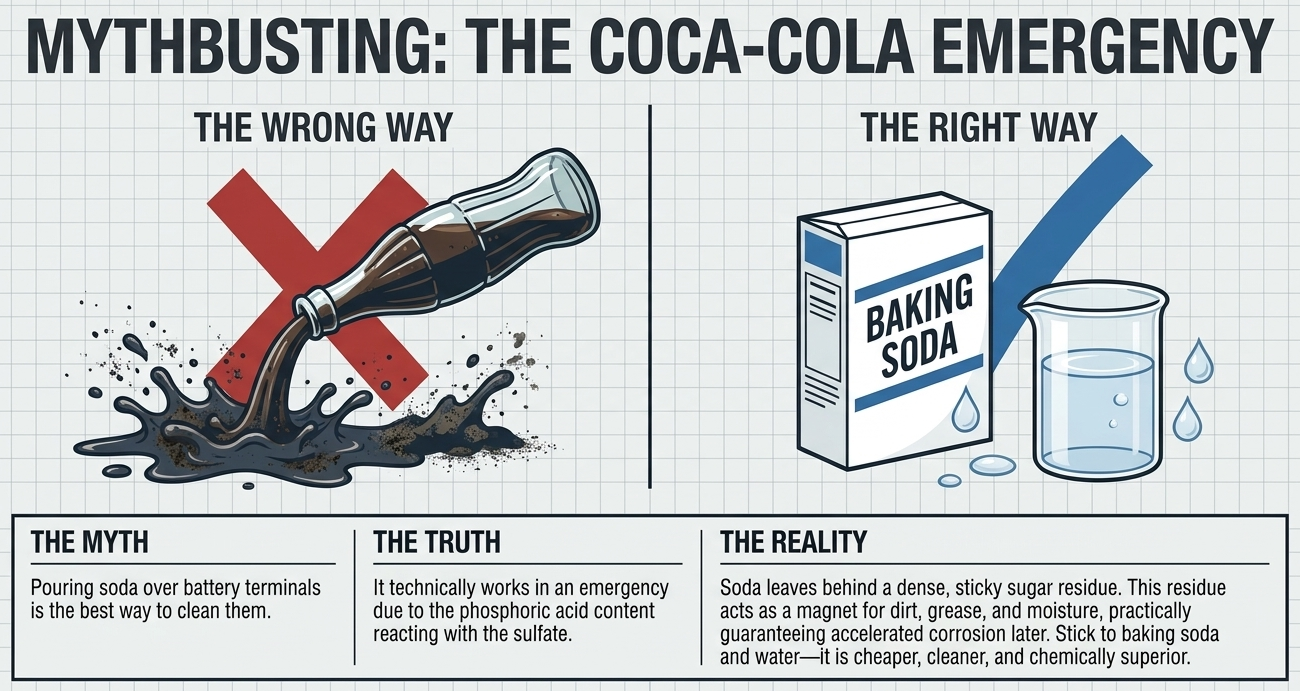
Is it safe to use soda (like Coca-Cola) to clean terminals?
It works in an emergency because of the phosphoric acid, but it leaves behind a sticky sugar residue that actually attracts dirt and moisture later. Stick to baking soda and water—it’s cheaper, cleaner, and more effective at neutralizing acid.
Why does corrosion come back so fast after I clean it?
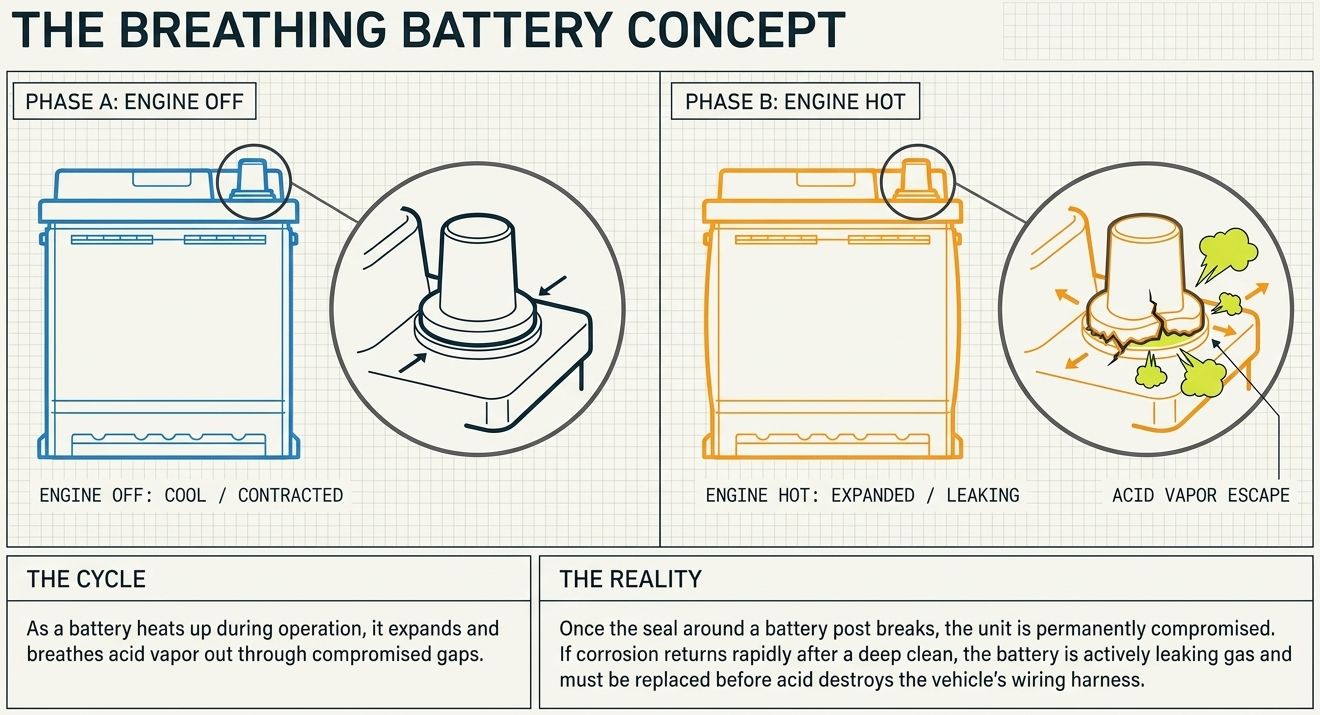
This usually means the seal around the battery post is broken. As the battery heats up, it “breathes” acid vapor out through the gap. Once the seal is gone, the battery is technically compromised and should be replaced before the acid damages your wiring harness.
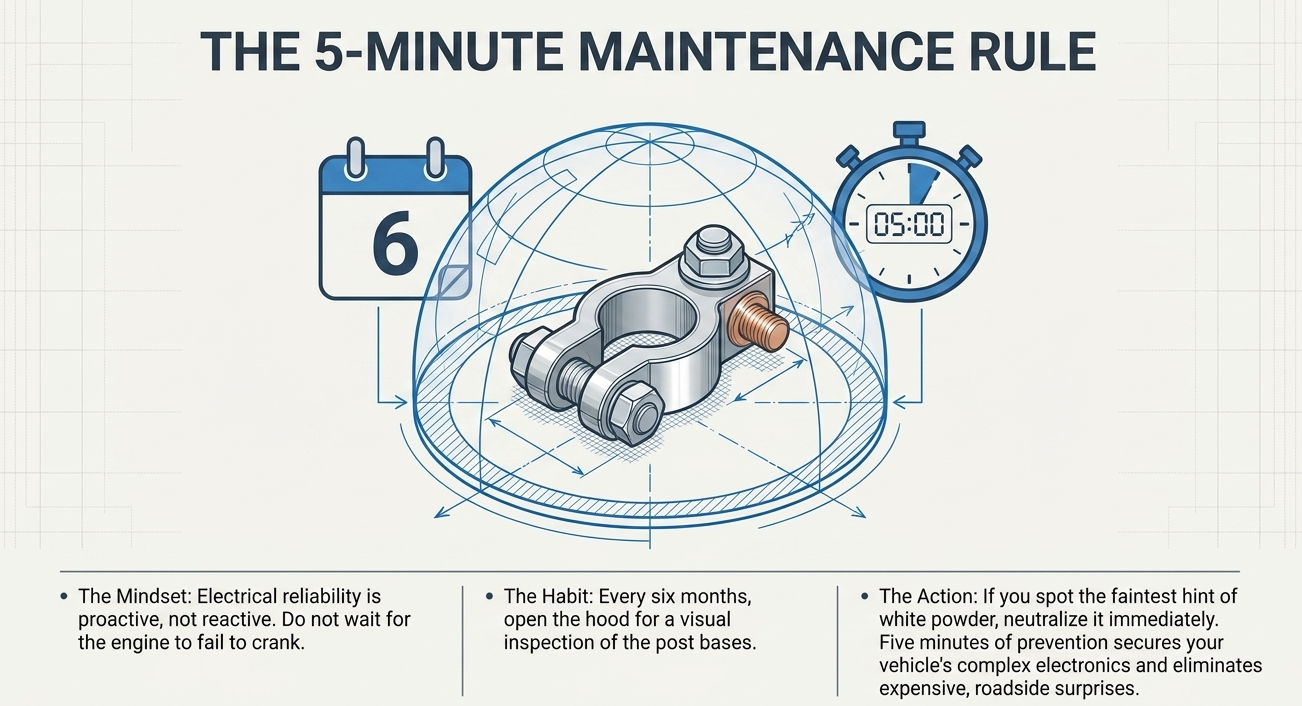
Final Verdict: The 5-Minute Maintenance Rule
Battery maintenance shouldn’t be a reactive task performed only when the car won’t start. Every six months, pop the hood and inspect the post bases. If you see the faintest hint of white powder, neutralize it with a quick spray of battery cleaner. Taking care of your battery terminals saves money and time, ensuring your vehicle remains ready for the road without expensive surprises.

Eric Strong works in the automotive repair industry more than 20 years. His work included repairing electrical systems in various vehicle systems. A hybrid electric car battery replacement experience expanded his understanding of automotive battery technology.
Page Contents